


Best Bread Dipping Oil: A Guide to Flavour and Quality
That generic bottle of "Extra Virgin" olive oil in your pantry is likely the very thing standing between you and a truly memorable appetizer. Most Canadians have experienced the disappointment of a dipping oil that feels heavy or entirely flavourless against a piece of fresh sourdough. It's frustrating when you want to recreate that vibrant, peppery bite found in world-class bistros, only to end up with a flat, greasy mess. Finding the best oil for bread dipping requires looking past marketing buzzwords and understanding the sensory science of freshness and harvest dates.
You deserve to know exactly how to select the finest oils to elevate your home dining experience. In this guide, we'll explore how to identify authentic, high-polyphenol oils and master the art of the perfect oil-and-balsamic duo. You'll learn the secrets to pairing specific textures of bread with premium infusions, ensuring your next starter is a sophisticated sensory discovery that leaves your guests asking for your source. From understanding 2026 certification standards to serving the ultimate crusty loaf, we've curated everything you need for culinary excellence.
Key Takeaways
- Learn why a simple "Extra Virgin" label is only the beginning and how to use fresh harvest dates to identify the best oil for bread dipping.
- Discover how to categorize oils by their flavour intensity-delicate, medium, or robust-to ensure your selection complements your meal perfectly.
- Master the culinary chemistry of the "Balsamic Duo" by balancing rich fats with the sophisticated acidity of aged dark or white balsamic vinegars.
- Identify the ideal bread pairings, such as ciabatta or sourdough, focusing on a crust-to-crumb ratio that optimizes oil absorption and texture.
- Find a reliable Canadian source for ultra-premium, high-polyphenol oils that bring the world’s highest quality standards directly to your table.
The Anatomy of the Best Oil for Bread Dipping
The best oil for bread dipping isn't just a kitchen staple; it's a culinary centrepiece. While many people reach for any bottle labeled "Extra Virgin," this is actually the baseline for quality rather than the peak. For a true restaurant-quality experience, you need a finishing oil. These oils are crafted to be consumed raw, preserving the delicate aromatics and complex flavour profiles that heat would otherwise destroy. Unlike cooking oils, which are selected for their smoke point, a dipping oil is chosen purely for its sensory impact.
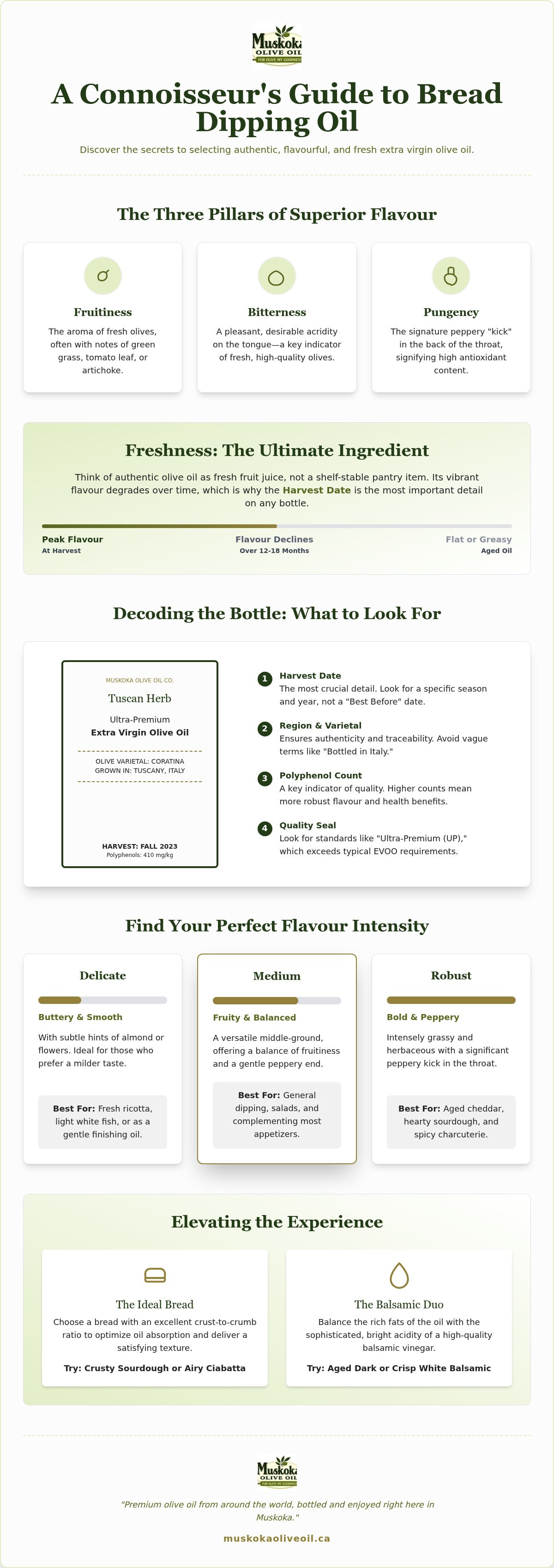
A superior oil should possess three distinct characteristics: fruitiness, bitterness, and pungency. Fruitiness refers to the aroma of fresh olives, often carrying notes of green grass, tomato leaf, or artichoke. Bitterness is a pleasant acridity felt on the tongue, while pungency is that signature peppery kick in the back of the throat. Together, these traits create a balanced, vibrant profile that stands up to a robust sourdough or a soft ciabatta.
Why Freshness is the Ultimate Flavour Driver
Think of Olive oil as a fresh fruit juice rather than a shelf-stable pantry item. From the moment the olives are pressed, the clock starts ticking. Over time, oxygen and light degrade the delicate fats, leading to a flat or greasy taste. This is why the harvest date is the most critical piece of information on any label. High-quality oils will always display a specific harvest window, allowing you to ensure you are buying a product at its peak.
When you taste that sharp, peppery finish, you're experiencing piquancy, a direct indicator of the oil's antioxidant content and its recent production. Ultra-Premium is a specific standard that exceeds traditional EVOO requirements by mandating stricter chemical limits and higher sensory scores to ensure the product is truly world-class. Finding the best oil for bread dipping often means looking for this higher tier of certification.
Identifying Quality Labels and Standards
To find a truly exceptional oil, you must learn to read between the lines of clever marketing. Many mass-produced bottles use vague language like "bottled in Italy," which often means the oil was grown elsewhere and merely packaged there for the prestige. You should look for labels that specify the region of growth and the exact olive varietals used to ensure authenticity and traceability.
The presence of polyphenols is another key indicator of excellence. These naturally occurring compounds provide the oil’s stability and its legendary health benefits. A high polyphenol count ensures the oil remains fresh longer and delivers a more intense flavour profile. For those looking to explore beyond traditional varieties, The Ultimate Guide to Infused Olive Oil in Canada offers a deeper look into how citrus and herb infusions can further enhance your dipping rituals.
Selecting Your Flavour Profile: From Robust to Infused
Selecting the best oil for bread dipping is a personal journey that depends entirely on your palate and the occasion. To truly appreciate the nuances of a premium harvest, it helps to organize oils into three distinct intensity levels: delicate, medium, and robust. This classification allows you to tailor your starter to the rest of your menu, ensuring the oil enhances rather than overpowers your meal. When you organize a tasting flight, you provide guests with a sensory map of the Mediterranean, moving from the softest notes to the most vigorous.
Robust vs. Delicate: Matching the Oil to the Occasion
Robust oils are typically crafted from early-harvest olives, picked when they are still green and full of life. These oils possess a bold, herbaceous, and intensely grassy profile that demands attention. Because of their high polyphenol content, they offer a significant peppery finish that can actually cause a slight tingle in the throat. These are best paired with strong savoury snacks like aged cheddar, spicy olives, or smoked charcuterie.
In contrast, delicate oils are often made from riper olives, resulting in a buttery and smooth texture with hints of almond or floral notes. These are ideal for those who prefer a milder taste or when serving subtle flavours like fresh ricotta or a light white fish. Medium oils sit comfortably in the centre, offering a versatile balance of fruitiness and a gentle peppery end. Offering a range of intensities is an excellent way to organize a tasting experience, allowing guests to realize the vast spectrum of flavours available in a single bottle.
The Art of the Infusion: Garlic, Herbs, and Citrus
Infused oils have seen a massive rise in popularity across Canada because they provide a complex flavour profile without the need for additional seasonings or messy dried herbs. You don't have to worry about sediment at the bottom of the dipping bowl; the essence is already perfectly integrated into the oil's structure. For a classic, savoury experience, Garlic Infused Olive Oil: The Ultimate Canadian Kitchen Essential remains a top choice for its rich, aromatic depth.
During the warmer months, citrus-infused oils like blood orange or lemon offer a bright, refreshing summer dipping experience. These pair beautifully with a crisp baguette and a sprinkle of flaky sea salt. Whether you prefer the bite of a robust oil or the zest of a citrus infusion, you can explore our curated selection of premium oils to find the perfect match for your next crusty loaf.
The Perfect Pairing: Why Balsamic Vinegar is the Essential Partner
While the best oil for bread dipping provides the luscious, fatty foundation of your starter, it requires a sharp, acidic counterpoint to achieve true culinary balance. This relationship is often called the "Balsamic Duo," a partnership where the rich lipids of the olive oil are cut by the bright, complex acidity of aged vinegar. This contrast cleanses the palate between bites, allowing the fruity or peppery notes of the oil to shine through without feeling heavy or greasy on the tongue. Without this acidic lift, even the finest oil can feel one-dimensional when paired with dense, starchy breads.
The secret to a restaurant-quality dip lies in the viscosity of the ingredients. High-quality balsamic is aged in wooden barrels, a process that evaporates water and concentrates natural sugars, resulting in a thick, syrupy texture. When added to a bowl, this dense vinegar doesn't mix with the oil; instead, it settles into beautiful, dark beads at the bottom. This physical separation allows you to control exactly how much sweetness and acidity you capture with each piece of bread, ensuring a different sensory experience with every dip.
Dark vs. White Balsamic: Choosing Your Aesthetic
Selecting between dark and white balsamic is often a matter of visual intent and flavour depth. Dark balsamic vinegars are deeply concentrated, offering a flavour profile reminiscent of sun-dried fruits like figs and raisins. They create a striking, classic contrast against golden oil, making them a favourite for traditional presentations. These vinegars bring a rich, caramel-like sweetness that stands up well to robust, early-harvest oils.
If you prefer a cleaner, more contemporary look, white balsamic is an excellent alternative. It is cooked at a lower temperature to prevent caramelization, resulting in a tart, crisp finish that won't discolour your bread. This is particularly useful when serving light-coloured loaves where you want to maintain a pristine presentation. For an extra layer of gourmet sophistication, infused balsamics-such as fig or pomegranate-add a subtle fruity undertone that complements the natural aromatics of the oil.
The Science of the Dip: Viscosity and Surface Tension
The way vinegar interacts with your oil is a lesson in surface tension. Because aged balsamic is significantly denser than olive oil, it maintains its integrity at the bottom of the dish. This creates a "bead" of flavour that clings to the porous surface of the bread rather than soaking through it instantly. Watery, low-grade vinegars lack this density and will simply run off the crust, leaving you with a soggy texture and a lack of flavour.
To maximize visual appeal, use a shallow, wide ceramic bowl. Pour your oil first, then gently drop the balsamic into the centre. For the ideal flavour balance, aim for a ratio of three parts oil to one part vinegar. This specific ratio ensures that every dip provides a harmonious blend of fat, fruit, and acid, turning a simple appetizer into a sophisticated sensory experience that rivals any high-end bistro.
Elevating the Experience: Bread Choice and Serving Rituals
The bread you choose is the canvas for your starter, and it plays a vital role in how the flavours of the oil are delivered to your palate. Even the best oil for bread dipping requires a structural partner that can hold both the lipid and the acid without collapsing. Sourdough, Ciabatta, and Baguette are the gold standards in this category. Each offers a unique texture and crust-to-crumb ratio that affects how much oil is absorbed. A dense, crusty exterior is essential because it provides the necessary grip and crunch to balance the silky texture of a premium extra virgin oil.
Beyond the bread itself, the ritual of serving is what transforms a simple snack into a sophisticated appetizer. Temperature is the most overlooked factor in this process. Your bread should always be served warm, ideally fresh from the oven or lightly toasted, to release its natural grain aromas and soften the interior. Your oil, however, must remain at room temperature. Never heat your dipping oil; high temperatures can destroy the delicate polyphenols and volatile aromatics that define a high-quality harvest.
Sourdough vs. Ciabatta: The Absorption Debate
Ciabatta is often heralded as the ultimate dipping bread because of its massive "alveoli"-the large air pockets created during its long fermentation. These holes act as tiny reservoirs, trapping generous pools of oil and balsamic beads. If you enjoy a heavy, saturated dip, Ciabatta is your best choice. Sourdough offers a different advantage. Its natural tanginess provides a beautiful flavour bridge to the herbaceous, grassy notes of a robust oil. The chewiness of sourdough also ensures the bread doesn't dissolve instantly, allowing you to savour the complex finish of the oil. Avoid soft, pre-sliced sandwich breads at all costs. They lack the structural integrity needed and will quickly become a soggy, unappealing mess.
The Presentation: Bowls, Plates, and Garnishes
Aesthetic appeal is a major part of the sensory discovery. Use a shallow, wide-rimmed ceramic bowl or a specialized dipping plate rather than a deep ramekin. This allows the oil to spread out, showcasing its natural green or golden hue against a white background. To elevate the presentation, consider adding a few carefully selected garnishes that enhance rather than mask the oil's profile. A sprinkle of flaky sea salt is essential for drawing out the oil's fruitiness. You can also add a pinch of dried oregano, red pepper flakes for a hint of heat, or a sprig of fresh thyme for an aromatic touch. To find the ideal foundation for these pairings, you can explore our collection of premium oils and begin your own tasting ritual at home.
Discovering Premium Dipping Oils at Muskoka Olive Oil Co.
Muskoka Olive Oil Co. stands as a premier Canadian curator, bridging the gap between world-class Mediterranean groves and your kitchen table. We recognize that the best oil for bread dipping must meet rigorous international standards to deliver the sensory experience you expect. By offering national shipping coverage, we ensure that every household in Canada can access fresh-harvest oils that haven't spent months languishing on a grocery store shelf. These oils are more than just ingredients; they are invitations to discovery. A curated set of our extra virgin oils and aged balsamics makes an impeccable gift for a host who appreciates the finer details of a shared meal. Beyond the dipping bowl, our range extends into sophisticated skincare and a wide variety of infused selections designed to elevate every aspect of your daily life.
Our Commitment to Freshness and Flavour
Our focus remains steadfast on the "Ultra-Premium" standard, a classification that demands excellence in both chemical composition and sensory performance. We source our oils with a deep commitment to purity, ensuring they are never flat, greasy, or rancid. This methodical approach allows you to realize your potential as a gourmet host, confident that every bottle you open will provide the vibrant, peppery finish that characterizes a world-class harvest. We act as your local guide to global quality, selecting only the finest batches to ensure your culinary results are consistently exceptional. There is a palpable sense of pride in our roots, and we are eager to share the nuances of our craft with our community.
This commitment to tradition and quality isn't limited to the pantry; for those who appreciate the same level of craftsmanship in their morning routine, you can discover Bambi Nonno Coffee and their premium Italian-style roasts.
Creating Your Own Dipping Ritual
The true joy of a premium starter lies in the experimentation. We help you organize a tasting experience that reflects your personal style, encouraging you to explore the diverse pairings between our robust extra virgin oils and our aged dark or white balsamic vinegars. Each combination offers a new flavour profile to discover, from the bright zest of citrus to the deep, earthy tones of a traditional harvest. For those looking to expand their repertoire, Infused Olive Oil Recipes: Elevate Your Culinary Rituals provides a wealth of inspiration for your next gathering. We invite you to browse our current collection and select the ingredients that will transform your next crusty loaf into a sophisticated sensory event.
Elevate Your Next Gathering with Culinary Excellence
Mastering the art of the perfect starter is a sensory journey that begins with the highest quality ingredients. You now understand that the best oil for bread dipping is defined by its harvest date and Ultra-Premium standards; these factors ensure every drop is packed with vibrant flavour and healthy polyphenols. By balancing these robust oils with the syrupy density of aged balsamic and the right crusty loaf, you transform a simple appetizer into a sophisticated culinary ritual that will surely impress your guests. To complete the atmosphere of elegance, many hosts choose to pair their gourmet presentation with luxury accessories from Millo Beauty, ensuring every detail of the evening is polished.
Muskoka Olive Oil Co. is proud to be your trusted curator for these world-class ingredients. We offer a meticulously selected range of infused and extra virgin oils that meet the most stringent quality metrics in the industry. With national Canadian shipping available, we bring this world of refined tastes directly to your door. Elevate your next meal with the finest dipping oils from Muskoka Olive Oil Co. and discover how superior purity can redefine your daily dining rituals. We look forward to helping you create a restaurant-quality experience in the comfort of your own home.
Frequently Asked Questions
What is the best oil for bread dipping?
The best oil for bread dipping is a fresh, Ultra-Premium Extra Virgin Olive Oil characterized by a high polyphenol count and a recent harvest date. These oils offer the vibrant fruitiness and signature peppery finish that lower-grade oils lack. Choosing a small-batch oil ensures the complex aromatics remain intact, providing a sensory experience that defines a world-class appetizer.
Can I use regular grocery store olive oil for dipping?
You can use grocery store oil, but it often lacks the depth and freshness required for a finishing application. Many mass-market "Extra Virgin" oils are blends that may be older or lack specific harvest transparency. For dipping, where the oil is the primary flavour, a premium oil provides a cleaner, more robust taste without the flat or greasy profile common in industrial brands.
Is dipping bread in olive oil healthy?
Dipping bread in high-quality olive oil is an excellent way to incorporate healthy monounsaturated fats into your diet. Premium extra virgin oils are packed with antioxidants and polyphenols that support heart health and reduce inflammation. Choosing this over butter or margarine allows you to enjoy a rich, satisfying starter that aligns with the wellness benefits of the Mediterranean lifestyle.
How do I make a restaurant-style olive oil dip?
To recreate a restaurant-style dip, start with a shallow, wide-rimmed ceramic bowl. Pour in a generous amount of premium oil and add a splash of aged balsamic vinegar, allowing it to settle into distinct beads. Finish with a sprinkle of flaky sea salt and a pinch of red pepper flakes or fresh herbs to add both visual appeal and a layered flavour profile.
Should I mix balsamic vinegar into my dipping oil?
You should avoid whisking the two together, as the goal is to maintain the distinct textures of both liquids. By dropping the balsamic into the centre of the oil, you allow it to form dense, syrupy droplets. This presentation lets guests control the balance of fat and acidity in every bite, ensuring the best oil for bread dipping remains the prominent feature.
How long does dipping oil stay fresh once served?
Dipping oil is at its peak for about two to three hours after being poured. Exposure to light and oxygen begins to degrade the delicate volatile compounds that provide its aroma and taste. For the best results, only pour what you intend to use for that specific meal, and never return used oil to the original bottle to prevent contamination or oxidation.
What kind of bread is best for dipping in olive oil?
Breads with a crusty exterior and an open crumb, like Ciabatta or Sourdough, are the superior choices for dipping. The large air pockets in Ciabatta act as reservoirs for the oil and vinegar, while the natural acidity of Sourdough provides a beautiful counterpoint to a robust oil. Soft sandwich breads should be avoided because they lack the structure to prevent sogginess.
What are the best herbs to add to dipping oil?
Fresh rosemary, thyme, and oregano are exceptional choices for adding earthy, aromatic depth to your dip. If you prefer a bit of heat, dried red pepper flakes provide a sharp contrast to the buttery notes of the oil. Many Canadians also find that using a pre-infused garlic oil offers a perfectly balanced flavour profile without the need for additional prep or seasoning.
Leave a comment