


Can You Substitute Balsamic Vinegar for Red Wine in Cooking?
Can you substitute balsamic vinegar for red wine without making dinner too sweet or sharp? Yes, but it’s not a straight swap. Red wine and red wine vinegar aren’t interchangeable, and balsamic has its own sweet-tart character. Pouring in the same amount can noticeably change a dish.
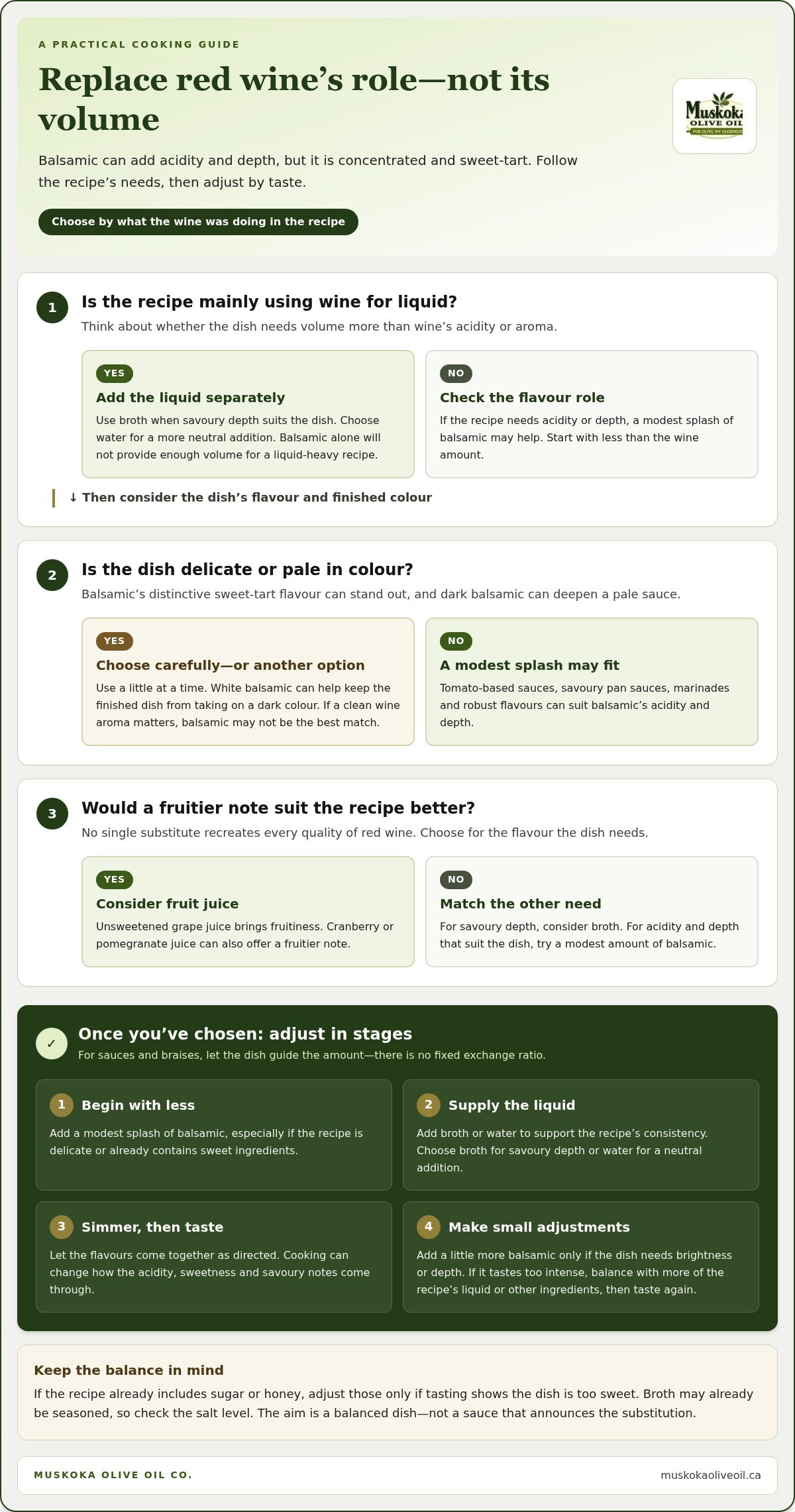
The key is to replace red wine’s role, not simply its volume. Balsamic can add acidity and depth to sauces, braises and marinades, but start with less and taste as you cook. Add broth or water separately if the recipe needs more liquid.
This guide explains when balsamic suits a recipe, how to balance its sweetness and acidity, and why the best substitute depends on what the dish needs. You’ll also find alternatives, from broth for savoury depth to cranberry or pomegranate juice for a fruitier note, so you can choose an option that supports the meal rather than taking it over.
Key Takeaways
- You can substitute balsamic vinegar for red wine in some recipes, but match its role rather than replacing the volume directly.
- Start with less balsamic and make up liquid with broth or water when needed. Taste before adjusting further.
- Choose a substitute to suit the dish: broth adds savouriness, while unsweetened grape juice brings fruitiness.
- Adapt the substitution to the recipe, since tomato sauces, pan sauces, braises and marinades use red wine differently.
- Choose dark or white balsamic according to the colour and flavour you want in the finished dish.
Can balsamic vinegar replace red wine in cooking?
Yes, balsamic vinegar can replace red wine in some cooked dishes, but it won’t behave like an equal measure of wine. Red wine adds liquid, acidity, aroma and depth. How much each quality matters depends on the recipe and cooking time. Balsamic is more concentrated and has a sweet-tart flavour, so the same volume may make a dish sweeter, sharper or more distinctly balsamic than intended.
A red-wine substitute should perform the job the wine does in a particular recipe, not simply match its volume. If the wine provides acidity, a little balsamic may help. If it mainly adds liquid to a braise, balsamic alone won’t provide enough volume; add another suitable liquid. Consider the recipe’s purpose before choosing an alternative.
Red wine, red wine vinegar, and balsamic: what is the difference?
Red wine is a fermented grape drink used in cooking for its liquid, acidity and aroma. As it simmers, its flavour changes and blends with other ingredients. Red wine vinegar is made by fermenting red wine into vinegar, giving it a sharper, more direct acidity and less of wine’s character. Balsamic vinegar is made from grape ingredients and vinegar, and has a sweet-tart taste that can be rich and concentrated. Its history and production vary, as outlined in Balsamic Vinegar.
These ingredients do different jobs. A recipe calling for red wine doesn’t automatically call for red wine vinegar, and neither is a guaranteed one-for-one match for balsamic. Decide whether the dish needs wine’s rounded aroma, vinegar’s sharp acidity or balsamic’s deeper sweet-tart note.
When is balsamic a sensible substitute?
A modest splash can suit tomato-based sauces, savoury pan sauces or marinades where acidity and depth complement the other ingredients. It can also work with robust flavours that won’t be overshadowed by its distinctive taste. Start with less than the recipe’s wine quantity and build gradually. You can add more, but it’s difficult to remove sweetness once it’s in the pot.
Use more caution in delicate dishes, pale sauces or recipes where a clean wine aroma matters. Dark balsamic can deepen the colour, and its sweet-tart flavour may stand out against mild ingredients. A white balsamic option, such as Pomegranate Quince White Balsamic, keeps the finished dish from taking on a dark colour. The best match still depends on the wine’s role and the dish’s intended flavour.
How to use balsamic vinegar instead of red wine without overpowering a dish
Use balsamic as a seasoning component, not an automatic equal-volume replacement. Its sweetness and concentrated flavour can build quickly, while the recipe may rely on wine for a larger amount of liquid. Adding balsamic gradually lets you develop the flavour without letting it dominate.
For a sauce or braise, think in two parts: balsamic contributes flavour and acidity, while broth or water supplies some of the liquid the recipe needs. Choose broth when savoury depth suits the dish. Water is more neutral when you don’t want to add another flavour. The right balance depends on the other ingredients and how much the sauce will reduce.
A simple adjustment method for sauces and braises
Instead of pouring in the recipe’s full wine quantity as balsamic, adjust in stages. This gives you time to assess the sauce as it cooks.
- Begin with less balsamic. Add a modest splash to the pan or pot, especially if the recipe is delicate or already contains sweet ingredients.
- Add suitable liquid. Use broth or water to provide more cooking liquid, adding enough to support the recipe’s consistency rather than following a fixed ratio.
- Let the flavours come together. Simmer the dish as directed, then taste. Cooking changes how the acidity, sweetness and savoury notes come through.
- Adjust in small increments. Add a little more balsamic if the dish needs brightness or depth. If it tastes too intense, balance it with more of the recipe’s liquid or other ingredients, then taste again.
This method works for a pan sauce, where a small amount can add dimension, and for a braise, where broth can provide the liquid while balsamic adds a supporting note. When comparing white balsamic vinegars, consider whether their colour and flavour will suit the finished dish.
How to keep balsamic’s sweetness in balance
Let the recipe guide your corrections. If it already includes sugar, honey or another sweet ingredient, reduce or omit some only if tasting shows the dish has become too sweet. Don’t remove sweetness automatically: it may balance tomatoes, spice or other sharp flavours.
Use savoury ingredients already in the recipe to round out balsamic’s sweet-tart edge. Depending on the dish, broth, mushrooms, onions or herbs can help the flavours feel more integrated. Add them in a way that fits the recipe rather than treating them as a universal fix. Check the salt level, too. Broth may already be seasoned, and extra salt can make a concentrated sauce taste more pronounced.
Colour matters as well. Dark balsamic can deepen a pale pan sauce or change the look of a light-coloured dish. If appearance is important, choose an alternative that suits the desired finish and add it gradually. When you substitute balsamic vinegar for red wine, the aim is a balanced dish, not a sauce that announces the swap before the first taste.
Which non-alcoholic red wine substitute fits your recipe?
No single substitute recreates every quality of red wine. Choose according to what the recipe needs most: savoury depth, fruitiness, acidity or extra cooking liquid. The guide below compares common options by their general flavour balance. Ingredients vary, so add them gradually and taste as you cook rather than relying on a fixed exchange ratio.
| Substitute | Acidity | Sweetness | Savouriness | Best fit |
|---|---|---|---|---|
| Broth | Low | Low to mild | High, depending on the broth | Braises, stews and savoury sauces that need liquid and depth |
| Balsamic with broth or water | Moderate to pronounced | Noticeable | Low on its own | Robust sauces or marinades that suit a sweet-tart note |
| Unsweetened grape juice | Low | Fruity | Low | Sauces where grape-like fruitiness is more important than sharp acidity |
| Red wine vinegar, used sparingly | High | Low | Low | Recipes that mainly need a bright acidic lift |
| Cranberry or pomegranate juice | Varies | Fruity, sometimes tart | Low | Recipes that can welcome a vivid fruit note |
Choose a substitute by the job red wine does
If a dish needs savoury depth, broth is a useful foundation. A little suitable vinegar can add brightness if the flavour calls for it. For grape-like fruitiness, try unsweetened grape juice, keeping its natural sweetness in mind. If acidity is the main requirement, use a suitable vinegar sparingly. Vinegar is a seasoning, not a full measure of cooking wine.
Match alternatives to sauces, marinades and braises
A braise needs enough liquid to cook its ingredients, so broth or water may be needed alongside a flavourful substitute. Marinades can often accommodate a sharper acidic note because it’s balanced with other ingredients and coats the food. A finishing or pan sauce has less liquid and concentrated flavours, so make small adjustments and taste before adding more.
If you substitute balsamic vinegar for red wine, choose it for the recipe’s flavour direction, not simply because it’s on hand. Its sweet-tart profile can lend depth, but may be out of place when the dish calls for clean fruitiness or savoury liquid. Start with the quality the recipe lacks, then adjust acidity, sweetness and seasoning in small steps.
How to adapt popular recipes that call for red wine
The right adjustment depends on how the recipe uses wine. In a tomato sauce, it may add acidity and depth; in a braise, it also contributes cooking liquid. A marinade uses it as part of a flavourful coating, while a pan sauce can concentrate its taste quickly. Match the substitute to the cooking method and the dish’s flavour profile, not just the ingredient list.
Tomato sauces and pan sauces
Tomatoes already bring acidity, so a small amount of balsamic can add a rounded, sweet-tart note without requiring extra vinegar. Let the sauce simmer, then taste before adding sugar, another acidic ingredient or more balsamic. If the recipe uses wine to loosen the sauce or provide volume, add broth or water as needed. Balsamic supplies flavour, not the missing liquid.
Pan sauces need a lighter hand. Their flavours reduce and become concentrated as they cook, so balsamic’s sweetness can become prominent. Start with broth if the sauce is delicate or you want to preserve a clean savoury profile. If balsamic suits the other ingredients, add it gradually near the end and taste before adjusting salt or acidity.
Braises and marinades
For a braise, separate the flavour contribution from the liquid required for cooking. Use broth or water to provide the needed volume, then add a modest amount of balsamic if its sweet-tart character complements the meat, vegetables and other seasonings. A robust braise may suit that deeper note; a delicate one may be better with broth alone or another less assertive substitute.
Marinades can accommodate sharper flavours, but balance still matters. Consider the full mixture: balsamic’s sweetness may complement savoury ingredients, while juice, honey or other sweet components could make it too sweet. If the marinade already includes acidic ingredients, use less balsamic or choose a milder alternative. The same substitution won’t work for every marinade because ingredients and intended flavours vary.
Consider when the sauce will be tasted, too. A marinade is spread across other ingredients, while a finishing sauce is served in concentrated form, so even a small change can stand out. Make adjustments gradually and judge the finished dish, not just the raw mixture.
In short, choose a substitute for the job red wine does in that recipe, then adapt the amount and liquid to the cooking method. To compare options for a lighter-coloured dish, explore white balsamic vinegars and consider how their colour and flavour might suit your ingredients.
Choose a balsamic that complements your cooking
Before choosing a balsamic, identify what the red wine contributes to the recipe: acidity, aroma, liquid or depth. Then select an alternative that suits the dish and adjust gradually as it cooks. This is the practical way to substitute balsamic vinegar for red wine without expecting it to behave like wine in every respect.
Colour and flavour both matter. Dark balsamic can bring a deeper hue and a more noticeable presence to a dish. White balsamic can be a better visual fit when you want to keep a pale sauce or light-coloured ingredients from taking on a darker shade. Neither is automatically the right choice. Consider the finished dish and how much sweetness or acidity it can accommodate.
Dark or white balsamic: which suits the dish?
For a tomato-based sauce or rich, dark braise, a deeper colour may sit naturally alongside the other ingredients. In a pale pan sauce, a dish of light vegetables or a delicate preparation, colour may be part of the appeal, so a white option can be a good fit. Explore the white balsamic vinegars with the recipe’s appearance and flavour balance in mind.
Don’t choose by colour alone. A dish that needs savoury liquid may call for broth, while one that benefits from a sweet-tart accent may suit a small amount of balsamic. If the recipe already includes fruit, sugar or other acidic ingredients, account for those before adding more. Taste the dish as it develops, since the final balance depends on the whole combination.
A thoughtful next step for home cooks
Experiment first in recipes where a sweet-tart note makes sense, such as a robust sauce or marinade. Add a little, let it mingle with the other ingredients, and taste before making another adjustment. This small test can show whether the balsamic complements the dish or draws too much attention.
Muskoka Pomegranate Quince White Balsamic is one white balsamic option for cooking. Consider whether its fruit-forward flavour suits the recipe rather than assuming it will replace red wine in every dish. The same principle applies to other balsamics: choose for the flavour you want, and use them thoughtfully.
In brief, match the balsamic to the dish’s colour and flavour, then adjust to taste. Explore white balsamic options and consider where a gentle sweet-tart accent would complement your cooking.
Make room for a little flavour experimentation
Think of a substitution as a chance to shape the dish, not simply fill an empty space in the recipe. A balsamic that suits one sauce may feel too pronounced in another, so let the other ingredients guide your choice. Give the flavour time to settle before making a final adjustment. The best results often come from tasting with curiosity and making small changes.
If you want to substitute balsamic vinegar for red wine, start with a recipe where its sweet-tart character feels at home. Muskoka Olive Oil Co. offers dark and white balsamic vinegars to customers across Canada, so you can explore different styles for everyday cooking.
Explore balsamic vinegars for your kitchen and find a flavour for your next meal. A thoughtful splash can bring a fresh note to familiar dishes.
Frequently Asked Questions
Can you substitute balsamic vinegar for red wine in cooking?
Yes, you can substitute balsamic vinegar for red wine in some recipes, but it isn’t a direct equal-volume replacement. Balsamic is concentrated and can add noticeable sweetness, particularly in a sauce that reduces. Begin with a small amount, then add broth or water separately if the recipe needs more liquid. Taste after the flavours have cooked together, and adjust carefully so the balsamic doesn’t overshadow the other ingredients.
What is the best non-alcoholic substitute for red wine in a sauce?
The best substitute depends on what the red wine contributes to that particular sauce. For savoury depth, broth with a small amount of an appropriate acidic ingredient can work well. If the sauce suits a sweet-tart note, try a restrained amount of balsamic instead. Consider whether the sauce is already acidic or sweet, and taste as it cooks. There’s no universal ratio for every recipe or cooking method.
Can I use red wine vinegar instead of red wine in a recipe?
You can use red wine vinegar in some recipes, but it isn’t the same ingredient as red wine. Vinegar is more acidic and won’t supply the wine’s liquid volume, so a recipe for a stew or sauce may need broth or water as well. A little vinegar can add brightness when appropriate. Don’t apply a vinegar-for-vinegar conversion to cooking wine; those substitutions serve different purposes.
How much balsamic vinegar should I use instead of red wine?
There’s no single conversion that works for every dish. The amount depends on the recipe’s size, the balsamic’s intensity and sweetness, and whether the wine is used in a quick sauce or a longer-cooking dish. Start with a small amount, provide any needed liquid separately, and taste before adding more. If the recipe calls for a substantial pour of wine, balsamic alone is unlikely to replace its full role.
Can balsamic vinegar replace red wine in beef stew or a braise?
It can add sweet-tart depth to a beef stew or braise, but use it as a supporting flavour rather than the main cooking liquid. Broth or water can provide liquid as the meat and vegetables cook. Taste the cooking liquid once the ingredients have softened, since their flavours will have blended and developed. Let the stew’s other ingredients guide any further addition of acidity or sweetness.
Does balsamic vinegar contain alcohol, and is it suitable for strict alcohol avoidance?
Don’t assume every balsamic vinegar is suitable for strict alcohol avoidance. Product ingredients and production details can vary, so review the specific product information if avoiding alcohol for medical, religious or other strict reasons. If the information doesn’t address your needs, a non-vinegar option such as broth or water may be a better fit for the recipe. This is especially useful when the substitute’s flavour matters less than avoiding particular ingredients.
Leave a comment