


High Quality Olive Oil vs Regular: Is the Difference Really Worth It?
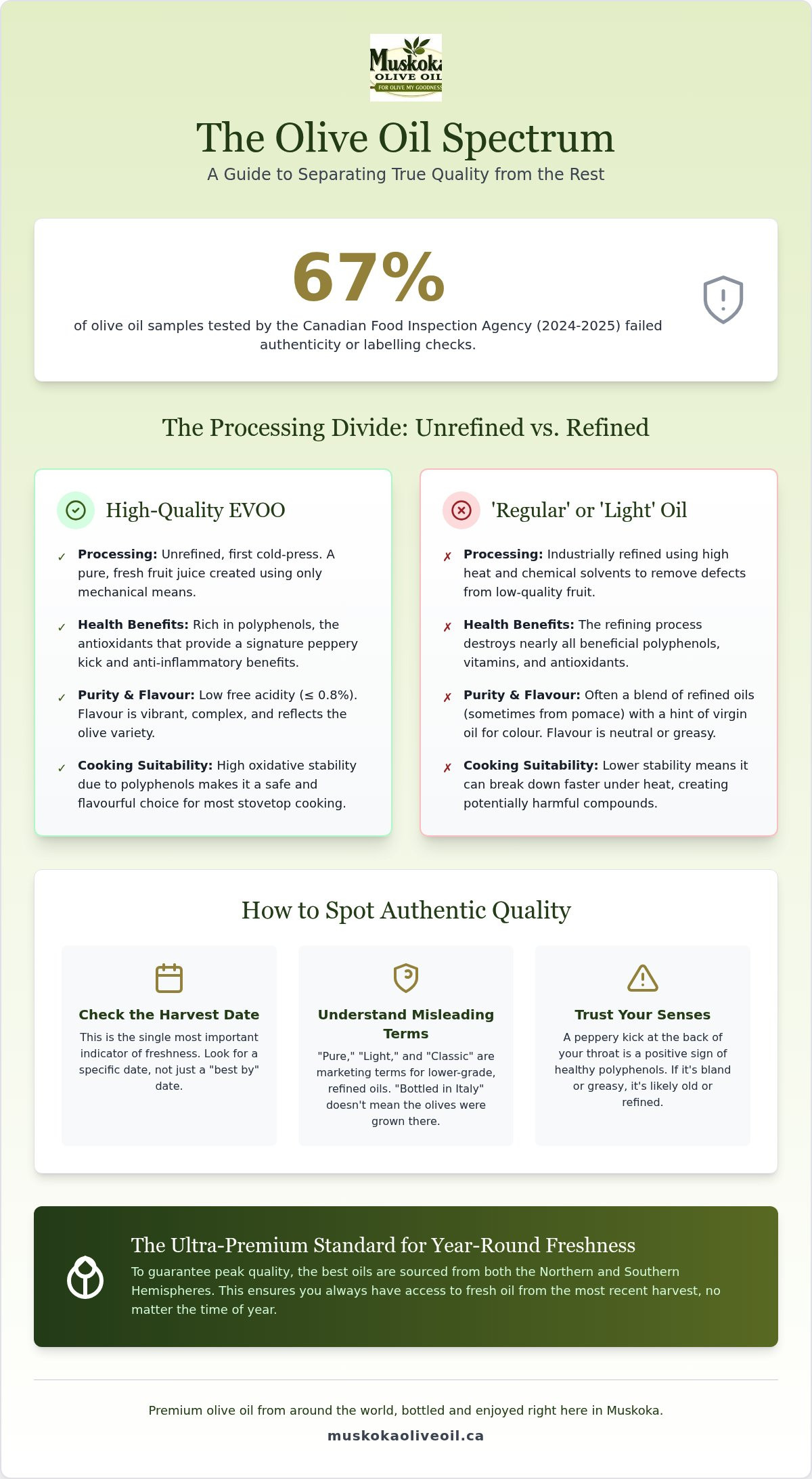
Did you know that 67% of olive oil samples tested by the Canadian Food Inspection Agency in its 2024-2025 report failed authenticity or labelling checks? This startling figure highlights why the debate of high quality olive oil vs regular is about much more than just a price tag. When you're standing in the grocery aisle trying to decipher confusing labels like "Pure" or "Extra Light," it's natural to feel skeptical. You want the best for your health, but you need to know if that premium bottle actually delivers a measurable difference in your kitchen.
At Muskoka Olive Oil, we believe that quality is a chemical reality that directly impacts your well-being and your vibrant flavours. We'll show you how to look past the marketing to find the truth in harvest dates and polyphenol counts. This guide provides a clear framework for when to reach for your finest fresh extra virgin olive oil and when a standard variety will do. By the end, you'll have the confidence to choose authentic products that bring world-class excellence to your table, bottled and enjoyed right here in Muskoka.
Key Takeaways
- Understand that the core difference in high quality olive oil vs regular lies in the processing, where premium extra virgin oil remains a pure, unrefined fruit juice while "regular" options are often chemically refined blends.
- Learn to recognize the signature peppery kick of polyphenols, the powerful antioxidants that provide the anti-inflammatory benefits central to healthy Mediterranean cooking.
- Debunk common myths about smoke points and discover why the oxidative stability of premium oil makes it a safer, more flavourful choice for your stovetop.
- Master the art of label reading to spot red flags and avoid adulterated products, ensuring you always bring authentic, world-class quality into your kitchen.
- Discover how the Ultra-Premium standard guarantees peak freshness throughout the year by sourcing exceptional oils from both the Northern and Southern Hemispheres.
The Spectrum of Quality: Defining EVOO vs. Regular Olive Oil
To truly understand high quality olive oil vs regular, you have to look at the bottle as more than just a kitchen staple. Think of it as a spectrum of purity and craftsmanship. At one end, you have Extra Virgin Olive Oil (EVOO). This is the unrefined, first cold-press juice of the olive. It's essentially a fresh fruit extract that hasn't been touched by chemicals or excessive heat. At the other end, "regular" or "pure" olive oil is a processed product, often consisting of a blend of refined oils and a small amount of virgin oil added back in for colour and a hint of scent.
The extraction methods define these categories. EVOO is produced using strictly mechanical means; the olives are crushed and the oil is separated through spinning or pressing. Regular oils, however, undergo industrial refining processes to remove defects found in low-quality fruit. You might also see "Light" olive oil on the shelf at your local grocery store. Don't be fooled by the name. It contains the same number of calories as any other oil. The term "light" refers only to its neutral flavour and pale colour, which are the results of heavy processing.
The Processing Divide: Refined vs. Unrefined
When you compare high quality olive oil vs regular, the processing divide is where the health benefits are either saved or lost. Heat and chemicals strip away the "soul" of the olive. During the refining process, manufacturers use high temperatures and chemical agents to neutralize unpleasant odours and flavours found in lower-grade fruit. While this creates a shelf-stable product, it destroys the natural vitamins and antioxidants that make olive oil a health powerhouse. Unrefined EVOO remains intact, preserving its delicate chemical profile. According to international standards, to earn the "Extra Virgin" grade, the oil must meet strict criteria, including a free acidity level of no more than 0.8%. This low acidity is a direct marker of the fruit's quality and the care taken during the harvest.
The Myth of "Pure" Olive Oil
Marketing language can be incredibly deceptive for Canadian shoppers. Labels like "Pure" or "Classic" often suggest a higher standard, but these are actually lower-grade oils. These varieties frequently contain refined pomace oils, which are extracted from the leftover skins and pits using chemical solvents. Another common trap is the "Bottled in Italy" claim. This often means the oil was shipped in bulk from various countries and simply packaged in Italy to capitalize on the region's prestige. For a truly premium experience, you want to know exactly where the olives were grown and, most importantly, the specific harvest date.
The Science of Superiority: Why Freshness and Polyphenols Matter
The difference between high quality olive oil vs regular isn't just a culinary preference; it's a matter of molecular chemistry. Unlike regular oils that often sit in clear plastic bottles under harsh grocery store lights, premium oil is treated like the fresh fruit juice it is. Light, heat, and oxygen are the primary enemies of quality. They trigger oxidation, a process that turns oil rancid and systematically destroys the very nutrients you're paying for. While regular oils are often already degraded by the time they reach your kitchen, superior oils are handled with a level of care that preserves their biological integrity.
Polyphenols: The Healthy Heart of Premium Oil
That signature "peppery" sensation at the back of your throat isn't a defect. It's actually a sign of excellence. This bite comes from polyphenols, which are natural antioxidants found in the olive fruit. Extensive research highlights the health benefits of polyphenols, suggesting they play a critical role in reducing inflammation and supporting heart health as part of a balanced Mediterranean eating pattern. If your oil feels smooth and greasy with no bite, the polyphenols have likely degraded or were never present in the first place.
You can perform a simple "cough test" at home. A high-quality oil should make you want to cough slightly when tasted neat. This indicates high levels of oleocanthal, a specific polyphenol with properties that researchers compare to natural anti-inflammatory agents. For those who prioritize these health markers, ultra premium extra virgin olive oil represents the global peak of polyphenol density, ensuring you receive the maximum benefit from every drizzle.
The Freshness Clock: Harvest Dates vs. Expiry Dates
Many shoppers treat olive oil like a fine wine that improves with age. This is a mistake. Olive oil is a perishable product that starts to lose its vitality the moment it's pressed. This is why the harvest date is the only date that truly matters on a label. A "best before" date is often set two years from the time of bottling, but that oil could have been sitting in an industrial tank for a year before it ever saw a bottle. By the time you buy it, the clock has already run out on its peak flavour and nutrient density.
To get the most from your investment, follow the 18-month rule. To enjoy the full nutrient profile, consume your oil within 18 months of its harvest. At Muskoka Olive Oil, we list the harvest month and year clearly on our dark glass bottles. This transparency allows you to track the freshness of your premium olive oil Ontario selections, ensuring you aren't bringing home a product that has already lost its essence. If you haven't tasted oil from the most recent harvest, you haven't truly experienced what this superfood can do for your cooking.
Practical Culinary Application: Smoke Points and Flavour Profiles
When you bring a bottle of Muskoka Olive Oil into your kitchen, you aren't just buying an ingredient; you're investing in a culinary tool that changes how your food behaves under heat. The debate over high quality olive oil vs regular often centres on the stove, where many home cooks fear that premium oil is too delicate for the frying pan. This misconception often leads people to reach for cheaper, refined oils that lack the protective benefits of a truly fresh press. In reality, the performance of your oil depends less on its name and more on its chemical stability.
The Smoke Point Reality Check
Many internet forums claim that Extra Virgin Olive Oil shouldn't be used for high-heat cooking. This is a myth. High-quality EVOO typically has a smoke point of approximately 400°F (204°C), which is well above the temperatures used for most sautéing, roasting, and pan-frying. While regular olive oil might have a slightly higher smoke point due to refining, it lacks the oxidative stability provided by natural antioxidants. These polyphenols act as a shield, preventing the oil from breaking down into harmful compounds when heated. For those looking to add another layer of depth to their pan-seared dishes, cooking with infused olive oils offers a flavour-safe way to sauté without sacrificing quality or health.
The Sensory Profile: Tasting the Difference
A premium oil offers a complex sensory experience that regular oils simply cannot replicate. Professional tasters look for three specific pillars: fruitiness, bitterness, and pungency. Fruitiness refers to the aroma of fresh olives, green grass, or tomato leaf. Bitterness is a pleasant sensation on the tongue, while pungency is the peppery bite in the throat. In contrast, regular olive oil often tastes flat, greasy, or fusty. In some BI cases, it may even taste like old peanuts or wax, which are clear indicators of rancidity. Using a premium oil creates what chefs call a "flavour bridge." It carries the subtle notes of herbs and spices, elevating a simple grilled trout or a bowl of fresh Ontario greens. For those who take their outdoor cooking seriously, pairing these flavours with the clean burn of premium fuel from Charcoal Kings ensures your meal is exceptional from start to finish.
Whether you're preparing a meal in a rustic cottage kitchen or a modern Bracebridge home, finishing a dish with a drizzle of fresh EVOO transforms the ordinary into something world-class. Regular oil acts as a background fat; high-quality oil serves as a lead character. Bringing this level of excellence to your healthy Mediterranean cooking ensures that every meal enjoyed on the dock feels like a refined experience. The difference isn't just something you can measure in a lab; it's something you can taste in every bite.
The global olive oil market is rife with adulteration. For Canadian shoppers, the risk is real. When you compare high quality olive oil vs regular at the supermarket, the label is often designed to mislead rather than inform. Authentic extra virgin olive oil is a premium product with high production costs. If you find a massive bottle priced lower than a cup of coffee, it's a major red flag. True quality demands careful harvesting and immediate pressing; these are steps that simply cannot be shortcutted for a bargain price.
Red Flags in the Grocery Aisle
Packaging tells a story before you even read a word. High-quality oil is almost always housed in dark glass bottles with gold caps to protect it from light damage. If you see oil in clear plastic bottles, it's already on the path to oxidation. Light penetrates the plastic and breaks down the delicate chemical structure. You should also be wary of generic "Product of..." labels. These often indicate a blend of oils from multiple countries, which makes traceability nearly impossible. While a "Best Before" date is standard, it's often a trap used to hide the true age of the oil. A transparent producer will always prioritize the harvest date over a vague expiry window.
The Gold Standard: Single Origin and Traceability
A connoisseur looks for the specific olive variety on the label. Knowing if your oil is made from Koroneiki, Picual, or Arbequina olives tells you exactly what to expect in terms of flavour profile and polyphenol density. Estate-bottled oils offer the highest level of quality control, as the grower, miller, and bottler are often the same entity. This ensures that the olives were pressed within hours of being picked. At Muskoka Olive Oil, we use dark glass bottles with gold caps and our signature label design to signify that what's inside meets the world's highest standards. If you're exploring flavoured options, our guide to infused olive oil Canada provides deeper insights into choosing products that maintain these high standards.
Choosing the right bottle shouldn't feel like a gamble. By looking for dark glass, specific origins, and clear variety names, you can ensure your kitchen is stocked with genuine liquid gold. If you're ready to taste the difference that true traceability makes, you can explore our collection of Ultra-Premium oils and have them delivered directly to your door.
Elevating the Everyday: The Muskoka Olive Oil Co. Difference
When you weigh the choice of high quality olive oil vs regular, you're ultimately choosing between a mass-produced commodity and a world-class ingredient. At Muskoka Olive Oil, we believe your kitchen deserves better than the generic, often degraded options found in supermarket aisles. We specialize in sourcing premium olive oil from around the world, bottled and enjoyed right here in Muskoka. This commitment ensures that the vibrant, healthy Mediterranean lifestyle is accessible whether you're at a rustic cottage in Bracebridge or preparing a family meal in Huntsville.
The Ultra-Premium (UP) Benchmark
Most consumers are familiar with the "Extra Virgin" label, but we hold ourselves to a much higher benchmark: the Ultra-Premium (UP) standard. This isn't just a marketing term; it's a measurable chemical reality that guarantees excellence. To qualify as UP, an oil must meet strict requirements for Free Fatty Acids (FFA), Peroxide levels, and Pyropheophytins that far exceed even the most rigorous international standards. For example, while standard EVOO allows for an FFA of 0.8%, the UP standard requires 0.3% or lower. This precision ensures a cleaner taste, a higher smoke point, and a significantly higher antioxidant density. By focusing on these metrics, we provide a product that is consistently superior in both flavour and health benefits.
Freshness is our obsession. Because olives are harvested at different times in the Northern and Southern Hemispheres, we rotate our stock every six months. This unique sourcing strategy allows us to provide fresh extra virgin olive oil Canada can rely on for peak vitality year-round. You aren't just getting oil; you're getting a seasonal product at its peak biological potency, captured at the moment of harvest and protected in our dark glass bottles.
Your New Pantry Essential
Transitioning to a premium-first kitchen is the most cost-effective way to elevate your daily rituals. You'll soon realize that a small drizzle of high-quality oil provides more flavour and satisfaction than a large amount of regular refined fat. For busy Canadian families, our infused olive oil varieties offer a quick, healthy way to add gourmet depth to roasted vegetables, grilled meats, or fresh salads. These oils become your secret weapon for healthy Mediterranean cooking, making it easy to prioritize wellness without sacrificing the joy of a delicious meal.
Whether you're enjoying a quiet morning by the lake or hosting a summer dinner on the dock, our oils bring a sense of refined discovery to your table. We invite you to visit our store in person to taste the difference for yourself. Experience the peppery kick of our high-polyphenol oils or explore our curated selection of balsamic vinegars. If you can't make it to Muskoka, you can easily order online for delivery across Canada and bring world-class quality directly to your kitchen.
Bring World-Class Excellence to Your Muskoka Table
Choosing high quality olive oil vs regular is one of the simplest yet most impactful ways to transform your daily meals into a wellness ritual. By prioritizing the harvest date and Ultra-Premium standards, you ensure your pantry is stocked with the potent antioxidants and vibrant flavours your body deserves. You've learned that true quality is found in the transparency of the label, the protection of dark glass, and the unmistakable peppery kick of a fresh press. These markers aren't just for connoisseurs; they're the foundation of a healthy, balanced lifestyle.
Whether you're roasting vegetables for a lakeside dinner or whisking a fresh vinaigrette in your cottage kitchen, our oils are bottled fresh for the Muskoka lifestyle and designed to exceed international expectations. We invite you to explore the Muskoka Olive Oil Co. Ultra-Premium Collection and enjoy the convenience of shipping across Canada. Elevating your cooking doesn't have to be complicated. It starts with a single bottle of liquid gold, curated with care and delivered directly to your door. Start your journey toward more flavourful, healthy Mediterranean cooking today.
Frequently Asked Questions
Is it safe to cook with high-quality extra virgin olive oil?
Yes, cooking with high-quality extra virgin olive oil is safe and often healthier than using refined alternatives. Premium oils possess a smoke point of approximately 400°F (204°C), which covers most home cooking methods. Their high antioxidant content provides oxidative stability, preventing the oil from breaking down into harmful compounds. When comparing high quality olive oil vs regular for the stovetop, the superior oil remains stable under heat while adding incredible depth to your healthy Mediterranean cooking.
Why does some olive oil make me cough?
A slight cough or peppery sting in the throat is a hallmark of excellence. This sensation is caused by oleocanthal, a potent polyphenol found in fresh, high-quality fruit. It indicates that the oil is rich in antioxidants and has been processed with care to preserve its biological integrity. If your oil is smooth but lacks this bite, it likely has a low polyphenol count or has begun to degrade due to age or poor storage.
How long does a bottle of premium olive oil stay fresh after opening?
To enjoy the full flavour and health benefits, you should consume a bottle of premium oil within three to six months of opening. While the oil won't necessarily spoil immediately, its delicate chemical profile begins to oxidize once exposed to air. To preserve its freshness, always store your dark glass bottles in a cool, dark cupboard away from the oven or direct sunlight. This ensures every drizzle remains as vibrant as the day it was bottled.
Can I use regular olive oil for baking instead of premium?
While regular oil is an option for baking, premium olive oil elevates the texture and moisture of your cakes and breads. For a subtle profile, choose a mild extra virgin variety that won't overpower other ingredients. Alternatively, many Canadian bakers use infused olive oil to add natural citrus or herbal notes to their recipes. Using high-quality oil ensures your baked goods contain healthy fats and antioxidants rather than the refined residues found in cheaper, processed blends.
What does "cold pressed" actually mean for olive oil quality?
Cold pressed refers to oil that has been extracted using strictly mechanical methods at temperatures below 27°C. This process ensures that no chemicals or excessive heat are used to strip the oil from the fruit. By maintaining a low temperature, the producer preserves the delicate polyphenols and complex flavour compounds that define premium quality. It is the gold standard for ensuring that you are getting a pure, unrefined product that retains its natural vitamins.
Why is high-quality olive oil sold in dark glass bottles?
High-quality oil is sensitive to light, which acts as a catalyst for oxidation and nutrient loss. Dark glass bottles with gold caps provide a necessary barrier against UV rays, keeping the oil fresh and potent. In contrast, regular oils sold in clear plastic containers are often already degraded by the time they reach your kitchen. This protective packaging is a hallmark of Muskoka Olive Oil Co., ensuring our world-class standards are maintained from the mill to your table.
Is expensive olive oil better for your heart than the regular kind?
Research suggests that high-quality olive oil offers superior benefits for heart health compared to regular refined oils. The key lies in the polyphenol count; these antioxidants are known for their anti-inflammatory properties and ability to protect blood lipids from oxidative stress. Regular olive oil undergoes refining processes that strip away these vital compounds. Investing in a premium bottle ensures you are consuming a nutrient-dense superfood that supports a balanced, healthy eating pattern for long-term wellness.
How can I tell if my olive oil has gone rancid?
You can identify rancid oil by its distinct smell and flat taste. Fresh oil should smell like green grass, tomatoes, or fresh fruit. If your oil smells like crayons, old peanuts, or putty, it has oxidized and lost its health benefits. On the palate, rancid oil feels greasy and heavy rather than clean and vibrant. Regularly checking your pantry ensures you are only using the freshest premium olive oil Ontario has to offer for your family meals.
Leave a comment