


How Long Does Balsamic Vinegar Last Once Opened? A Practical Guide
How long does balsamic vinegar last once opened? There isn’t one precise countdown that applies to every bottle. If yours has been sitting in the pantry and its best-before date has passed, the date and any change in appearance can raise questions, but neither tells the whole story on its own.
When stored well, balsamic vinegar can retain good quality for a long time, though its flavour may gradually fade. The bottle’s label, how it has been stored and what you notice when you open it all help you decide whether it’s still enjoyable. A date is useful guidance, not a substitute for checking the vinegar itself.
This guide explains how to assess an opened bottle, store it to preserve its flavour and decide what changes in appearance, aroma or taste may mean. It also clarifies why quality and safety are different considerations, so you can make a confident choice without relying on a universal shelf-life rule.
Key Takeaways
- There isn’t one universal deadline for how long does balsamic vinegar last once opened. Use the bottle’s label and assess its condition instead of relying on a fixed date alone.
- Exposure to air, light and warmth can gradually affect balsamic vinegar’s flavour.
- A change in aroma or taste calls for attention. Sediment by itself doesn’t tell the whole story.
- For a simple storage routine, close the cap securely and keep the bottle in a cool, dark cupboard away from heat.
- Use balsamic in dressings, marinades, roasted vegetables and finishing touches while its flavour is enjoyable.
How long does balsamic vinegar last once opened? The practical answer
Properly closed balsamic vinegar can retain its enjoyable quality for a long time after opening, but there’s no dependable countdown that applies to every bottle. Ingredients, production style, storage and handling all affect how well its aroma and flavour hold up. A general expectation about quality is not a guaranteed shelf life.
Quotable takeaway: “An opened bottle may keep its quality for a long time, but no general time frame guarantees that every balsamic vinegar will taste its best.” Start with the date and storage directions on the bottle, then assess its condition. Don’t treat a calendar date as the only factor.
What does ‘last’ mean for an opened bottle?
“Last” can mean that a bottle has been in the pantry for a long time, or that it still has the aroma and balanced sweet-tangy flavour you want in a dish. Vinegar may remain usable while its flavour becomes less vivid. For a dressing, marinade or finishing drizzle, that change can make a difference even if the vinegar still looks familiar.
Leaving the cap loose, storing the bottle somewhere warm or letting residue build up around the neck can affect its condition over time. Careful handling helps preserve quality, but it doesn’t make every bottle identical. For an overview of how balsamic types and production differ, see What is balsamic vinegar?
Why the bottle label still matters
Check the label for its date and any directions for storing the product after opening. These instructions apply to that particular bottle, so follow them rather than assuming every balsamic vinegar should be handled the same way. If the label says to refrigerate it after opening, for example, follow that direction.
A date gives useful context, but it doesn’t mean the vinegar changes suddenly on that day. Nor does a date guarantee that the product will remain in good condition regardless of how it was stored. Consider the label, storage history, aroma and taste together. Balsamic vinegar includes different styles, from traditional products to other types, so one broad rule may not fit every bottle.
For instance, white balsamic can suit different culinary uses from dark balsamic. Muskoka Olive Oil Co.’s white balsamic vinegar is one option to explore when choosing a balsamic for a dish. Whatever the style, follow the product directions and consider whether its flavour still works for the meal you have in mind.
What affects the quality of balsamic vinegar after opening?
An opened bottle’s flavour is shaped by what happens between uses. If the cap is left loose, air and kitchen odours can reach the vinegar. A bottle stored beside a hot stove or in direct sunlight also faces conditions that may gradually dull its aroma and taste. These factors don’t create an exact countdown, but they can affect how enjoyable the vinegar is.
Air, light, warmth and careless handling are everyday influences that can affect an opened bottle’s flavour. A secure cap limits unnecessary exposure, while a stable spot away from heat and sunlight helps preserve its character. Close the bottle promptly after pouring, and avoid leaving it on a sunny counter while you prepare a meal.
How noticeable a change is depends on the vinegar’s style, label directions and handling. There’s no exact time penalty for leaving a cap loose or storing a bottle near a warm appliance. Think of proper storage as a way to protect the aroma and flavour you enjoy, not a guarantee that every bottle will taste the same indefinitely.
Does the type of balsamic make a difference?
Dark and white balsamic vinegars bring different qualities to a dish, so changes in aroma or flavour may be more noticeable depending on how you use each style. White balsamic can add a balsamic note without the same dark appearance. Explore white balsamic vinegars to discover how this style can work in your cooking.
Don’t assume that dark and white balsamic have identical ingredients, production methods or storage needs. The product label is the best guide to directions for that particular bottle. If its instructions differ from general advice, follow the label.
How handling affects flavour
A cap that doesn’t close properly leaves the contents more exposed to air and nearby kitchen smells. Heat from a stove, oven or sunny window can also make for a poor storage location. Direct light may affect flavour quality over time. These are reasons to choose a cupboard rather than a spot beside the cooktop, not proof that a bottle has instantly become unusable.
After pouring, check that the cap is secure and the bottle’s neck is clean enough to close neatly. If you cook often, put the vinegar away between uses instead of leaving it out with other ingredients. This simple habit helps limit exposure and keeps storage conditions more consistent.
Ultimately, how long does balsamic vinegar last once opened? There’s no one-size-fits-all answer. The style, label directions and storage history all matter. Handle the bottle carefully to preserve its flavour, then use its aroma and taste to judge whether it still brings the balance you want to your cooking.
Has balsamic vinegar gone bad, or has its character simply changed?
An older bottle can taste less lively without showing a clear sign that it should be discarded. Its aroma may seem muted, or its flavour may no longer have the balance you remember. That suggests a possible quality change, not automatic proof of spoilage. Age alone doesn’t tell you what has happened to the vinegar.
“One change in appearance, such as sediment, shouldn’t decide whether balsamic vinegar is still good; assess the whole bottle.” Look at the contents and bottle opening, consider how the vinegar has been handled, and pay attention to any noticeable odour or change in flavour. If you see mould, notice an unmistakably unpleasant smell or suspect contamination, don’t use it.
Appearance alone can’t answer how long balsamic vinegar lasts once opened. Sediment or cloudiness may be a reason to look more closely, but neither is a definitive verdict on its own. The vinegar’s overall condition, handling and aroma provide important context.
What to check before using an older bottle
Start by checking the vinegar and the inside of the bottle opening for visible mould, foreign material or other unexpected signs. Then smell cautiously. Does it have the familiar sweet-tangy character, or is the odour plainly unpleasant or unusual? If the bottle looks or smells concerning, stop there. Don’t taste it to test whether it’s safe.
Keep the product’s label directions in mind as you assess it. If your inspection leaves you uncertain, the prudent choice is to discard the bottle rather than take a taste to resolve the doubt.
How to think about sediment and flavour shifts
Sediment or cloudiness is one observation, not a complete assessment. Consider it alongside the aroma, the overall appearance and whether the bottle was closed and handled carefully. A less vivid flavour can mean the vinegar is past its peak, while a strong unpleasant smell or visible mould is a clearer reason to stop using it.
Not every change in colour or texture has the same explanation, so don’t assume every change is harmless. At the same time, sediment alone isn’t proof that the vinegar has spoiled. Follow the label’s product-specific guidance, examine the bottle carefully and take clear warning signs seriously. If something seems genuinely off, choose a replacement.
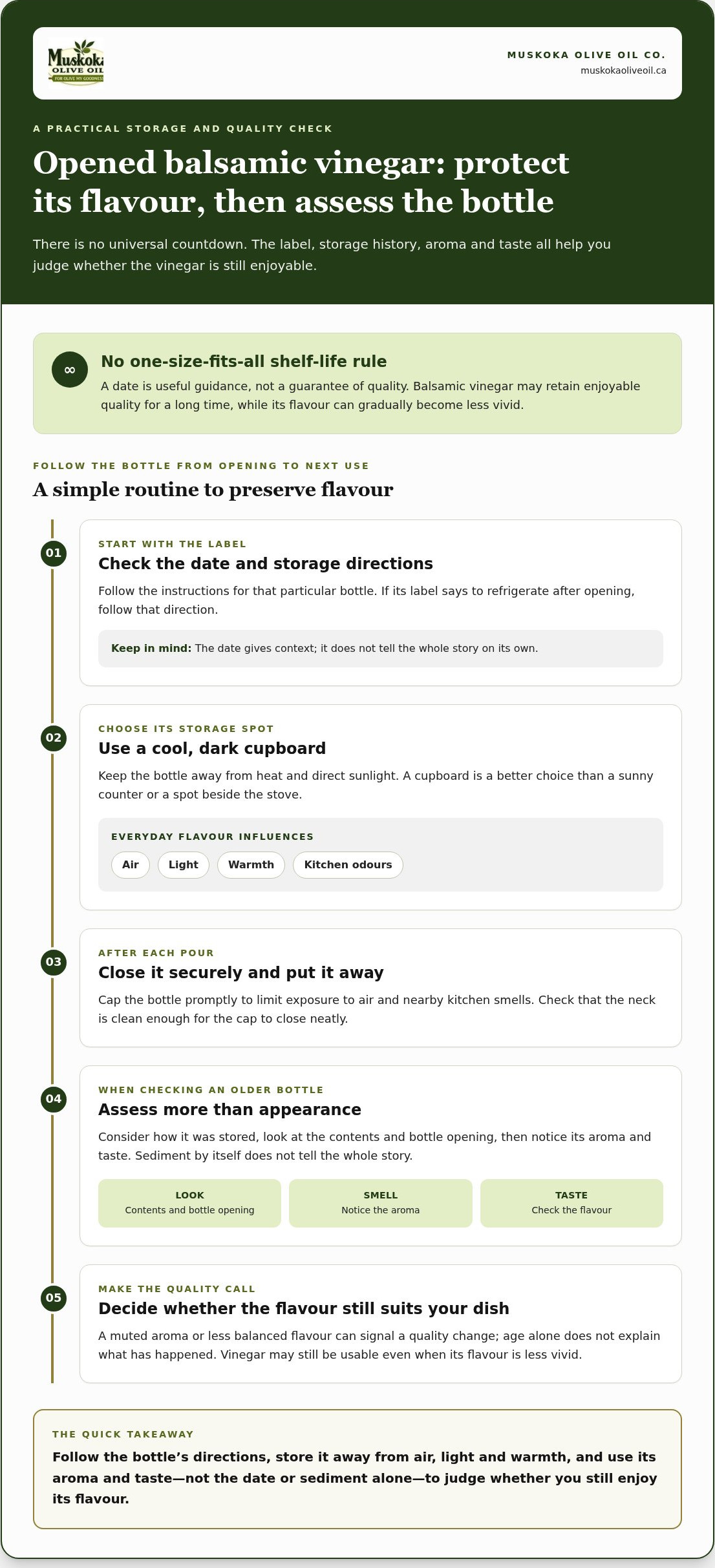
How to store opened balsamic vinegar to preserve its flavour
Give the bottle a consistent place in your kitchen and check it after each use. Paying attention to the closure and bottle opening helps keep the next pour neat and the bottle easy to handle. The aim is a simple routine you’ll remember, not a complicated storage process.
A simple after-use routine
After pouring what you need, take a moment to finish these steps:
- Check the closure. Fit the cap properly and make sure it isn’t cross-threaded or sitting crooked.
- Clean up drips. Wipe balsamic from the neck or outside of the bottle so it doesn’t become sticky around the cap.
- Put it back promptly. Return the bottle to its storage spot rather than leaving it on the counter until the meal is finished.
This routine is especially useful when you’re preparing several dishes at once. A clean bottle is easier to pick up and pour from, and a properly fitted cap helps keep the contents enclosed between uses. If the cap is damaged or no longer fits, don’t assume it is sealing securely.
Should opened balsamic vinegar be refrigerated?
Follow the storage directions on your bottle. Some products may give different instructions, so don’t assume every balsamic vinegar should be stored in the same way. If the label says to refrigerate it or gives other specific storage advice, follow those directions.
If the label doesn’t ask you to refrigerate it, choose a storage spot that suits the product directions and your kitchen. You don’t need to move a bottle into the fridge simply because it has been opened, and refrigeration isn’t a universal mistake either. The label is the useful deciding point.
Wondering how long does balsamic vinegar last once opened? A good storage routine supports its quality, but it can’t promise a set period for every bottle. Keep the label with the product so its directions are easy to find, and make the after-use steps part of your cooking routine.
If you’re choosing a balsamic for everyday cooking, explore white balsamic vinegars and consider how their flavour and colour might suit your dishes.
Enjoy opened balsamic vinegar while its flavour is at its best
An opened bottle is easiest to enjoy when it becomes part of everyday cooking. A small splash can add sweet-tangy contrast to a simple meal, while a drizzle at the end lets you notice its aroma and flavour. You don’t need to follow a strict schedule. Use the vinegar when it tastes appealing and suits the dish you’re making.
Easy ways to use a bottle already in your pantry
Whisk balsamic with olive oil for a quick salad dressing, or stir a little into a vegetable marinade. Toss roasted vegetables with a splash after cooking, or finish a bowl of soup or a savoury grain dish with a few drops. Start with a modest amount, taste, then add more if the flavour brings the balance you want.
For fruit-forward cooking, a pomegranate and quince balsamic can offer a different direction for salads or a simple dressing. Try the Pomegranate Quince White Balsamic with olive oil over leafy greens, or use a small drizzle to complement sliced fruit. Let the aroma and taste guide how much you add.
Choose a balsamic for the way you cook
Dark and white balsamic vinegars can suit different dishes and presentation styles. A dark vinegar can bring deeper colour to a dressing or finishing drizzle, while white balsamic is useful when you want a balsamic touch without darkening lighter-coloured ingredients. The best match depends on the dish and the flavour you want to bring forward.
Explore white balsamic vinegars for salads, fruit and other bright dishes. Keep the bottle’s label in mind, and choose based on its flavour and how you plan to use it rather than assuming every balsamic will behave the same way.
If an older bottle has no warning signs, its flavour can help you decide whether it still suits your meal. If its aroma is familiar and the taste works in a dressing, marinade or finishing touch, you can enjoy it in the dish. If the flavour seems less vivid than you remember, you may prefer it in a cooked preparation where it plays a supporting role. Don’t use it if you notice clear warning signs such as mould or an unmistakably unpleasant odour.
So, how long does balsamic vinegar last once opened? There’s no universal deadline that guarantees a bottle will keep its best flavour. Pay attention to the label, how it has been stored and what you notice when you use it. If you’re ready to explore a different style for your kitchen, browse the balsamic selection and choose one that suits the dishes you love to make.
Make room for a new flavour in your kitchen
Let your next balsamic choice begin with a dish you’re looking forward to making. White balsamic can complement a bright salad or fruit, while dark balsamic can bring a different finishing touch to roasted vegetables or a savoury meal. Thinking about the ingredients on your table can help you choose a bottle and inspire a new pairing.
Knowing how long does balsamic vinegar last once opened is useful, but discovering new flavours can be just as rewarding. Consider which style would bring something fresh to your cooking, whether you’re preparing a quick weekday meal or setting a table for company.
Muskoka Olive Oil Co. serves customers across Canada with white and dark balsamic vinegars to explore. Explore balsamic vinegars for your kitchen and choose a flavour that inspires your next dish. A thoughtful pairing can make the familiar feel new.
Frequently Asked Questions
Does balsamic vinegar expire after it is opened?
There isn’t one opening date that automatically makes every bottle unusable. To keep your pantry organized, note when you first opened the bottle, separately from the date printed on its label. That note gives you context about the bottle’s history, not a guaranteed deadline. The product’s directions and condition are more useful than applying the same month or year limit to every balsamic vinegar.
Is balsamic vinegar safe to use after its best-before date?
A best-before date isn’t, by itself, a complete assessment of an opened bottle. Treat it as information about the product, and don’t ignore changes you can observe. If you’re unsure about a bottle past its date, don’t serve it to guests. Choose a replacement rather than asking others to take that risk.
Should you refrigerate balsamic vinegar after opening?
Check the bottle’s directions, as products may give different storage instructions. Chilling can also make the vinegar seem thicker, which may affect how easily it pours. If you’ve refrigerated a bottle, let its label guide what you do next rather than assuming every balsamic should be stored the same way.
Can you freeze balsamic vinegar to make it last longer?
Freezing isn’t a standard preservation step for ordinary opened balsamic vinegar, and it can make texture and pouring less predictable after thawing. It also adds a thawing step without replacing the bottle’s storage directions. Unless the manufacturer specifically recommends freezing, follow the storage conditions stated on the label.
What should I do if balsamic vinegar has dried around the cap?
Clean dried drips from the cap and bottle exterior with a damp cloth, then dry the area before closing it. Avoid pushing residue into the bottle while cleaning around the opening. If the cap is sticky because it no longer closes properly, don’t rely on it to seal the bottle. Check the contents separately and discard the vinegar if you find a concerning sign.
Can balsamic vinegar lose flavour without going bad?
Yes. A less vivid aroma or taste can make balsamic less satisfying in a dish without, by itself, proving spoilage. If the bottle has no other concerning signs, decide whether its current flavour suits your recipe. A subtle vinegar may disappear in a strongly flavoured dish, so consider whether you want its balsamic character to stand out before adding it.
Leave a comment