


How to Read Olive Oil Labels: Finding Quality in Canada
What if the "Extra Virgin" bottle in your pantry is actually a blend of low-quality oils masquerading as a premium product? It's frustrating to pay a premium price for a label that feels more like a marketing puzzle than a guarantee of quality. You've likely felt that sting of doubt when choosing between "pure," "light," or "first cold pressed" options at the supermarket. At Muskoka Olive Oil Co., we believe transparency is the ultimate ingredient for health and culinary excellence. This guide will teach you how to read olive oil labels with the precision of a connoisseur, ensuring you never settle for rancid or refined blends again.
We'll explore why the harvest date is far more critical than a best-by date and how to identify the polyphenol-rich oils that provide the greatest health benefits. Whether you're browsing our curated selection at muskokaoliveoil.ca, you'll gain the confidence to choose the freshest oils available in Canada. By understanding these technical details, you can elevate your daily rituals and bring world-class quality into your kitchen with every pour.
Key Takeaways
- Master how to read olive oil labels to distinguish between generic supermarket grades and true Ultra-Premium extra virgin oils.
- Learn why the harvest date is a far more reliable indicator of quality and freshness than the standard "best-by" date.
- Uncover the truth behind the "Packed in Italy" label and why single-estate sourcing is essential for superior flavour.
- Discover how proper bottle selection protects the delicate polyphenols that make olive oil a powerhouse for your health.
- Visit Muskoka Olive Oil in Bracebridge or Huntsville to experience these standards firsthand, or browse our selection at muskokaoliveoil.ca.
Beyond 'Extra Virgin': Why the Term Isn't Enough Anymore
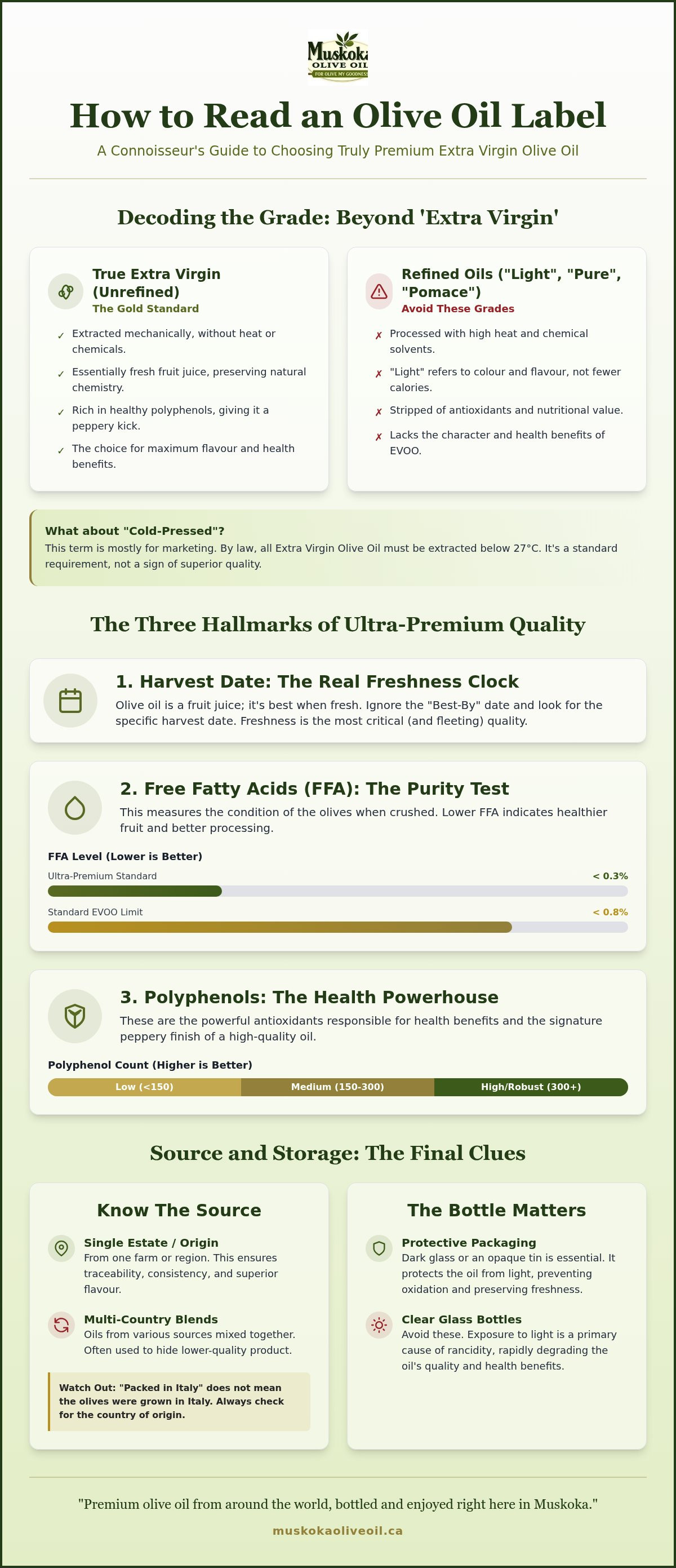
Extra Virgin Olive Oil (EVOO) is technically the highest grade of unrefined oil available. It's extracted solely by mechanical means without the use of heat or harsh chemicals, preserving the fruit's natural chemistry and health properties. However, when you're learning how to read olive oil labels, it's vital to realize that "Extra Virgin" has become a broad umbrella. Many mass-market oils sold across Canada barely meet the minimum chemical standards required for this classification. These products often sit on grocery store shelves for months under bright lights, losing their "extra virgin" status through oxidation before they ever reach your kitchen. At Muskoka Olive Oil, we believe the label should be a guarantee of excellence, not just a legal minimum.
You'll also encounter terms like "Pure," "Light," or "Pomace" oil. These are frequently misunderstood by consumers. "Light" refers only to the neutral colour and lack of flavour, not a lower calorie count. These oils are refined using high heat and chemicals, which strips away the heart-healthy antioxidants you're looking for. Pomace oil is even lower quality, extracted from the leftover pits and skins using chemical solvents. For those seeking true wellness and culinary depth, these grades should be avoided. We focus on transparency at our shops, because a bottle should tell a story of craftsmanship rather than hiding behind vague terminology.
The Problem with Cold-Pressed Claims
Seeing "cold-pressed" on a bottle feels like a badge of honour, but it's actually a legal requirement for all EVOO. By international standards, the temperature during extraction must stay below 27 degrees Celsius. Using this term is often a marketing distraction designed to make mediocre oil seem artisanal. While traditional stone presses are rare today, modern centrifugal extraction is the superior method used for Muskoka Olive Oil products. This process is faster and cleaner, significantly reducing the oil's exposure to oxygen. When you visit our shops in Bracebridge or Huntsville, we can show you how these modern techniques preserve the vibrant integrity of the fruit.
Refined vs. Unrefined: The Flavour and Health Gap
Refining is a process that uses high heat and chemicals to "fix" oil made from poor-quality or fermenting olives. This industrial process removes the polyphenols, which are the powerful antioxidants responsible for the signature peppery kick found in Muskoka Olive Oil. Without these, you're left with a processed fat that lacks character and nutritional value. True, unrefined extra virgin olive oil is essentially a fresh fruit juice, not a processed fat. You can taste this difference immediately at our tasting bars or by ordering through muskokaoliveoil.ca. Mastering how to read olive oil labels means looking past the marketing and demanding the unrefined purity your family deserves.
The Golden Three Metrics: Harvest Date, FFA, and Polyphenols
Understanding how to read olive oil labels requires moving past the glossy marketing on the front of the bottle and looking for the technical data on the back. While most grocery store brands provide a "Best-By" date, this is often an arbitrary guess based on the bottling time, not the pressing time. To find the freshest oil, you must look for the specific Harvest Date. Olive oil is a seasonal product, and freshness is its most fleeting quality. Because we source from both the Northern and Southern Hemispheres, Muskoka Olive Oil provides the freshest possible products twice a year. This ensures our community in Bracebridge and Huntsville always has access to oil at its peak potency, regardless of the calendar month.
Truly transparent producers go a step further by disclosing chemical laboratory results directly on the label or through an easily accessible report. We adhere to the Ultra-Premium (UP) standard, a benchmark that far exceeds the baseline requirements for Extra Virgin status. If a brand refuses to share its chemical metrics, they are likely hiding a lack of quality. You deserve to know exactly what you're putting in your body, which is why we prioritize these data points at muskokaoliveoil.ca and in our local storefronts. Seeing these numbers allows you to verify the excellence we claim.
For large-scale retailers, managing these detailed product specifications requires sophisticated systems; many brands explore PIM (Product Information Management) solutions to maintain data accuracy and transparency across their entire inventory.
Free Fatty Acids (FFA): The Freshness Indicator
FFA measures the condition of the olives at the moment they were crushed. High FFA levels indicate that the fruit was damaged, overripe, or sat too long before processing. While the generic standard for Extra Virgin allows for an FFA of up to 0.8%, our Ultra-Premium oils must test below 0.3%. This lower percentage guarantees a higher smoke point and better shelf stability in your Canadian pantry. It is the difference between a refined, stable oil and one that is already beginning to degrade due to poor handling.
Polyphenols: The Health-Boosting Antioxidants
The presence of polyphenols is the primary reason many Canadians choose high-quality oil for its health benefits. These natural antioxidants are measured in mg/kg, and a higher number generally indicates a more robust, peppery flavour profile. You can learn more about identifying polyphenol rich olive oil Canada to ensure you're getting the maximum anti-inflammatory benefits. At Muskoka Olive Oil, we provide these counts so you can tailor your selection to your specific wellness goals and taste preferences.
Peroxide Value: Measuring Oxidation
Peroxide value tells you how much the oil has been exposed to oxygen during production and storage. A low peroxide level ensures the oil stays fresh longer once you open it at home. High peroxide levels mean the oil is already dying, having lost its protective qualities and vibrant taste to oxidation. When you visit our shops, we can guide you through these numbers to help you find the perfect bottle for your kitchen. Exploring our collection in person is the best way to understand how these metrics translate into superior flavour.
Tracing the Origin: Single Estate vs. Multi-Country Blends
Learning how to read olive oil labels is often an exercise in detective work. You'll frequently see bottles emblazoned with Italian flags and the words "Packed in Italy," yet a closer look at the small print reveals a blend of oils from across the Mediterranean or even multiple continents. This "Packed in" trap is a common way for mass producers to sell low-quality, multi-country blends under the guise of premium heritage. At Muskoka Olive Oil, we reject this lack of transparency. We source our extra virgin oils from specific, vetted estates globally, ensuring every bottle has a clear lineage back to a single farm or mill. This commitment to single-estate sourcing is why our products maintain a level of excellence that generic blends simply can't match.
A single-estate oil is produced from olives grown, harvested, and pressed in one location. This level of control allows the producer to monitor every step of the process, from the health of the trees to the temperature of the crush. When you visit our shops in Bracebridge and Huntsville, you can taste the difference that this focused craftsmanship makes. You can also explore our full range of single-origin and infused selections at muskokaoliveoil.ca. Knowing exactly where your oil was grown and pressed is the only way to guarantee its purity and freshness.
Understanding Cultivars and Varietals
Just as a wine connoisseur chooses between a Pinot Noir and a Cabernet, an olive oil enthusiast looks for specific cultivars. A high-quality label should clearly state the variety of olive used, such as the robust Picual from Spain, the peppery Koroneiki from Greece, or the buttery Arbequina. Each varietal offers a unique flavour profile that can transform a dish from ordinary to extraordinary. For those interested in how these natural profiles can be further enhanced, our guide to infused olive oil Canada provides excellent pairing ideas for your next meal. Identifying the cultivar is a key step in mastering how to read olive oil labels effectively.
The Importance of Single-Origin Traceability
Broad designations like "Product of the EU" are significant red flags for any discerning shopper. These labels typically indicate that oils of various ages and qualities were trucked to a central facility, mixed, and processed with high heat to create a uniform, bland product. This industrial blending destroys the "terroir," or the unique regional character that defines a world-class oil. Single-origin traceability ensures that the oil you're buying preserves the specific soil and climate characteristics of its home. When you shop at Muskoka Olive Oil, you aren't just buying a cooking fat; you're experiencing the authentic taste of a specific harvest from a trusted partner estate.
The Hidden Label: What the Bottle Colour and Material Reveal
The physical bottle is a silent indicator of a producer's commitment to quality. While text provides technical data, the packaging itself tells you how much the brand values the oil's integrity. Light and heat are the primary enemies of high-quality extra virgin olive oil. When UV rays penetrate a container, they trigger a chemical process called photo-oxidation. This reaction rapidly destroys the delicate polyphenols and vibrant flavour compounds we discussed in earlier sections. Understanding how to read olive oil labels also involves inspecting the physical vessel that holds the oil, as clear glass is often a death sentence for freshness.
To ensure these critical details—like harvest dates and chemical metrics—remain clear and professional throughout the product's life, many premium producers rely on high-performance labelling systems from OptiMediaLabs Canada.
You should also avoid buying premium oil in plastic bottles for long-term storage. Plastic is often porous, allowing oxygen to slowly seep into the container and turn the oil rancid. Some plastics can even leach unwanted chemicals into the product over time. At Muskoka Olive Oil, we ensure all our products are housed in materials that provide a total barrier against UV degradation. We treat our oils like the fresh fruit juices they are, protecting their "Ultra-Premium" chemical profile from the moment they are bottled until they reach your table. View our range of UV-protected extra virgin oils at muskokaoliveoil.ca.
Dark Glass vs. Clear Glass
Dark green or amber glass is the global industry standard for premium oils because it filters out the harmful light spectrum. If you see a clear bottle on a brightly lit grocery store shelf, it's a significant red flag. Unless that clear bottle is stored inside a dark, light-proof box, the oil has likely already begun to degrade. A transparent bottle might look attractive on a shelf, but it sacrifices health benefits for aesthetic appeal. As you refine your skills in how to read olive oil labels, remember that the best producers never compromise on packaging colour.
Proper Storage After the Purchase
Your kitchen habits serve as the final "label" for your oil's quality. Even the finest Muskoka Olive Oil product will suffer if it's stored incorrectly at home. Follow these simple rules to maintain excellence:
- Keep your bottles in a cool, dark cupboard away from the stove and oven.
- Avoid storing oil on the counter where it's exposed to direct sunlight.
- Maintain an ideal temperature range between 15 and 20 degrees Celsius.
- Purchase smaller bottles more frequently rather than buying in bulk to ensure you're always using the freshest stock.
Oxygen is the enemy of longevity, so always ensure the cap is tightened immediately after use. If you have questions about the best storage solutions for your kitchen, our staff at the Bracebridge and Huntsville shops are happy to share their expertise. Visiting us in person allows you to see how we maintain these standards in a professional retail environment.
Put Your Knowledge to the Test at Muskoka Olive Oil
Now that you've mastered the nuances of how to read olive oil labels, it's time to apply that knowledge where it matters most: your palate. Supermarket aisles often leave you guessing, but Muskoka Olive Oil offers a transparent alternative that prioritizes your health and culinary results. We invite you to step away from the mystery of mass-market labels and experience the clarity of Ultra-Premium standards. A label is only as good as the oil inside, and we take pride in proving our quality through every pour. By choosing an oil with a verified chemical pedigree, you're ensuring that your kitchen is stocked with the freshest, most nutrient-dense ingredients available in Canada.
Understanding the technical data is the first step, but tasting the difference is what truly transforms your cooking. At Muskoka Olive Oil, we don't expect you to take our word for it. We believe that transparency should be experienced firsthand, which is why we've designed our business around the "try before you buy" philosophy. Whether you're looking for a robust extra virgin oil for a hearty salad or a delicate infused oil for finishing a dish, our selection is curated to meet the highest possible standards of excellence and purity.
Visit Our Shops in Bracebridge and Huntsville
Our storefronts in Bracebridge and Huntsville aren't just retail spaces; they're educational hubs designed for discovery. We invite you to linger and learn in a welcoming environment that celebrates regional identity and world-class quality. When you walk through our doors, our expert staff will guide you through our tasting bar, helping you connect the sensory experience with the technical data you've learned to identify. We can show you exactly how to read olive oil labels on our specific bottles, explaining the significance of the harvest date and polyphenol count for each variety in stock. This interactive experience ensures you find the perfect flavour profile to elevate your daily rituals.
Shop the Freshest Harvests Online
If you can't visit us in person, our digital boutique at muskokaoliveoil.ca brings the same level of transparency to your screen. We provide detailed information on every product, including harvest dates and chemical metrics, so you can shop with quiet confidence from anywhere in Canada. Our website is a resource for those who refuse to settle for the low-quality blends found in traditional grocery stores. Having Ultra-Premium quality shipped directly to your door ensures you never have to compromise on freshness. Join our community of connoisseurs today and discover how superior ingredients can transform your health and your home.
Elevate Your Culinary Standards with Confidence
Choosing the right oil shouldn't feel like a leap of faith. By mastering how to read olive oil labels, you've gained the power to distinguish between industrial blends and true liquid gold. Remember that a fresh harvest date is your best guarantee of vitality, while lab-tested chemical data proves the oil's health-boosting potential. At Muskoka Olive Oil, we simplify this process by offering only Ultra-Premium Certified products that are lab-tested for high polyphenols. Every bottle we sell proudly displays its fresh harvest date, ensuring you never have to settle for less than the very best.
We invite you to visit our shops in Bracebridge and Huntsville or browse our fresh collection at muskokaoliveoil.ca. Our expert guides are always ready to help you explore our selection and find the perfect profile for your kitchen. It's time to stop guessing and start enjoying the purity your family deserves. We can't wait to help you discover your next favourite bottle and welcome you into our community of connoisseurs.
Frequently Asked Questions
Does the colour of the olive oil indicate its quality?
Colour is not a reliable indicator of quality or flavour. It merely reflects the type of olives used and their ripeness during the harvest. Professional tasters at Muskoka Olive Oil actually use blue-tinted glasses to hide the oil's colour, ensuring they aren't biased by a vibrant green or golden hue. Whether an oil is emerald or straw-coloured, its excellence is determined by chemistry and freshness rather than visual appearance.
What is the difference between 'Harvest Date' and 'Best-By Date'?
The harvest date tells you exactly when the olives were pressed, while the best-by date is often a vague estimate based on the bottling time. Freshness is the most vital factor in how to read olive oil labels effectively. At Muskoka Olive Oil, we prioritize harvest dates to ensure you receive the highest antioxidant levels. Always look for a date within the last 12 to 18 months to guarantee peak flavour and health benefits.
Why does some olive oil make me cough or feel a peppery burn?
That peppery sensation is a clear sign of high polyphenol content, which is exactly what you want in a premium oil. These antioxidants provide the anti-inflammatory benefits that make extra virgin olive oil so healthy. If you experience a slight burn or a cough, it means the oil is fresh and potent. You can experience this signature kick yourself by visiting our tasting bars in Bracebridge or Huntsville to sample our current harvests.
Is "First Cold Pressed" really important on a label?
The term "First Cold Pressed" is largely a marketing relic in the modern industry. By international law, all extra virgin olive oil must be extracted without high heat. While it sounds artisanal, it doesn't guarantee the oil's actual quality or freshness. Instead of relying on this phrase, we encourage you to look for the Ultra-Premium standards we maintain at Muskoka Olive Oil, which focus on rigorous chemical analysis and small-batch production.
What should I look for on the label if I want the healthiest oil?
Look for specific chemical metrics like polyphenol counts and Free Fatty Acid (FFA) levels. The healthiest oils will have high polyphenols and low FFA, typically below 0.3%. Transparency is key when learning how to read olive oil labels for wellness. We provide these detailed lab results for all our products at muskokaoliveoil.ca, allowing you to make an informed choice based on the actual nutritional profile and antioxidant strength of the oil.
Can I trust olive oil that is "Produced in Italy"?
You cannot always trust a label that simply says "Produced in Italy" or "Packed in Italy." These are often loopholes for blending oils from various countries before bottling them in an Italian facility. To ensure true quality, look for single-estate origin or a specific mill location. Muskoka Olive Oil avoids these mystery blends by sourcing directly from vetted estates, providing you with a clear and honest trail from the grove to your Canadian table.
How long does a bottle of high-quality olive oil stay fresh after opening?
A bottle of high-quality oil typically stays fresh for about four to six months after opening. Once exposed to oxygen, the delicate flavours and antioxidants begin to degrade. To maintain the integrity of your Muskoka Olive Oil purchase, keep the cap tight and store the bottle in a cool, dark place. If you don't use oil daily, consider buying smaller bottles from our shops in Bracebridge or Huntsville to ensure every drop stays vibrant.
Leave a comment