


Raspberry Balsamic Vinaigrette Recipe: A Fresh, Tangy Dressing
The secret to a vibrant raspberry balsamic vinaigrette recipe isn’t adding more sweetness. It’s balancing ripe berry flavour with balsamic’s lively acidity and smooth, flavourful olive oil. Get that balance right, and the dressing tastes fresh rather than sharp, syrupy or heavy.
Wondering whether to use fresh or frozen raspberries, or how to keep homemade dressing from separating or turning too thick? This recipe walks you through the method, from blending the berries to emulsifying the oil, with practical ways to adjust the flavour and consistency. You’ll also find ideas for serving it with crisp salads, grilled vegetables and summer meals.
Each ingredient has a role: raspberries bring fruit and body, balsamic adds acidity, and olive oil rounds out the flavour. A fruit-forward white balsamic can complement the berries without overwhelming them. Taste as you go, since the sweetness and acidity of berries and vinegar can vary.
Key Takeaways
- Make this raspberry balsamic vinaigrette with fresh or thawed raspberries, balsamic vinegar, Dijon mustard, maple syrup and extra virgin olive oil.
- Choose an olive oil that complements the berries, and consider a fruit-forward white balsamic for a bright finish.
- Adjust tartness, sweetness, fruit flavour or thickness a little at a time, tasting as you go.
- Pair the dressing with greens, fruit, nuts, cheese or grains for a satisfying mix of flavours and textures.
- Refrigerate the vinaigrette in a covered container and assess its aroma, appearance and texture before serving leftovers.
Raspberry Balsamic Vinaigrette Recipe: What Goes Into a Balanced Dressing?
Fruit, balsamic vinegar and olive oil come together in this sweet-tangy dressing. Fresh raspberries provide the fruit flavour, colour and texture, giving you more control over the finished result than relying on flavoured vinegar alone. The balsamic and oil help balance the berries.
A classic vinaigrette combines oil and an acidic ingredient, often with other flavourings. Here, raspberry pulp adds body, while the berries’ natural tartness meets the balsamic’s acidity. Since berry size, ripeness and vinegar flavour vary, taste the dressing as you combine the ingredients and adjust it to suit your palate.
What each raspberry vinaigrette ingredient contributes
Each ingredient has a distinct role. Think of them as parts of a balance, not flavours competing for attention:
- Raspberries supply fresh fruit flavour, rosy colour and thickness from the crushed or blended fruit. Riper berries generally taste sweeter; less-ripe ones can make the finished dressing sharper.
- Balsamic vinegar brings acidity and its own flavour, which may be bright and fruity or deeper and more pronounced. Its character helps determine whether the dressing tastes delicate or bold.
- Olive oil softens the vinegar’s sharp edge and carries the berry and balsamic flavours across the palate. A mild oil lets the raspberries lead, while a more assertive extra virgin olive oil adds a greener, pepperier note.
The proportions determine whether the dressing tastes pleasantly tangy or too sharp, and whether it lightly coats salad ingredients or feels dense. Add the oil gradually and taste the mixture as you go. Small adjustments let you account for the berries and choose the balance you enjoy.
Choosing balsamic vinegar and olive oil for the recipe
A fruit-forward white balsamic can complement raspberry with bright, gentle acidity while keeping the dressing’s colour lighter. The Muskoka Pomegranate Quince White Balsamic offers a fruity flavour that can support the berries without turning the dressing into a one-note sweet sauce. Add it gradually, then taste before deciding whether you want more acidity.
A dark balsamic usually brings deeper colour and a more pronounced, rounded flavour, which can make the berries taste richer and the dressing more robust. Neither style is automatically better; choose based on the salad and the balance you want. Extra virgin olive oils also range from mild and delicate to more robust. A gentler oil keeps raspberry in front, while a bolder one adds a savoury, peppery note. Choose an oil whose flavour you enjoy on its own, since you’ll taste it in the finished vinaigrette.
How to Make Raspberry Balsamic Vinaigrette Step by Step
This fresh-raspberry method lets you choose a smooth or more rustic texture. Start with the ingredients below, adding the olive oil gradually and tasting as you combine everything. For a general overview of vinaigrette ratios and preparation, see the USDA Team Nutrition Vinaigrette Guide.
Ingredients
- Fresh raspberries, gently rinsed and patted dry
- Balsamic vinegar
- Dijon mustard
- Maple syrup
- Extra virgin olive oil
- Fine salt
- Freshly ground black pepper
Frozen raspberries work too. Thaw them first and drain away excess liquid so it doesn’t water down the dressing. Taste the fruit and balsamic as you combine them, since their sweetness and acidity can vary from batch to batch.
Prepare the raspberries and combine the ingredients
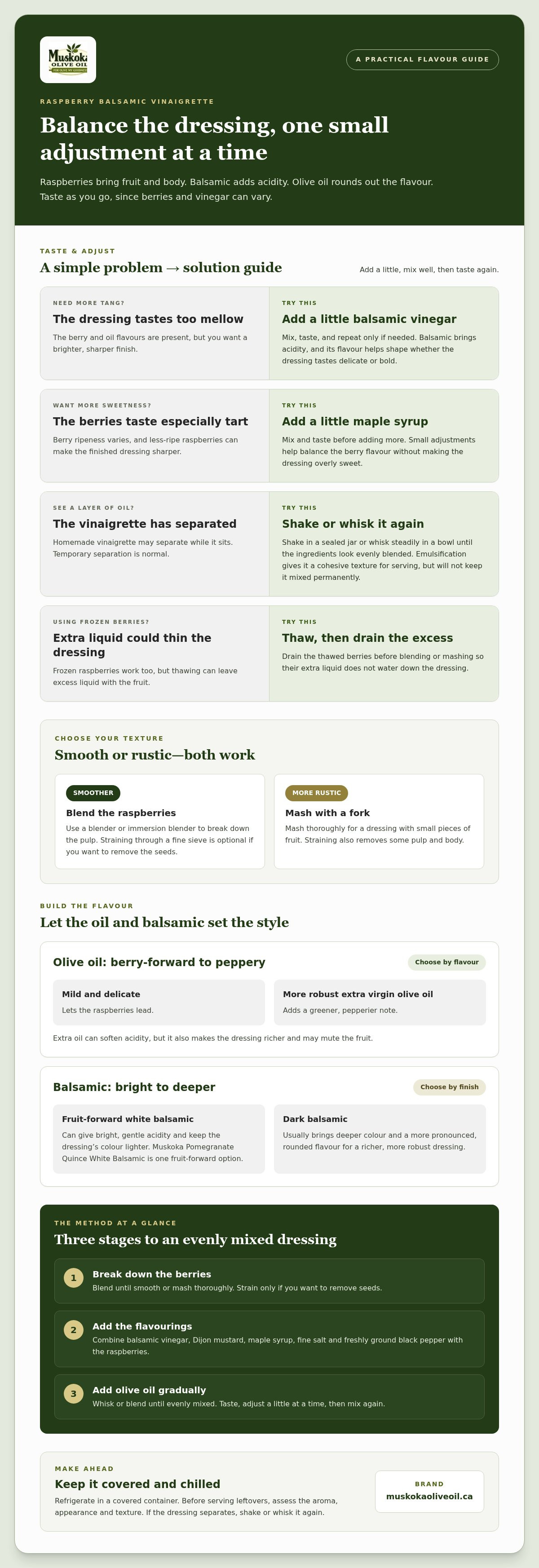
Choose a blending method based on the texture you prefer. A blender or immersion blender breaks down the pulp for a smoother dressing; mashing with a fork leaves small pieces for a more rustic finish. Straining is optional. Press blended fruit through a fine sieve if you want to remove the seeds, keeping in mind that straining also removes some pulp and body.
- Place the raspberries in a bowl or blender jar. Blend until smooth, or mash thoroughly with a fork.
- Add the balsamic vinegar, Dijon mustard, maple syrup, salt and a few grinds of pepper. Whisk or pulse briefly to combine.
- Gradually add the olive oil while whisking or blending, until the dressing looks evenly mixed.
Emulsify, taste and finish the dressing
Emulsification disperses tiny droplets of oil through the vinegar and fruit so the ingredients look evenly combined. It won’t keep the dressing mixed permanently, but it gives the vinaigrette a cohesive texture for serving. Shake the ingredients in a sealed jar or whisk them together in a bowl.
- Shake the sealed jar or whisk steadily until the dressing looks evenly blended.
- Taste a small spoonful. For more tang, add a little balsamic vinegar; for more sweetness, add a little maple syrup. Mix and taste again before adding more.
- If a layer of oil forms while the dressing sits, shake or whisk it again before serving. Temporary separation is normal in homemade vinaigrette.
Choose an oil whose character suits the berries, from mild and delicate to more robust. Compare possible flavour profiles in the extra virgin olive oil collection.
How to Fix Raspberry Balsamic Vinaigrette That Is Too Tart, Sweet or Thick
The balance can shift with berry ripeness or balsamic flavour. Taste a little before changing anything, then adjust in small amounts and taste again. This is more reliable than adding several ingredients at once and trying to correct the flavour afterwards.
Use the raspberry balsamic vinaigrette recipe as your starting point, and remember that each addition changes more than one quality. Extra oil can soften acidity, but it also makes the dressing richer and may mute the fruit. More raspberry strengthens the fruit character, but adds pulp and can bring extra sweetness or tartness. Adjust gradually to keep the flavour in balance.
Adjust the sweet-tart balance without masking the raspberries
Make one small change at a time, mix thoroughly, then taste a little on a leaf of the greens you plan to serve. The salad itself can affect how sharp or sweet the dressing seems.
- Too tart or sharp: Stir in ½ teaspoon of maple syrup, then taste. Repeat in small increments only if needed. A little extra oil can also soften the vinegar’s edge, but it will make the dressing richer.
- Too sweet: Add balsamic vinegar 1 teaspoon at a time, mixing and tasting between additions. This restores tang, though too much can make the dressing overly sharp.
- Fruit flavour is faint: Mix in a small spoonful of prepared, mashed raspberry. Start with about 1 tablespoon, then taste. The added fruit may make the dressing thicker and shift its sweetness or acidity, so reassess the whole balance.
These amounts are cautious starting points, not fixed corrections. Berries differ in ripeness, and balsamic vinegars vary in sweetness and acidity. If the dressing is only slightly off, a small adjustment is usually enough. Give it a moment to combine before deciding it needs more.
Correct a dressing that is too thick or separates
Fruit pulp can make a vinaigrette feel heavier than expected, especially if the berries were mashed rather than blended. To loosen it without changing the flavour dramatically, add water a teaspoon at a time, whisking between additions. If the dressing also tastes too sharp, a small amount of oil may round it out, but expect a richer finish rather than a neutral thinning.
If the mixture separates, whisk briskly or shake it in a tightly sealed jar until it looks evenly combined again. This brings the oil and other ingredients together temporarily. Homemade vinaigrette may separate as it stands, so give it another shake before serving. Adjust the thickness first, then taste and make any final flavour changes in small increments.
What to Serve with Raspberry Balsamic Vinaigrette
Raspberry balsamic vinaigrette brings fruit, acidity and a touch of sweetness, so it works best with ingredients that add contrast rather than compete with it. Use it as a finishing dressing: toss lightly, taste, then add more only if the ingredients need it. A heavy pour can overwhelm delicate greens and ripe fruit.
Build a salad around sweet-tart raspberry dressing
Start with tender greens, then add a modest amount of fruit, crunch and savoury richness. Strong pairings balance sweet berries with savoury cheese, creamy textures with tang, and soft leaves with crisp nuts or seeds.
- Greens: Baby spinach, butter lettuce and spring mix have a mild flavour that lets the dressing shine.
- Fresh fruit: Sliced pear, apple or strawberries echo the berry notes. Choose one so the salad stays fresh rather than overly sweet.
- Nuts and seeds: Toasted pecans, walnuts or pumpkin seeds add a crisp, nutty contrast to soft fruit and greens.
- Cheese: Crumbled goat cheese or shaved aged cheese lends a creamy or savoury counterpoint to the dressing’s tang.
For a simple combination, toss spinach and thinly sliced pear with a little vinaigrette, then finish with toasted walnuts and goat cheese. The fruit picks up the raspberry notes, the cheese tempers the acidity, and the nuts add texture. Add the dressing just before serving to keep the greens lively.
Use the vinaigrette beyond a leafy salad
Try a spoonful in a grain salad with cooked farro, quinoa or barley, especially alongside roasted vegetables such as beets or squash. Their savoury, earthy character balances the dressing’s fruitiness. Start with a little, mix well and taste before dressing the entire bowl; grains and vegetables absorb flavour differently from leafy greens.
The vinaigrette can also be served as a dip for crusty bread, though its raspberry-forward sweetness makes it a more distinctive choice than a simple oil-and-vinegar dip. Offer a small dish alongside other savoury bites so guests can decide how much they enjoy the fruity tang.
The strongest pairings bring together mild greens, complementary fruit, crunchy nuts and savoury or creamy cheese. Each element either echoes the berries, softens their acidity or adds textural contrast. Use that flavour logic to adapt the salad to what’s in season, and taste the dressing with a small portion before coating the full dish.
For another way to complement berries, explore fruit-friendly white balsamic and consider how its flavour might suit your salad ingredients.
Make Ahead, Store and Serve Raspberry Balsamic Vinaigrette
You can prepare this raspberry balsamic vinaigrette before assembling a meal. Since it contains fresh fruit, transfer it to a clean, covered container and refrigerate it promptly rather than leaving it at room temperature. Make it close to when you plan to serve it to enjoy its fresh berry flavour.
Prepare the vinaigrette ahead and refresh it before serving
Before serving refrigerated dressing, check its aroma, appearance and texture. Discard it if you notice mould, an unusual smell or an unexpected change in appearance. A little separation is normal: oil and the fruit-and-vinegar mixture can settle into layers while chilled. Shake the closed container or whisk the dressing until it looks evenly combined, then taste it before pouring.
If the dressing has thickened in the refrigerator, stir it well first. Letting it stand briefly at room temperature can make it easier to pour, but don’t leave it out for an extended period. Dress the salad just before serving so delicate greens stay crisp and the fruit flavour remains fresh.
Choose ingredients that suit the finished flavour
The balsamic you choose shapes the character of the dressing. A fruit-forward white balsamic can complement raspberry without adding the deeper colour and more pronounced flavour associated with a dark balsamic. One option is Pomegranate Quince White Balsamic, whose fruity profile offers another layer alongside the berries. Taste the dressing with the ingredients you plan to serve, since the best balance depends on the whole dish.
For a simple serving check, spoon a little dressing over one leaf or a small bite of salad and taste before dressing the full bowl. That small test helps you decide whether the chilled vinaigrette needs another shake and whether its flavour suits the meal. Keep any remaining dressing covered and refrigerated, and assess it again before using it later.
For your next batch, explore culinary olive oils and balsamic vinegars to find flavour pairings that suit the way you like to cook.
Make the Dressing Your Own
A good dressing can become a small signature in your kitchen. Let the meal guide your choices: a delicate oil and fruit-forward vinegar keep the berries in focus, while more robust flavours bring extra character to a savoury plate. Taste a little with the food before serving, then adjust the pairing to suit the occasion.
There’s plenty to explore beyond this dressing. Muskoka Olive Oil Co. offers extra virgin and infused olive oils for cooking, along with white and dark balsamic vinegars. Comparing their flavour profiles can inspire new combinations for salads, vegetables and everyday meals.
Ready to find a pairing for your next dish? Explore culinary olive oils and balsamic vinegars, then bring a fresh, balanced finishing touch to the table.
Frequently Asked Questions
Can I make raspberry balsamic vinaigrette with frozen raspberries?
Yes. Frozen raspberries can be used, though their fruit flavour may be softer than that of a fresh-berry batch. Their moisture and pulp can also affect how well the dressing clings to salad leaves. Thaw and drain the berries, then taste the dressing on the greens you plan to serve. That gives you a better sense of the finished flavour than tasting the vinaigrette alone.
How can I remove raspberry seeds from vinaigrette?
Straining out the seeds is a matter of texture, not a requirement. A fine sieve gives the dressing a smoother finish, which can suit delicate greens or a carefully plated salad. Press the fruit gently so you collect the pulp without forcing seeds through. Some fruit may remain in the sieve, so expect a slightly lighter-bodied dressing after straining.
Can I use raspberry jam instead of fresh raspberries?
Yes, but jam gives the dressing a more concentrated, cooked-fruit flavour and can make it thicker because of its pectin. Begin with a small spoonful, mix it in, then taste before adding more. If the result leans too sweet, add balsamic vinegar gradually to restore tang. Jam varies by brand, so check its ingredients and adjust based on the flavour and consistency of your batch.
Does raspberry balsamic vinaigrette need mustard?
No, mustard isn’t essential. Dijon adds a savoury note that can temper the berry sweetness, while leaving it out gives the fruit a cleaner, more direct flavour. You can also try a small amount of whole-grain mustard if you’d like visible seeds and a more textured finish. Check the label if you’re avoiding particular ingredients, since prepared mustards can vary.
Can raspberry balsamic vinaigrette be used as a marinade?
It can work as a short-use marinade for vegetables or tofu. The fruit and sweet notes may behave differently during cooking than those of a savoury marinade, so try it on a small portion first or serve it as a finishing drizzle after cooking. If using it with raw meat or seafood, keep unused dressing separate.
Why does homemade raspberry vinaigrette separate?
Homemade vinaigrette separates because its oil and vinegar-based ingredients don’t stay evenly dispersed indefinitely. Raspberry pulp can also settle, so a thicker layer at the bottom may be fruit rather than a sign that the dressing has spoiled. Separation alone is expected in a freshly made dressing. If you’re unsure about a stored batch, assess its smell and appearance rather than relying on its layers alone.
Is raspberry balsamic vinaigrette vegan?
It can be vegan, depending on the sweetener and any prepared ingredients you use. Maple syrup is plant-based, while honey isn’t. Check the labels on balsamic vinegar, mustard and jam, if included, because ingredients can differ between products. The dressing’s status is separate from the rest of the meal: adding cheese to a salad, for example, changes whether the complete dish is vegan.
Leave a comment