


Signs of Rancid Olive Oil: How to Recognize and Handle It
What if olive oil that smells unusual is still fresh, while a bottle that looks perfectly fine has turned stale? The signs of rancid olive oil can be subtle, and natural bitterness or a peppery finish can make them harder to recognize. An unfamiliar flavour doesn’t necessarily mean the oil has spoiled; it may simply have more character than you’re used to.
A careful smell and taste can offer better clues than appearance alone. Rancid oil may smell like crayons, putty, old peanuts or wet cardboard, and taste flat, waxy or stale. By contrast, fresh extra virgin olive oil can be pleasantly bitter or pungent, with a lively peppery sensation in the throat. Those qualities aren’t the same as rancidity.
This guide explains how to check an oil’s aroma and flavour, distinguish common signs of rancidity from the vibrant notes of fresh oil, and decide whether a bottle is worth keeping. You’ll also find practical storage habits that help limit exposure to air, light and heat, so your next bottle stays fresher for longer.
Key Takeaways
- Assess aroma and flavour together; one unfamiliar note may not tell the whole story.
- Learn to distinguish signs of rancidity from the lively character of a bold extra virgin olive oil.
- Use a simple check before deciding whether to keep or discard a bottle.
- Small storage habits can help slow quality loss and preserve olive oil’s flavour.
- Know what to look for when choosing a fresh bottle of extra virgin olive oil.
Signs of Rancid Olive Oil: Use This Smell-and-Taste Checklist
Rancid olive oil often has stale, unpleasant aromas or flavours, but one unfamiliar note alone isn’t proof. The most useful home check is to smell and taste a small amount, then consider whether the oil has lost the fresh, lively character you expect. Sensory clues can guide your decision, but they aren’t a laboratory test.
Rancidity in olive oil is a quality deterioration associated with oxidation, a process in which exposure to oxygen contributes to changes in the oil. The general process is described in Rancidification. For a home assessment, look at the overall sensory pattern rather than trying to diagnose the chemistry from a single aroma or taste.
What rancid olive oil may smell like
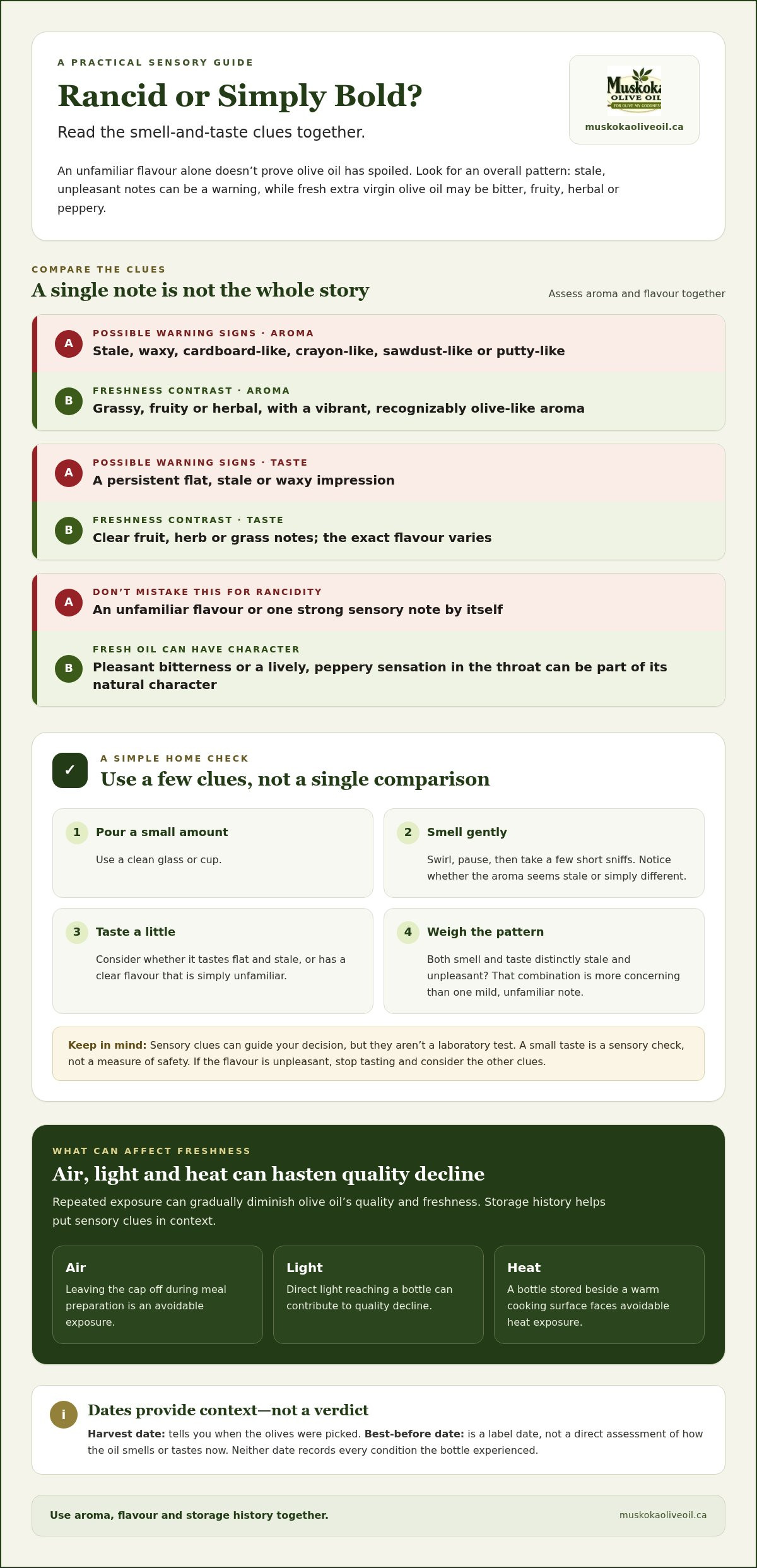
Rancid aromas are sometimes compared to crayons, wet cardboard, sawdust or putty. You might also notice a stale, waxy impression. These comparisons are reference points, not a definitive test. Aromas vary in strength, and your first impression may not be certain.
- Possible warning signs: A stale, waxy, cardboard-like or crayon-like smell.
- Freshness contrast: Fresh oil may smell grassy, fruity or herbal, with a vibrant, recognizably olive-like aroma.
- What to consider: Is the aroma consistently stale, or simply different from another variety you’ve tried?
Pour a small amount into a clean glass or cup. Swirl it gently, pause, then take a few short sniffs. Don’t treat one comparison as conclusive; use the aroma as a clue to weigh alongside flavour and storage history.
What rancid olive oil may taste like
Rancid oil may taste flat or stale, without the fresh character you expect. There isn’t one universal rancid flavour, so don’t rely on a single description to judge it. A small taste is a sensory check, not a measure of safety. If the flavour is unpleasant, stop tasting and consider the aroma and other clues instead.
- Possible warning signs: A persistent flat, stale or waxy impression.
- Freshness contrast: Fresh oil may have distinct fruit, herb or grass notes, though the exact flavour varies.
- What to consider: Does the taste feel lifeless and stale, or does it have a clear flavour that’s simply unfamiliar?
Use the checklist as a whole. If both the smell and taste seem distinctly stale and unpleasant, that combination is more concerning than one mild, unfamiliar note. Don’t force yourself to keep tasting if you’re unsure. The next sections explain how rancidity develops and how to distinguish it from the bitterness or pungency that can be part of an olive oil’s natural character.
Why Olive Oil Turns Rancid: Oxygen, Light, and Heat
Rancidity is a quality decline associated with oxidation. Heat, light and air can hasten that decline. Their effects accumulate gradually, so an oil’s quality may change without one obvious moment when it suddenly becomes rancid. The chemical process is outlined in Rancidification.
Repeated exposure to air, light and heat can steadily diminish olive oil’s quality and freshness. A bottle left uncapped on a sunny counter or stored beside a warm cooking surface illustrates avoidable exposure. Neither example gives a precise timeline, but both can speed deterioration.
How oxidation affects olive oil
Olive oil’s natural composition can influence how it responds to storage conditions. It contains monounsaturated fats, and extra virgin olive oil also contains polyphenols. These compounds can contribute to oxidative stability, but they don’t make oil immune to deterioration. Composition is only one part of the picture; it can’t tell you how a particular bottle was handled or predict its freshness on its own.
That’s why one composition measure shouldn’t be treated as a verdict on a bottle. The same oil may experience very different conditions depending on how it was packaged, transported, displayed and stored at home. Date information and sensory character provide separate context, not a calculation that guarantees quality.
What harvest and best-before dates can tell you
A harvest date identifies when the olives were picked, giving useful context about the oil’s age. A best-before date serves a different purpose: it’s a date on the label, not a direct assessment of how the oil will smell or taste now. Neither date records every condition the bottle experienced between harvest and your kitchen.
Read dates alongside what you know about the bottle’s handling. For example, a bottle with a harvest date may still have been displayed under bright light, while another bottle’s storage history may be unclear. Don’t assume a date guarantees freshness or that every oil shares the same freshness window. Use label information as context, then consider storage conditions and sensory observations together.
Everyday habits can expose oil to air, light or heat: leaving the cap off while preparing a meal, keeping a bottle near a hot appliance, or storing it where direct light reaches it. These details help explain why an oil’s quality may have declined, without assigning an unsupported shelf life to a particular bottle.
When choosing an oil, harvest information can help you compare what’s available, but it isn’t the only consideration. Packaging and display conditions matter, too. Explore extra virgin olive oils with these freshness considerations in mind.
Rancid or Simply Bold? How to Interpret Olive Oil’s Flavour
A strong flavour doesn’t automatically mean olive oil has gone rancid. Fresh extra virgin olive oil can taste bitter, feel peppery in the throat, or have pronounced fruit and herb notes. The useful question is whether those flavours seem lively and clear or whether the oil comes across as stale. One sensory note alone cannot establish rancidity; look for a pattern across aroma, taste and the bottle’s history.
Use this comparison as a guide, not a pass-or-fail test. Olive varieties and harvests differ, so the same intensity won’t mean the same thing in every oil.
| What you notice | Possible fresh character | Possible rancid character | What to consider next |
|---|---|---|---|
| Aroma | Fruity, grassy or herbal | Stale, waxy or otherwise unpleasant | Does the aroma feel fresh and distinct, or persistently flat? |
| Taste | Fruity, bitter or peppery | Flat or stale, without lively character | Does the flavour have definition, or does it seem dull and unpleasant? |
| Overall impression | Distinctive, even if unfamiliar or intense | Several stale impressions that agree with each other | Weigh the sensory clues alongside dates and storage history. |
Can bitter or pungent olive oil be fresh?
Yes. Fresh extra virgin olive oil can be fruity or grassy, with bitterness or a pungent, peppery sensation after tasting. These qualities may be more noticeable in some oils than others. Intensity alone doesn’t prove a defect, just as a mild flavour doesn’t guarantee freshness. Consider whether the oil’s character feels coherent and lively instead of judging it by strength alone.
For example, a peppery finish alongside a fresh, distinct aroma can be part of an oil’s character. A stale taste paired with an unpleasant, dull aroma points in a different direction. If you’re unsure, pause and assess the overall impression rather than fixating on bitterness or the sensation in your throat.
Why appearance is not a reliable verdict
Colour alone can’t tell you whether olive oil is fresh or rancid. Oils naturally vary in colour, and lighting or the container can affect how they look. Clear oil isn’t proof of freshness, and cloudiness isn’t proof of spoilage. Appearance can prompt a closer look, but it can’t replace an assessment of aroma, taste and storage history.
To make a more grounded decision, put the clues together: note the harvest and best-before dates, consider where and how the oil was stored, then assess its smell and taste. These details won’t provide laboratory certainty, but they can help distinguish a naturally bold oil from one with a consistently stale character. The signs of rancid olive oil make more sense as a combination of observations than as a single dramatic flavour or visual change.
How to Check and Store Olive Oil: A Practical Routine
A repeatable check can help you assess a bottle without relying on one impression. Read the label, consider how the oil has been stored, then smell and taste a small sample. If it seems distinctly stale and unpleasant, don’t keep tasting in the hope that the impression will change.
- Inspect the label. Look for the harvest and best-before dates, if provided, and note any information that helps you understand the oil’s age. Treat dates as context, not a guarantee of flavour.
- Assess the aroma. Pour a little into a clean, neutral cup. Cover it briefly, warm the cup gently between your hands, then uncover and smell. Notice whether the aroma seems fresh and distinct or stale and unpleasant.
- Taste cautiously. If the aroma doesn’t put you off, try only a small amount. Pay attention to the overall flavour rather than judging the oil by bitterness or pepperiness alone.
- Decide using the clues together. Consider your observations, the label and the bottle’s storage history. If the smell and taste are both distinctly unpleasant, set the oil aside rather than using it.
A simple at-home freshness check
A neutral cup helps keep other food aromas from clouding your impression. After warming the covered cup gently in your hands, notice the aroma before tasting. Jot down a few words about what you detect, then compare them with the date information and what you know about where the bottle has been stored. This makes it easier to assess several clues instead of relying on a passing first impression.
Everyday habits that help preserve quality
Make storage part of your kitchen routine. Keep olive oil in a cool, dark cupboard away from direct light and heat sources such as the stove, oven or a sunny window. Close the cap promptly after pouring so the oil isn’t left exposed to air between uses.
Keep the oil in its original container when it protects it from light. Avoid transferring it to a clear bottle for countertop display, where light can reach it. If you like having oil within easy reach, choose a convenient storage spot away from heat and direct sun.
Bottle size matters, too. Choose an amount that suits how your household cooks and uses olive oil, rather than buying more than you can comfortably use. There’s no universal consumption timeline that fits every bottle or kitchen; proper storage and the oil’s sensory condition are more useful guides than an invented deadline. If you’re choosing a fresh bottle, explore extra virgin olive oils with these freshness habits in mind.
What to Do With Rancid Olive Oil and How to Choose Fresh
If an oil has a persistently stale, unpleasant smell and taste, set it aside rather than using it. Consider the sensory clues alongside the bottle’s storage history: one unfamiliar note may not settle the question, but several consistent signs can make the decision clearer. Don’t try to cover an unpleasant flavour with herbs, vinegar or cooking. That won’t restore the oil’s original quality.
When the sensory clues point to rancidity
Review what you noticed. Did the aroma seem stale? Did the taste lack freshness or feel unpleasant? Has the bottle been left open, near heat or in direct light? When these clues point in the same direction, there’s stronger reason to stop using the oil. If its profile remains distinctly stale, avoid using it in food or for another purpose.
There’s no need to keep tasting to reach certainty. A home assessment can guide your choice, but it isn’t a laboratory analysis. If the oil’s smell and flavour are persistently disagreeable, trust that combined impression and move on to a fresh bottle.
Choosing a fresh extra virgin olive oil
For your next bottle, look for harvest information when it’s provided. It gives useful context about when the olives were picked, but it can’t tell you how the oil was handled after harvest or guarantee the flavour in your kitchen. Consider packaging and display, too: a container that limits exposure to light and a bottle kept away from heat are sensible factors to weigh when choosing oil.
Notice where a bottle is displayed. Direct sunlight or a spot beside a heat source can expose oil to conditions that speed quality deterioration. Once you bring it home, keep the cap closed between uses and store it away from light and warmth. These habits support quality, but they can’t reverse deterioration that has already occurred.
Use your senses as part of the selection process, not as a promise about any bottle. A harvest date, suitable packaging and thoughtful handling are useful considerations; none alone guarantees a particular aroma or flavour. To explore options with freshness and flavour in mind, browse the extra virgin olive oil selection. Compare the information available for each oil and choose one that suits how you cook and the flavours you enjoy.
Make Freshness Part of Your Everyday Cooking
Olive oil can be more than a dependable pantry staple; it can shape a meal’s character. A peppery finish might bring lift to something creamy, while a softer, fruit-forward oil can complement ripe tomatoes or warm bread. As you taste different oils, notice which flavours you enjoy and how they work with the ingredients you cook most often. The signs of rancid olive oil become easier to interpret as your palate grows familiar with the varied personalities of fresh oils.
Let that curiosity guide your next meal. Try a new oil with a familiar dish, or serve a little alongside bread so its character can stand on its own. There’s no need to make every choice complicated. A thoughtful ingredient can invite you to savour a meal, discover a flavour you love and bring more enjoyment to everyday cooking.
Ready to explore a different flavour for your kitchen? Explore extra virgin olive oils from Muskoka Olive Oil Co. and find an oil that inspires your next dish. Every new taste is an opportunity to cook with confidence and pleasure.
Frequently Asked Questions
Does olive oil go rancid even if the bottle is unopened?
Yes. An unopened seal can limit new exposure after bottling, but it can’t reverse changes that may have occurred earlier or guarantee that the oil stayed in ideal conditions throughout storage and distribution. A sealed bottle isn’t a time capsule. Treat its unopened status as useful context, not proof of its present flavour quality.
Can rancid olive oil make you sick?
Rancidity describes deteriorated oil quality; it doesn’t, on its own, predict whether a particular person will become ill. This article’s sensory guidance isn’t a medical assessment. If you feel unwell after consuming any food, speak with a qualified healthcare professional, especially if symptoms concern you. Keep flavour quality separate from the question of your personal health.
Can you fix rancid olive oil by heating or flavouring it?
No reliable home method restores rancid oil to its original quality. Heating may alter its flavour, and ingredients such as garlic or herbs may add new flavours, but neither should be considered a way to undo deterioration. If a recipe calls for olive oil, use a different bottle whose flavour suits the dish rather than trying to transform oil that has lost its quality.
How long does olive oil last after opening?
There’s no single opening-to-use period that guarantees every bottle will remain fresh. How often you open it, how much oil remains, and the bottle’s packaging and storage all contribute to its changing condition. A large bottle used occasionally may be exposed to different conditions than one used regularly. Choose a size that fits your household’s cooking habits rather than relying on a universal countdown.
Does refrigerating olive oil prevent it from going rancid?
Refrigeration doesn’t make olive oil immune to quality changes. Cold temperatures may cause the oil to become cloudy or thicken; these changes can reverse as it warms and don’t by themselves indicate rancidity. If you’ve chilled a bottle, let a small amount return to room temperature before judging its aroma or flavour. Follow any storage directions provided on the product label.
Is olive oil still good after its best-before date?
A best-before date isn’t a precise sensory verdict, and the oil doesn’t automatically change character on that date. Consider the bottle’s storage and any harvest details, then assess its present flavour and aroma rather than relying on the calendar alone. The signs of rancid olive oil offer clues about its condition, while the date provides separate context for making your decision.
Leave a comment