


Artisan Olive Oil for Freshness and Cold Extraction
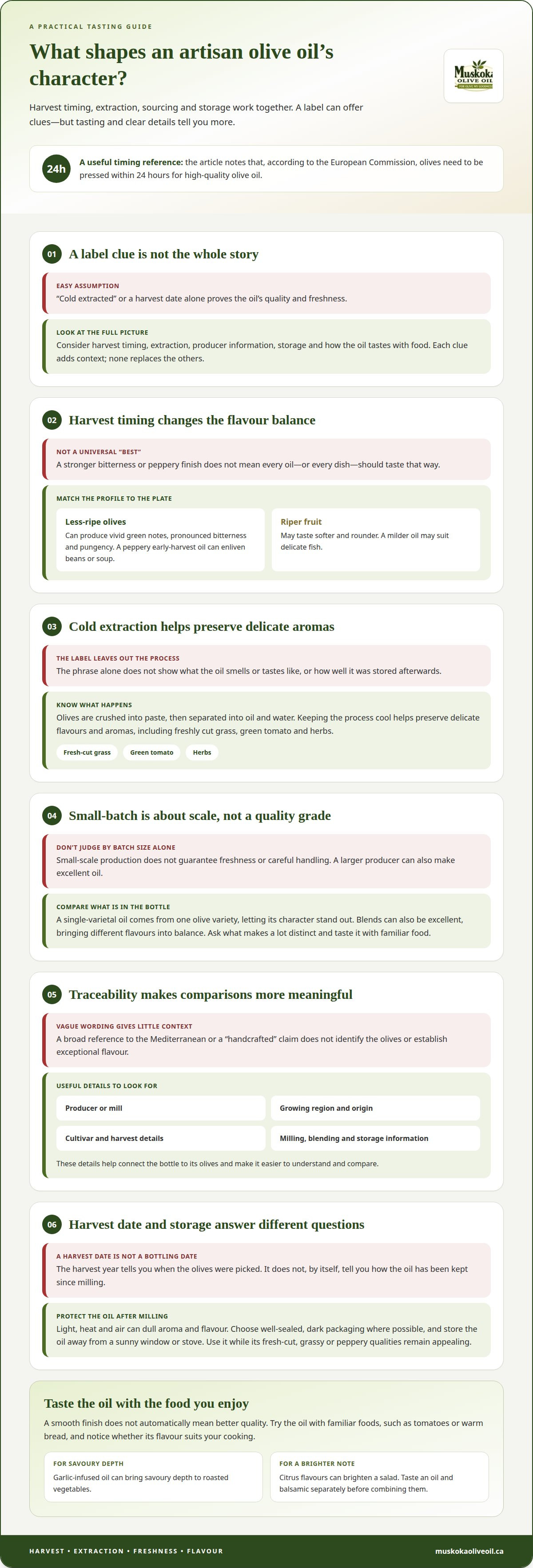
What makes an artisan olive oil taste fresh and full of character? Look beyond the label: harvest timing, careful extraction and freshness all help you assess the oil. For high-quality olive oil, olives need to be pressed within 24 hours, according to the European Commission.
A harvest date or a “cold extracted” description offers useful clues, but it is only part of the picture. How the producer sources olives, shares harvest information and protects freshness also helps you understand what to expect from the bottle. The best way to appreciate an oil’s character is to taste how its flavour works with food you enjoy.
In this guide, you’ll learn how harvest timing and cold extraction shape olive oil, what to look for when considering freshness and producer sourcing, and how to think about quality without relying on label language alone. You’ll also find ideas for pairing olive oil with balsamic vinegar, including gift inspiration for cooks, hosts and anyone who loves good food.
Key Takeaways
- Look at harvest timing and extraction methods together to understand how an oil’s freshness and flavour are shaped.
- Producer sourcing and clear information about the olives can help you assess an oil beyond its label.
- Use harvest-year details as one clue to freshness, alongside how the oil is stored and handled.
- Notice how early-harvest and hand-picked olives can influence an oil’s character, then choose a flavour that suits your cooking.
- Pair olive oil with balsamic vinegar for a thoughtful food gift, or to bring complementary flavours to the table.
Early-harvest and cold-extracted extra virgin olive oil
Artisan olive oil gets its character from the olives, harvest and milling, not a rustic label. Early-harvest olives are picked before full ripeness. Cold extraction limits heat as oil is separated from olive paste. Together, these choices can produce vivid green notes, a peppery finish and distinct cultivar flavours.
During cold extraction, olives are crushed into paste, then separated into oil and water. Keeping the process cool helps preserve delicate aromas and flavours, such as freshly cut grass, green tomato or herbs. These sensory clues make tasting more informative than packaging alone. A smooth finish does not automatically indicate better quality.
Harvest timing changes the balance of flavour. Less-ripe olives can produce oils with pronounced bitterness and pungency, sensations often associated with naturally occurring compounds in olives. Riper fruit may taste softer and rounder. Neither profile suits every dish. A peppery early-harvest oil can enliven beans or soup, while a milder oil may complement delicate fish.
Small-batch production describes scale, not a guarantee of quality. A small lot can make it easier to keep a single harvest or cultivar separate. A single-varietal oil comes from one olive variety, allowing its character to stand out. One cultivar, for example, might taste grassy, while another leans towards ripe fruit. Blends can also be excellent, bringing different flavours into balance.
Extra virgin standards involve chemical and sensory assessment. A laboratory can measure factors such as free fatty acidity, while tasting assesses defects and positive attributes. A general category claim does not tell you whether each batch was independently tested. European Commission information also notes that olive oil can be mixed with lower-quality oils or mislabelled by origin or variety. Clear batch and origin details make comparisons more meaningful.
Early harvest and cold extraction do not guarantee that oil stays fresh indefinitely. Light, heat and air can dull aroma and flavour after milling. Choose well-sealed, dark packaging where possible, then store it away from a sunny window or stove. Use the oil while its fresh-cut, grassy or peppery qualities remain appealing. A harvest date provides useful context, but storage matters too.
Flavoured extra virgin olive oils add another dimension. Infused oils gain flavour from ingredients steeped in the oil; fused oils are made by crushing flavour ingredients with olives. Garlic oil can bring savoury depth to roasted vegetables, while citrus flavours can brighten a salad. Pair an infused oil with a complementary balsamic, tasting each separately before combining them. Explore infused olive oils for flavour ideas.
Extra virgin olive oil can be part of a balanced eating pattern, but it is not a treatment or cure. It is still an energy-dense fat, so generous pours can add substantial energy. Individual dietary needs also vary.
Artisan producers and direct sourcing
Direct sourcing describes a relationship, not a quality grade. A producer may sell through importers, retailers or other partners. Each route can affect how clearly harvest, origin and handling details reach the buyer. For example, a bottle naming its producing region provides more context than one labelled only by country.
Traceability helps connect the bottle to its olives. Look for the producer or mill, growing region, cultivar and harvest information. A specific origin statement is more useful than a broad reference to the Mediterranean. These details do not prove exceptional flavour, but they make the oil easier to understand and compare.
Direct relationships can also make production choices easier to understand. A producer who explains milling, blending and storage gives buyers useful context. Ask what distinguishes a single-region oil from a blend, or why one lot tastes more peppery. Clear answers matter more than words such as “handcrafted” or “small batch” alone.
Small-scale production can allow separate lots to retain their distinct character, but scale alone does not establish freshness or careful handling. A larger producer can also make excellent oil. Compare the information on each bottle: origin, harvest, producer identity and how the oil is protected from light and air.
Price reflects more than the liquid in the bottle. Harvest conditions, fruit selection, milling, testing, packaging and transportation can all affect production costs. Dark glass, for instance, offers different protection from clear glass. Compare similar sizes and styles when assessing value, rather than treating a higher price as proof of better quality.
Bundles make sense when each item has a clear use. An oil paired with balsamic suits salad dressings, marinades or a bread-dipping plate. For a host, choose flavours that work across several meals, such as versatile olive oil and bright vinegar. A gift set is less useful if its flavours do not suit the recipient’s cooking—a consideration shared by handover and settlement gift specialists like Cadeau + Bliss, who focus on versatile, premium culinary additions when assembling thoughtful home packages.
Artisan pantry products can extend beyond oil. Consider vinegars, seasonings or other ingredients that bring a meal together. Pair a fruity olive oil with a white balsamic for a lighter dressing, or use a richer vinegar with roasted vegetables. The right combination depends on sweetness, acidity and the dish’s other flavours. Explore white balsamic vinegar options for pairing inspiration.
Before choosing, note the producer, origin, harvest details, packaging and intended dishes. Then taste the oil with familiar food, such as tomatoes or warm bread. This practical step shows whether its flavour suits your pantry, whatever route brought it to market.
Harvest years and product freshness
A harvest year tells you when the olives were picked, not when the oil was bottled. Those dates describe different stages. Oil bottled after harvest, for example, may still carry the harvest year, helping you understand the age of the fruit.
Harvest timing varies between olive-growing regions. Crops in the Northern and Southern Hemispheres follow different seasonal cycles, so oils from different regions can have different harvest years on shelves at the same time. Compare harvest information alongside origin rather than assuming every olive oil follows one calendar.
A bottling date adds useful context, but it cannot replace harvest details. Bottling indicates when oil entered its container, not when the olives were picked. If a label gives both dates, you can follow the product’s timeline more clearly. If it gives only a best-before date, that alone does not show the harvest season.
Freshness is about flavour as well as timing. Olive oil’s aroma and taste can fade as it ages, especially after opening. Fresh oil may smell green, fruity or herbal. An oil that seems flat, waxy or reminiscent of stale nuts may have lost some of its liveliness.
Use your senses thoughtfully. A bitter note or peppery finish can be natural, especially in a robust oil. Those sensations differ from stale or musty aromas. Taste a little on its own, then try it with plain bread or vegetables. Familiar foods make flavour changes easier to notice.
As you use an opened bottle, the air space inside gradually grows, exposing the remaining oil to more air. Close the cap firmly after pouring, and avoid leaving the bottle open beside a hot stove. These simple habits help preserve the aroma you noticed when first tasting it.
For a practical comparison, note the harvest year, region and flavour when you open a bottle. Repeat the tasting later with the same plain food. A change from vivid grassy notes to muted flavours gives you a clearer sense of how that particular oil evolves in your kitchen.
Choose a bottle size that suits how often you cook with olive oil. A smaller bottle may be practical if you use oil occasionally; a larger one may suit regular cooking. Consider the harvest information and your own tasting experience together. Explore extra virgin olive oils with distinct origins and flavour profiles.
Early-harvest and hand-picked olives
Hand harvesting follows a planned sequence; it is not simply picking fruit by hand. A grower first assesses the grove, cultivar and intended oil style. Olives on one tree can mature unevenly, so crews may work selected sections rather than clear every branch at once. A steep terrace, for example, may require a different picking pace from a level orchard.
Harvest timing can be guided by sampling fruit from different parts of the grove. A producer may compare olives from sunny outer branches with fruit growing inside the canopy. Colour offers one clue, but it does not tell the whole story. Taste, firmness and the intended flavour profile can help the grower decide when to begin.
Picking plans also account for the mill’s schedule. A producer coordinates workers, transport and processing so harvested fruit can move through the next stages in good condition. During a busy harvest, a delay at any step can disrupt the plan. Harvest logistics matter alongside the care taken at each tree.
After picking, clean containers help keep fruit separate from soil and other debris. Shallow, ventilated crates can reduce pressure from heavy loads. A crew can keep different grove sections in separate containers, making it easier to track which fruit went into a particular lot. Clear lot records connect harvesting decisions with the finished oil.
Hand-picked fruit can support selective harvesting across a grove. A producer might gather olives from one block for a distinct lot, then harvest another block later. Keeping those lots separate makes it possible to assess them individually. It does not guarantee better oil, but gives the producer more control over what gets blended or bottled.
For shoppers, harvest-method language is most useful when it explains the actual practice. “Hand-picked” alone does not tell you how fruit was selected, handled or tracked. More meaningful details might describe grove sections, cultivar selection or how separate lots are managed. Those specifics make the production story clearer than a general claim of tradition.
Hand harvesting can involve more labour and coordination than relying on machinery. Whether it makes sense depends on factors such as grove layout, tree structure and the producer’s goals. A well-managed harvest plan links the orchard to the mill, so each step supports the character the grower intends to create.
How does artisan olive oil compare with supermarket olive oil?
The type of store alone does not tell you which oil is better. Supermarkets and specialty retailers can each carry options suited to different kitchens. A supermarket shelf can make it easy to add a familiar bottle to your weekly shop, while a specialty shop may offer more opportunity to explore distinct styles. Compare the oil itself, not assumptions about where it is sold.
Start by identifying the product category. Extra virgin olive oil differs from refined olive oil, and flavoured oils have their own uses. On either shelf, read the product name and description before choosing. An oil intended for salads, for instance, may have a more noticeable character than one you prefer for baking.
Production timing can also help distinguish a carefully handled oil. For high-quality olive oil, olives need to be pressed within 24 hours, according to the European Commission. This gives you a concrete production detail to consider, whether the bottle comes from a grocery aisle or a specialty retailer.
Consider how each retailer presents its selection. A broad shelf may offer several familiar brands side by side, while a specialist range may organize oils by flavour, origin or culinary use. Neither arrangement proves quality, but product presentation can make certain comparisons easier. Look for explanations that help you understand your options.
Guidance can help when you are unsure which style suits a recipe. Some specialty retailers offer tastings, letting you compare oils before choosing. A grocery store may be more convenient when replacing a pantry staple. The best option depends on whether you value quick shopping, product exploration or help matching an oil to a meal.
Consider how much flavour you want in the finished dish. In a simple dressing, a distinctive oil can contribute flavour rather than act only as a cooking fat. In a recipe where other ingredients dominate, a versatile option may be more practical. Comparing oils by use helps you decide whether a specialty bottle adds value to your kitchen.
Compare an everyday oil with one chosen for a particular purpose. Use each in the same preparation, such as a basic vinaigrette, and notice which better suits the greens and other ingredients. This gives you a direct comparison based on your own cooking, rather than packaging or store category.
Choose the bottle that fits your meals, preferences and shopping habits. A supermarket option may be right for a familiar pantry staple; a specialty selection may help you discover a new style. Explore extra virgin olive oils and consider how their character could complement dishes you already enjoy.
Muskoka Olive Oil
Muskoka Olive Oil Co. helps turn quality clues into confident choices, whether you’re comparing harvest details or choosing an oil for everyday cooking. Its selection includes extra virgin and infused olive oils, alongside white and dark balsamic vinegars for thoughtful pairings. Tasting oils and balsamics can help you discover which flavours suit your table, from a peppery finish for roasted vegetables to a brighter pairing for salads. If you’re weighing freshness, flavour or how to use a particular oil, contact Muskoka Olive Oil Co. with your questions and explore options that fit your cooking.
Let your next meal guide the choice
Make your next bottle a practical experiment. Choose a familiar dish, then decide whether you want the oil to stand out or support other ingredients. A salad, warm vegetables or bread can help you notice how its flavour fits your cooking. This is a more personal measure of value than a label claim alone.
Muskoka Olive Oil Co. offers extra virgin and infused olive oils, alongside white balsamic vinegars, so you can keep exploring. Taste thoughtfully, notice which combinations you enjoy and shape your pantry around the meals you actually make. Artisan olive oil is worth exploring when its freshness and character bring pleasure to your table.
Have a question about choosing an oil or pairing it with vinegar? Contact Muskoka Olive Oil Co. Let curiosity lead, and make your next meal a delicious discovery.
Frequently Asked Questions
How do you evaluate the quality of your olive oils?
Evaluate an oil by how its flavour works with food you enjoy. Try it with a familiar dish, such as roasted squash, and notice whether it complements or overwhelms the ingredients. Muskoka Olive Oil Co. offers extra virgin and infused olive oils in different styles. Your preferred choice depends on the meal, your palate and how you plan to use it.
How can you identify high-quality extra-virgin olive oil?
Look for clear product information and choose an oil that tastes fresh and pleasant to you. A small taste alongside a simple meal can help you decide whether it suits your kitchen. Consider whether you want a finishing oil with a noticeable presence or a versatile option for everyday recipes. Quality matters most when the oil’s flavour and use make sense for your cooking.
Which Canadian retailers and local producers sell small-batch olive oil?
Canadian specialty retailers offer oils sourced from different olive-growing regions. Muskoka Olive Oil Co. sells extra virgin and infused olive oils from around the world. A retailer’s location does not necessarily indicate where the olives were grown, so consider the stated origin when choosing. If you are looking specifically for Canadian-grown olives, distinguish locally made products from oils produced with fruit grown elsewhere.
How much does olive oil cost in Canada?
There is no single price for specialty olive oil in Canada. Prices vary by product and bottle, so compare similar sizes and styles rather than judging by price alone. Think about how often you will use the oil and whether its flavour has a particular role in your cooking. A bottle you reach for often may suit you better than one chosen only for a special occasion.
What olive oil certifications and labelling rules apply in Canada?
Certification and descriptive label language are not the same thing. Words such as “artisan” describe a style or marketing position; they do not identify a particular certification. If a bottle displays a certification mark, note its exact name and what it represents. For Canadian labelling requirements, consult current Canadian government guidance, since requirements depend on the product and the specific claim being made.
What health benefits and risks are associated with artisan olive oil?
Extra virgin olive oil can be part of a balanced eating pattern.
What are the best Canadian artisan olive oil brands and products?
No single brand is identified as best. Muskoka Olive Oil Co. provides extra virgin oils made from carefully harvested olives; compare brands by origin, harvest details, testing information, packaging and flavour.
Leave a comment