


Fish Finishing Oils: Cooking Fats and Olive Oil
The best fat for cooking fish isn’t always the best one for finishing it. Extra-virgin olive oil works for gentle cooking when you want its fruity character in the dish, while a neutral oil suited to higher heat lets the seafood take centre stage. A finishing oil for fish, added just before serving, brings fresh flavour and aroma without being cooked away.
It’s easy to reach for butter or the same oil at every stage, but both heat and flavour matter. Delicate fish benefits from a light touch: choose a cooking fat suited to the method, then let the finished dish shine with a drizzle that complements rather than overwhelms it.
This guide explains which fats work for different seafood cooking methods, how to use high-end extra-virgin olive oil as a finishing touch, and when a more delicate option such as toasted sesame oil belongs on the plate. With a few thoughtful choices, a simple fish supper can feel beautifully complete.
Key Takeaways
- Choose a cooking fat to suit the seafood and cooking heat, while keeping its flavour profile in mind.
- Use extra-virgin olive oil to bring fruity character to seafood, either during gentle cooking or as a finishing touch.
- Match the finishing oil’s flavour to the fish and its accompaniments so it complements rather than masks the dish.
- Add oil with a light hand and adjust the amount to the fish and the flavours on the plate.
- For the freshest aroma and flavour, consider when to drizzle the oil in relation to serving.
1. Choosing cooking fats for seafood
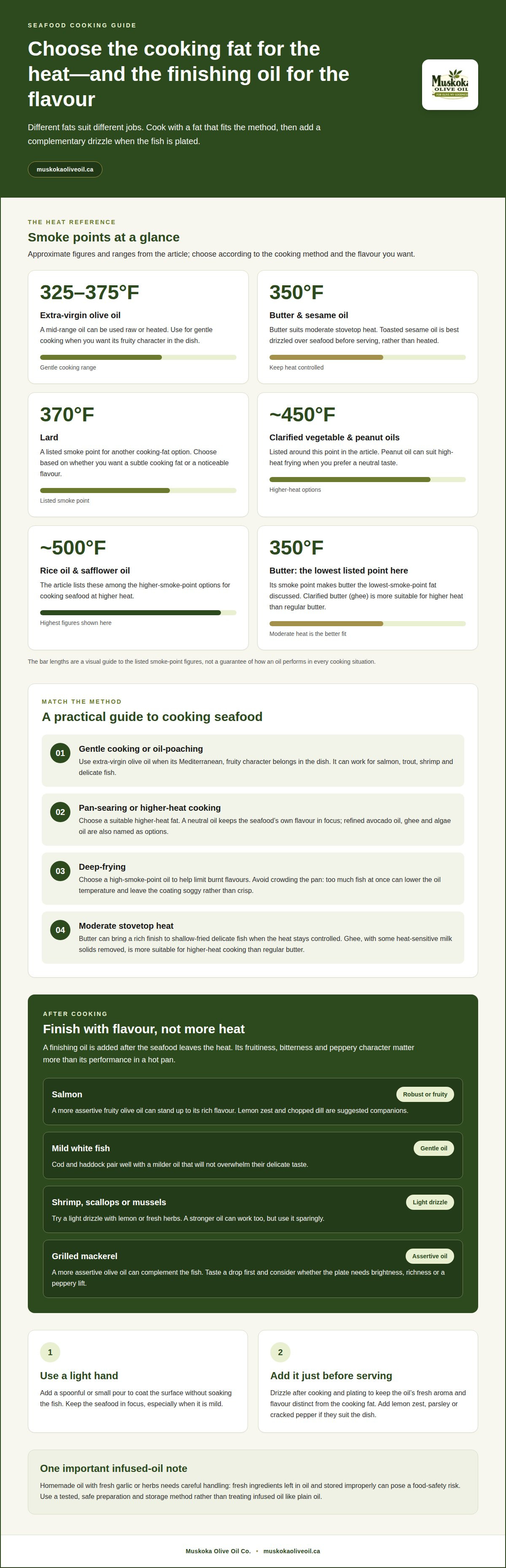
Choose a cooking fat by matching its heat tolerance and flavour to the seafood and cooking method. Extra-virgin olive oil has a smoke point between 325 and 375 degrees, and a mid-range oil can be used raw or heated. For pan-searing or oil-poaching salmon, trout, or shrimp, it brings a Mediterranean flavour as well as cooking fat.
For delicate fish, extra-virgin olive oil can also work for frying, adding a fruity note. Keep the heat appropriate for the oil and avoid crowding the pan: adding too much fish at once can lower the oil temperature and leave the coating soggy instead of crisp. A more neutral oil keeps the seafood’s own flavour in focus.
Refined oils generally tolerate more heat than less-refined oils. Rice oil and safflower oil have smoke points of about 500 degrees, while clarified vegetable, canola, and peanut oils are typically listed around 450 degrees. Refined avocado oil, ghee, and algae oil are other neutral options for high-heat seafood cooking. For deep-frying, a high-smoke-point oil can help limit burnt flavours.
Butter suits stovetop seafood cooked over moderate heat, but its 350-degree smoke point makes it the lowest-smoke-point fat discussed here. It can bring a rich, delicious finish to shallow-fried delicate fish, provided the heat stays controlled. Clarified butter, or ghee, has had some heat-sensitive milk solids removed, making it more suitable for higher-heat cooking than regular butter.
Sesame oil and coconut oil bring distinct considerations. Sesame oil has a smoke point of 350 degrees, and toasted sesame oil is best drizzled over seafood before serving, rather than heated. Refined coconut oil has a high smoke point and neutral flavour for high-heat recipes, while lard is listed at 370 degrees. Choose based on whether you want a subtle cooking fat or a noticeable flavour.
Homemade garlic or herb oil can pose a food-safety risk if fresh ingredients are left in oil and it is stored improperly. Use a tested, safe preparation and storage method rather than treating infused oil like plain oil.
For a simple choice, use extra-virgin olive oil for gentle cooking and fruity character, or choose a neutral, higher-heat fat for deep-frying. Butter works over moderate stovetop heat, while toasted sesame oil belongs at the table. This distinction helps preserve the oil’s flavour and gives the seafood the texture and taste you want.
Mid-range olive oil suits oil-poaching or seafood searing for Mediterranean flavour. Clarified butter removes some heat-sensitive solids, raising its smoke point for high-heat cooking. High-smoke-point oil helps prevent harmful compounds and unpleasant flavours when frying fish. Canola oil’s smoke point is 400 degrees Fahrenheit; its mild flavour suits delicate fish. Avocado oil is neutral and high-smoke-point.
2. Finishing seafood with high-end olive oil
A final drizzle of high-end extra-virgin olive oil adds fresh aroma and flavour after seafood leaves the heat. Unlike frying oil, it isn’t being chosen to withstand cooking temperature. The purpose is to complement the finished dish, so the oil’s fruitiness, bitterness, and peppery character matter more than its performance in a hot pan.
For salmon, try a robust, fruity olive oil that can stand up to the fish’s rich flavour. Mild white fish, such as cod or haddock, pairs well with a gentler oil that won’t overwhelm its delicate taste. For shrimp, scallops, or mussels, use a light drizzle with lemon or fresh herbs. A stronger oil can work too, but apply it sparingly.
Use a finishing oil for fish as the final touch, after cooking and plating. A spoonful or small pour lets you coat the surface without soaking the fish. Add lemon zest, chopped parsley, or cracked pepper afterward, if they suit the dish. This also keeps the oil’s fresh character distinct from the cooking fat.
Ready-made finishing oils in Canada don’t have one useful typical price: bottle size, ingredients, and producer all affect the shelf price. Compare the quantity and flavour ingredients, such as herbs or citrus, rather than assuming two bottles offer the same value. You can choose an oil that suits your seafood and kitchen without relying on a single typical price.
Homemade oil with fresh garlic or herbs needs careful handling because fresh ingredients can create food-safety concerns. Make a small amount, refrigerate it, and use it promptly instead of treating it like plain oil. Raw, unrefined oils generally have shorter shelf lives; they should be refrigerated and used within about six months. That general guidance isn’t a safe storage window for every homemade infusion.
In Canada, look for finishing oils at specialty food retailers, gourmet shops, and Canadian online retailers. Choose plain extra-virgin olive oil if you want to control the seasoning, or an infused oil when garlic or herbs would suit the dish. A small drizzle over grilled salmon, for example, can add aroma without competing with its seared surface.
Frying and finishing are different jobs. Peanut oil can suit high-heat frying when you prefer a neutral taste, while olive oil added after cooking contributes its own flavour. Neither choice makes a meal automatically healthier; the best method depends on the seafood, the heat, and the taste you want. Keep the finish restrained, especially with mild fish, and let the seafood remain the focus.
3. Which oils are best for finishing cooked fish?
Extra-virgin olive oil is a versatile finishing choice because its flavour can range from delicate and buttery to grassy, bitter, or peppery. Match its character to the fish: a gentle oil suits mild cod, while a more assertive one can complement grilled mackerel. Taste a drop first, then decide whether the plate needs brightness, richness, or a peppery lift.
For salmon, try a fruity olive oil with lemon zest and chopped dill. These familiar flavours complement the fish without requiring a heavy sauce. A more robust oil can also suit grilled salmon, especially alongside charred lemon or roasted vegetables. Add it after cooking so its fresh aroma remains distinct from the grill’s smoky notes.
White fish such as haddock or halibut has a mild flavour, so choose a softer oil and a restrained drizzle. Pair it with parsley, capers, or lemon for a clean finish. For pan-roasted cod, olive oil can round out the surface while keeping the fish’s delicate taste in focus. Strongly bitter or peppery oils may dominate a subtle preparation.
Shellfish offers another direction. A delicate olive oil works over seared scallops with citrus, while shrimp can take a herbaceous oil alongside garlic and parsley. For mussels, consider the broth as well as the seafood: a light drizzle can bring the plate together without obscuring wine, tomato, or aromatic herbs in the cooking liquid.
Toasted sesame oil gives cooked fish a distinctly nutty finish. Don’t heat it; drizzle it over the seafood before serving. A small amount can complement salmon with rice or shrimp with ginger and scallions. Keep the rest of the seasoning simple, since sesame oil’s aroma can quickly become the leading flavour.
Fresh, infused, or flavoured oils can add another layer, but consider every ingredient already on the plate. A lemon-forward finish, for instance, may be unnecessary when the fish already has lemon juice and citrus zest. Choose one main aromatic accent, then use herbs or cracked pepper to support it. This keeps the flavours clear rather than crowded.
A finishing oil for fish should complement the fish, not cover it. Pour a little onto a spoon and taste it with a bite of cooked seafood; adjust the pairing before serving. Choose olive oil for fruity or peppery notes, or toasted sesame oil for a nutty accent. The best match depends on the fish, how it’s prepared, and the flavours alongside it.
4. How much finishing oil should you use per serving of fish?
Use enough oil to lightly gloss the fish, not pool around it. The right amount depends on the fillet’s surface, the oil’s intensity, and the other ingredients on the plate. You can use a little more of a delicate olive oil than a strongly peppery one. For mild cod with lemon, start with a fine drizzle; for a bold oil over grilled salmon, use less.
Apply the oil gradually. First, place the cooked fish on its serving plate and add a thin stream across the top. Then taste a bite with the accompanying vegetables or sauce. If the fish still tastes dry, add another small drizzle. This approach keeps the oil from hiding delicate flavours or making the plate feel greasy.
Fillet shape also matters. A broad, thin piece of haddock exposes more surface than a compact portion, so it may need more oil for the same light coating. A small scallop has less surface area; a few drops can be enough to carry its aroma. Look for a gentle sheen rather than a slick, especially with mild white fish.
Consider the rest of the meal before pouring. If grilled salmon already has a rich sauce, keep the finish restrained. Plain halibut with steamed greens can take a clearer drizzle because fewer ingredients compete for attention. Lemon juice, melted butter, and oily dressings also add richness, so use less finishing oil when they’re present.
For a shared platter, season each piece individually instead of pouring freely over the whole dish. Drizzle a little across one fillet, then repeat only where the surface looks dry. This gives each piece a more even finish and prevents oil from collecting beneath the fish. On a family-style platter of trout, add the oil just before serving so the top remains lightly coated.
Use infused oils with an especially light hand. Garlic or herb flavours can be concentrated, and a heavy pour may dominate the fish. Add a little, taste it with a bite, then decide whether more is needed. For toasted sesame oil, use a few drops as a finishing accent alongside ingredients such as ginger or scallions.
Use the plate as your guide, not a fixed measure. A spoon can help control a strong oil; a pour spout may suit a mild one. Stop when the fish has a delicate sheen and the oil’s aroma complements the first bite. If oil gathers at the plate’s edge, you’ve likely added more than the serving needs.
5. When should you add finishing oil to cooked fish?
Add finishing oil after the fish has finished cooking and is on its serving plate. Heat can soften olive oil’s fresh aroma, so a final drizzle helps its fruity or peppery notes come through. For pan-seared trout, remove the pan from the burner, plate the fish, then add the oil before herbs or lemon zest.
Timing also affects texture. If crisp skin is part of the dish, as with pan-roasted salmon, keep the oil on the flesh side or drizzle it around the fish. Pouring directly over crisp skin can soften it. A few drops around the plate preserve the crisp finish while adding aroma to each bite.
For grilled fish, wait until it leaves the grill before adding oil. A drizzle over grilled halibut can complement its smoky edges, while adding oil over the flames risks burning it and creating unwanted flavours. Let the fish rest briefly on the serving platter, then finish it just before bringing it to the table.
For baked cod or poached haddock, add the oil after arranging the fish with its accompaniments. This lets you direct the flavour where it belongs, rather than mixing it into a cooking liquid or sauce. If the plate includes lemon juice, capers, or a herb dressing, taste those together before adding more oil.
For a family-style platter, finish the fish shortly before serving. Oil added too early can mingle with juices on the plate, especially beneath flaky fillets. Place the fish on a clean platter, add the finishing drizzle, then scatter parsley or dill. For individual plates, apply the oil after portioning so each serving gets an even touch.
Toasted sesame oil follows the same last-minute approach, but its bold aroma calls for restraint. Add it after cooking to salmon with rice, or shrimp with ginger and scallions. Don’t put toasted sesame oil in the pan; its role is a finishing accent. Use citrus and herbs sparingly so the dish has a clear flavour rather than competing aromas.
A useful sequence is simple: cook the fish, plate it, add any sauce, then finish with oil and fresh garnish. For example, spoon sauce beside grilled trout, drizzle olive oil over the flesh, and add chopped chives. This order keeps the sauce from carrying the oil away and leaves the garnish fresh and visible.
Make the final drizzle part of your serving ritual. Keep the bottle away from the hot pan, pour over plated fish, and serve promptly. To explore oils that can add a distinctive finishing touch, discover flavourful olive oil options.
Muskoka Olive Oil Co.
Muskoka Olive Oil Co. can help you choose an oil whose flavour suits the fish, cooking method, and final drizzle. Explore extra-virgin olive oils for fresh, fruity or peppery notes, or consider an infused olive oil when garlic or herbs would complement the plate. White and dark balsamic vinegars can also bring a sweet-tart contrast to seafood accompaniments.
If you’re unsure which direction to take, think about the fish first: delicate white fish calls for a lighter touch, while grilled salmon can stand up to more assertive flavours. Contact Muskoka Olive Oil Co. to discuss olive oil pairings for your fish dishes.
Make the finishing touch your own
Let the fish guide your next flavour pairing. A delicate fillet can welcome a softer, grassy oil, while a richer fish can take a more pronounced peppery note. Treat each plate as an invitation to experiment: taste the oil alongside the fish, then add herbs or citrus only if they bring the flavours into balance. That small moment of tasting can help you find a finishing oil for fish that feels thoughtfully matched, not simply poured on.
Muskoka Olive Oil Co. offers Ultra-Premium Extra Virgin Olive Oils and Infused Olive Oil to explore, along with white balsamic vinegars that can add a bright counterpoint to a seafood meal. Comparing flavour profiles can help you discover what suits your cooking and palate.
Contact Muskoka Olive Oil Co. to explore a pairing for your next fish dish. A considered drizzle can turn an everyday meal into a fresh expression of your own taste.
Frequently Asked Questions
Fats Fundamentals: Which Oils and Butters Work Best When Cooking Seafood?
Choose the cooking fat according to the seafood, heat, and flavour you want. Canola oil’s mild taste suits delicate fish, while peanut oil works for deep-fried seafood such as tempura. Butter adds richness to gently cooked fish, and clarified butter can suit higher-heat cooking. For a crisp coating, keep the pan or fryer temperature steady and cook in batches so the oil doesn’t cool sharply.
How do olive oil, chili oil, and herb oil compare on fish?
Olive oil brings fruity, grassy, or peppery notes; chili oil adds heat, while herb oil contributes aromas such as basil or rosemary. With mild fish like sole, use a restrained, gentle oil to keep its flavour clear. For a heartier preparation, such as grilled tuna, a bolder oil can complement the fish. If chili oil is already seasoned, taste it before adding extra salt.
Can you use extra-virgin olive oil as a finishing oil for fish?
Yes. A finishing oil for fish can be extra-virgin olive oil, drizzled over the cooked dish before serving. Its fresh flavour can enhance baked haddock with parsley or add a peppery note to grilled sardines. Choose an oil whose intensity suits the fish, then add it gradually. Extra-virgin olive oil can also be served with lemon wedges for diners who want extra brightness.
Leave a comment