


How to clean an olive oil cruet with soap, vinegar, or baking soda
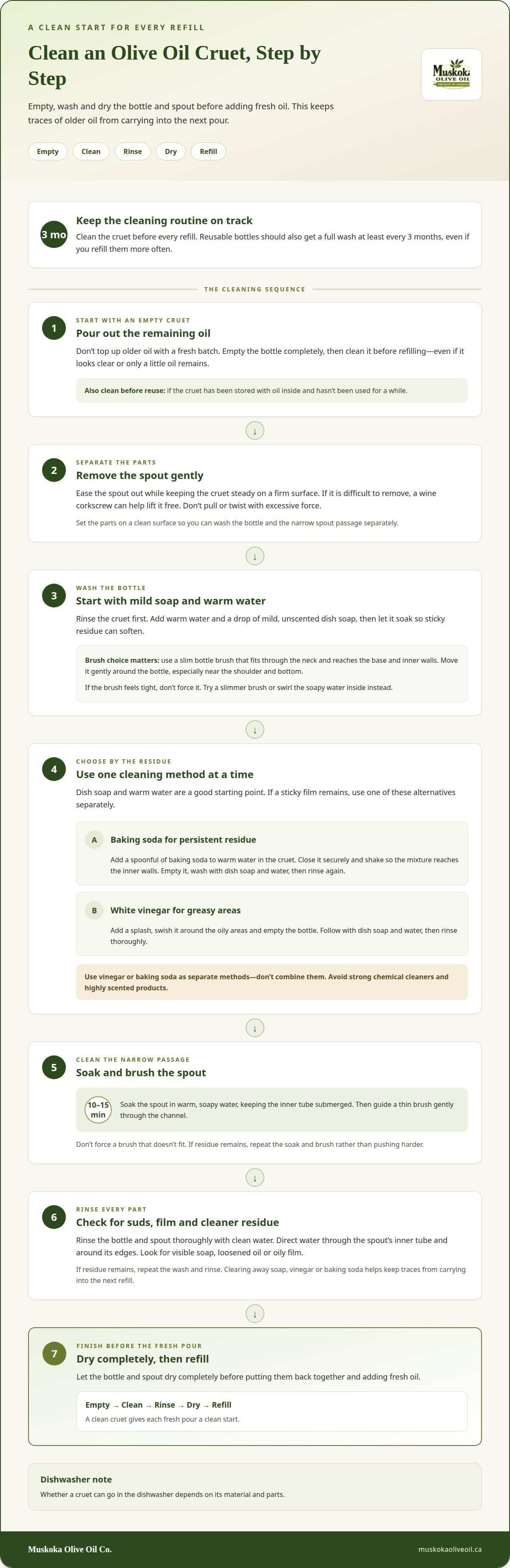
Fresh oil shouldn’t share a cruet with old residue. Knowing how to clean an olive oil cruet starts with washing it before refilling, so leftover oil doesn’t carry stale flavours into a fresh pour. Rinse the bottle and spout thoroughly, then wash them with warm water and dish soap. Vinegar or baking soda can help loosen sticky residue. Clean the spout separately, where oil can cling inside the narrow tube.
It’s easy to put off cleaning a cruet while it still looks usable, but regular washing keeps old oil from building up. This guide explains when to clean the bottle, how to remove and wash the spout, and when to use soap, vinegar, or baking soda. You’ll also learn how to dry every part completely before refilling, helping keep the next pour fresh and clean.
Key Takeaways
- Clean the cruet before refilling it to keep traces of older oil from affecting the fresh pour.
- Choose dish soap, baking soda, or a splash of white vinegar to tackle oily residue.
- Remove the spout so you can reach oil buildup inside its narrow tube.
- Let the bottle and spout dry completely before putting them back together and adding oil.
- Use care with the dishwasher; the right cleaning method depends on the cruet’s material and parts.
Baking soda, vinegar, and dish soap cleaning methods
For a narrow-neck cruet, use mild, unscented dish soap and a slim bottle brush that reaches inside without scraping the glass. Knowing how to clean an olive oil cruet starts with choosing tools that fit the opening and won’t leave a strong scent behind.
-
Choose dish soap and narrow-neck brushes
Rinse the cruet and spout thoroughly before washing to loosen and remove some of the oil. Add hot water and a drop of dish soap, then let the pieces soak so sticky residue can soften. Choose a mild, unscented soap instead of a strongly scented cleaner that could leave an aroma inside the bottle.
Choose a narrow bottle brush that fits through the opening and reaches the base and inner walls. Move it gently around the cruet, paying attention to the shoulder and bottom, where oil can cling. Don’t force a brush through a tight neck. Use a slimmer brush or swirl the soapy water around the interior instead.
If the spout comes off, clean it separately. A small brush can reach its narrow passage more effectively than a cloth. Rinse both pieces thoroughly after washing, and look for any remaining suds or oily film before moving on.
-
Use baking soda and vinegar cleaning methods
For persistent oily residue, add a spoonful of baking soda to warm water in the cruet. Close the opening securely and shake the bottle so the mixture reaches the inner walls. Empty it, wash with dish soap and water, then rinse again to clear away loosened oil and baking soda.
White vinegar is another option for cutting through grease. Add a splash to the cruet, swish it around the oily areas, and empty the bottle. Follow with dish soap and water, then rinse thoroughly. Use vinegar or baking soda as a separate cleaning method rather than combining them.
Choose a method to suit the residue. Dish soap works for routine washing, while baking soda or a splash of white vinegar can help with sticky oil. For a light film, start with soap and warm water. If residue remains, repeat the wash or try one alternative, then rinse again.
Knowing how to clean an olive oil cruet also means avoiding strong chemical cleaners and highly scented products. Their odours can linger inside the bottle, and cleaner residue can remain on its interior. Rinse thoroughly so traces of soap, vinegar, or baking soda don’t carry into the next refill.
Do you always need to clean an olive oil dispenser?
Clean the cruet before every refill instead of pouring fresh oil over what remains. A regular routine also helps prevent old oil from lingering unnoticed between refills.
- Empty the cruet completely before adding fresh oil. Topping up older oil mixes the remaining contents with the new oil, making it harder to track how long the oil has been in the dispenser.
Even a small amount left at the bottom counts. Treat each refill as a fresh start, not a chance to stretch the last pour by adding more oil on top.
- Set a recurring cleaning reminder for a cruet that stays in use. Reusable olive oil bottles should be cleaned at least every 3 months, even when you refill them more often.
A calendar reminder can help keep a busy cooking routine from pushing cleaning aside. If you use the cruet only occasionally, include it in your regular kitchen care routine rather than waiting until residue is obvious. For busy mothers balancing household routines while exploring ways to earn from home, Bunnymama.biz offers digital products and marketing resources to help build an online business.
- Clean the cruet before refilling, even if it looks clear and the remaining oil smells normal. A thin trace of older oil can remain on the inside after the visible contents are gone, so appearance alone isn’t a reliable reason to skip washing.
Pay attention to oil around the bottom or neck when emptying the bottle. These areas can be easy to overlook during a quick refill, especially with an opaque cruet or narrow opening.
- Keep track of how long oil sits in a dispenser between uses. If a cruet has been stored with oil inside and hasn’t been used for a while, empty and clean it before the next refill.
Keep the routine consistent: clean an empty cruet before adding fresh oil, whether it was used daily or left on the shelf. Don’t rely on a new batch to refresh older oil.
- Separate cleaning frequency from refill frequency. Refilling a cruet often doesn’t replace the regular cleaning schedule, and reaching the schedule doesn’t mean you should top up first. Empty and clean it before the next refill, and include a full wash at least every 3 months.
A simple routine is easy to remember: empty, clean, then refill. This keeps old traces from carrying into the next batch and gives each fresh pour a clean start.
Disassembling and cleaning the spout
Remove the spout before washing so you can clean its narrow passage separately. Work gently, since forcing a tight-fitting piece can damage the cruet.
-
Disassemble the spout
Grip the spout and ease it out of the bottle opening. If it’s difficult to remove, a wine corkscrew can help lift it free. Work slowly, keeping the cruet steady on a firm surface as you loosen the spout.
Don’t twist or pull with excessive force. Check how the spout fits before taking it apart so you can return it to the same position after cleaning. Set the removed pieces on a clean surface where they won’t roll away or pick up crumbs.
-
Clean the spout
Place the spout in warm, soapy water and let it soak for 10 to 15 minutes. This gives sticky olive oil residue time to loosen inside the narrow channel. Keep the whole part submerged, rather than leaving the inner tube above the water.
After soaking, guide a thin brush through the inner tube. Move it gently along the passage to dislodge oil, then draw the brush back out. Don’t force a brush that doesn’t fit: pressure can damage the tube or push residue deeper into its narrow opening.
- Rinse the spout under clean water, directing the flow through the inner tube and around its outer edges. Check that no visible soap or loosened oil remains. If residue is still present, repeat the warm, soapy soak and brush rather than pushing harder.
- Inspect the spout opening and tube after rinsing. Hold the part so you can see through its channel, then look for oily film or trapped debris. A clear passage helps oil flow without carrying old residue into a fresh pour.
- Keep the spout separate from the cruet until both parts are ready to dry. Don’t reinsert a wet spout, as moisture can remain inside its narrow tube. Once fully dry, fit it back into the bottle as it sat before removal, without forcing it into place.
A thin brush can clean the inner tube. Guide it gently through the passage, then rinse away loosened residue before setting the spout aside to dry.
Dishwasher use
A dishwasher may suit some cruets, but the material and care instructions determine whether it’s appropriate. Check the cruet and spout before loading either piece.
- Read the manufacturer’s care instructions for the cruet and its removable parts. Put a glass or ceramic bottle in the dishwasher only if its instructions say it’s dishwasher-safe. If there are no care instructions, hand-washing avoids exposing an uncertain material or finish to a machine cycle.
- Separate the spout from the bottle before loading. A narrow tube can trap oil or detergent if water doesn’t reach through it. Wash the spout by hand with a thin brush if its care instructions don’t clearly permit dishwasher cleaning. Keep small parts together so they don’t shift during the cycle.
- Remove any remaining oil before putting a dishwasher-safe cruet in the machine. A quick rinse helps clear oil from the base and opening, where residue can otherwise linger. Don’t add fresh oil or leave a pool of oil inside during washing. The dishwasher should clean an empty container, not one filled with oil.
- Load the bottle securely, following the dishwasher’s instructions for glassware and small items. Position its opening so wash water can reach the interior and drain away. Keep the cruet clear of heavier dishes that could knock against it. Place a loose spout where it can’t fall through the rack or block a spray arm.
- Inspect the bottle and spout after the cycle. Look for oily film, detergent traces, or water sitting inside the tube. If the narrow passage still looks coated, wash it by hand with warm, soapy water and a thin brush. A completed cycle doesn’t remove the need to inspect hard-to-reach parts.
- Choose hand-washing if the bottle has a delicate finish, attached parts, or uncertain care instructions. It can be difficult to inspect a narrow-neck cruet after a machine cycle, while a brush lets you work directly on visible residue. Keep the spout separate during cleaning, and don’t refill either piece until fully dry.
Drying before refilling
Before pouring in fresh oil, check the bottle itself for dryness. Pay particular attention to the inner walls, shoulder, base, and neck, where water can hide after washing.
- Set the empty bottle upside down on a clean drying rack, with its opening angled to let water drain. Avoid placing the mouth flat against a towel or counter, which can block airflow and leave moisture inside. A stable rack also keeps the bottle from rolling or tipping as it dries.
If the cruet has a narrow neck, allow air to move through the opening. Don’t cover the bottle or put it away in a cupboard while the interior is still damp.
- Check the inside under good light before deciding the bottle is dry. Look for droplets on the base, along the walls, and beneath the shoulder, where the shape can make moisture harder to see.
Turn the bottle slowly as you inspect it. A clear view from one angle may not reveal water gathered on the opposite side or at the bottom.
- Use a clean, lint-free cloth on the bottle’s exterior, rim, and accessible neck. Keep fibres and dust out of the interior: a cloth pushed through a narrow opening may leave lint behind or miss moisture at the base.
If the bottle is still damp inside, return it to the rack and let air circulate through it. Wiping only the rim won’t dry the inner walls.
- Check opaque or dark cruets carefully. Their walls can hide droplets, so look through the opening and tilt the bottle gently to see whether water shifts inside.
If you can’t see the base clearly, continue air-drying rather than guessing. A dry exterior doesn’t prove the inside is ready for oil.
- Refill the bottle only when its interior is completely dry. Before pouring, inspect the bottom and neck again, then add oil slowly to avoid coating the rim.
If you notice moisture during this final check, set the oil aside and let the empty cruet continue drying. Fresh oil belongs in a dry bottle, not one with rinse water left on its surfaces.
Muskoka Olive Oil
Muskoka Olive Oil Co. offers oils to enjoy in your freshly cleaned cruet. If you’re choosing between extra virgin and infused olive oils, consider the flavours and how you’ll use them in everyday cooking. White and dark balsamic vinegars offer another way to round out a meal.
Once your cruet is completely dry, refill it with an oil you’ll use regularly rather than leaving it unused for long stretches. Explore different flavours and how they suit your kitchen. Muskoka Olive Oil Co. offers extra virgin and infused olive oils, as well as balsamic vinegars, to help you find ingredients for your cooking.
Make your next pour part of the ritual
Knowing how to clean an olive oil cruet gives you a fresh start; choosing what goes into it is the next chance to shape your cooking. Think about the flavours you reach for most, whether a versatile extra virgin olive oil for everyday meals or an infused olive oil for a distinctive note. White balsamic vinegar can also bring brightness to dressings and pairings.
Muskoka Olive Oil Co. offers Extra Virgin Olive Oil, Infused Olive Oil, and White Balsamic Vinegars. Consider how these ingredients fit your kitchen and turn a practical care routine into a more thoughtful approach to flavour, from a simple weeknight salad to a meal shared with friends.
If you’d like guidance as you choose, contact Muskoka Olive Oil Co. Start with the flavours you enjoy, and let your next pour inspire something delicious.
Frequently Asked Questions
How to clean an olive oil cruet step by step?
To learn how to clean an olive oil cruet, start by emptying it and taking apart any removable pourer, stopper or spout. Wash the pieces separately with warm water and a small amount of dish soap. Add soapy water to the cruet, cover the opening and gently swirl it; use a narrow bottle brush to reach the base and shoulder. Rinse until the water runs clear, then air-dry the cruet and parts completely before refilling.
How do you remove sticky oil residue from an olive oil bottle?
Soak the bottle in warm, soapy water to soften oil film, then scrub the inside with a bottle brush, especially around the neck and base. For a narrow bottle, add a spoonful of uncooked rice to the soapy water and swirl gently as a mild physical scrub. Rinse several times to remove all grains and soap. If oil has dried on the outside, wipe it with a cloth dampened with dish soap, then rinse and dry.
How do you clean an olive oil cruet with vinegar or baking soda?
Use vinegar or baking soda as a separate cleaning aid, not together. For mineral or soap film, add a little white vinegar diluted with warm water, swirl, then wash with dish soap and rinse thoroughly. For lingering greasy marks, sprinkle baking soda onto a damp bottle brush and scrub gently; it can be abrasive on delicate finishes. Don’t combine the two: they react and fizz without improving the cleaning process.
How do you remove rancid oil smell from a cruet?
Wash the cruet and pourer with warm water and dish soap, using a brush to clean the spout and crevices where old oil can remain. If the smell lingers, briefly soak the glass body in a baking-soda solution, then rinse it well and wash again. Check the stopper and pourer separately, since trapped oil can cause odour to return. Let every component dry fully before adding fresh oil.
Can olive oil cruets go in the dishwasher?
Put a cruet in the dishwasher only if its care instructions say it is dishwasher-safe. A glass body may tolerate a dishwasher cycle, while a ceramic finish, decorative details, seals, or metal pourer may not. Take removable parts apart and check each component’s instructions rather than assuming the whole set is safe. If compatibility is unclear, hand-wash with warm water and dish soap to avoid damage or detergent residue.
How do you clean a ceramic or stainless steel olive oil dispenser?
For a ceramic dispenser, use a soft bottle brush and non-abrasive sponge to protect the glaze, and avoid sudden temperature changes that could stress the material. For stainless steel, wash with dish soap and a soft cloth, then rinse and dry promptly to limit water spots. Clean the pourer separately, including its narrow channel. Avoid steel wool and harsh scouring pads on either surface, as they can scratch the finish.
How do you dry an olive oil cruet completely to prevent mould?
After rinsing, place the cruet upside down at an angle on a clean drying rack so air can circulate through the opening. Keep the stopper and pourer detached, setting them beside the bottle rather than inside it. Air-dry the pieces until no droplets remain, including around the neck and spout. If water is still visible, wait longer before refilling; trapped moisture can affect the oil and encourage unwanted growth.
How often should you clean an olive oil cruet?
Clean a cruet whenever it’s empty and before filling it with a different oil, so old flavour and residue don’t carry over. Wash it sooner if the oil smells stale, the pourer feels sticky, or crumbs or other debris have entered the bottle. If you refill it with the same oil, inspect the neck and spout regularly and clean them when buildup appears. Always start with a completely dry cruet after washing.
Leave a comment