


How to Finish Pasta with Peppery Oil, Garlic, and Heat
The best finish for spaghetti starts with extra virgin olive oil, garlic, and hot pepper, then gets a final drizzle just before serving. A peppery finishing oil for pasta adds a fresh, savoury edge, and how much to use depends on the sauce and the oil’s intensity. Keep the flavours balanced so the oil complements the dish rather than dominating it.
A bowl of pasta can be wonderfully simple, but a small difference in oil flavour can change its character. The goal isn’t simply to add heat or richness. Choose an oil that works with the garlic, pepper, and other ingredients already on your plate.
This guide covers the aglio, olio e peperoncino approach, how to finish spaghetti, and what to consider when choosing a peppery oil. You’ll also learn why extra virgin olive oil can taste peppery and how to adjust the drizzle for different sauces. Use these ideas to make a familiar pasta dinner your own.
Key Takeaways
- Warm garlic and hot pepper gently to build flavour without letting the garlic turn bitter.
- Use reserved pasta water to help the oil cling to the spaghetti instead of pooling at the bottom of the bowl.
- Learn how olive variety and other factors shape an oil’s peppery character.
- Finish with a gradual drizzle, tasting as you go to keep the pasta balanced.
- Explore how extra virgin and infused olive oils can bring different flavours to a simple pasta dish.
Spaghetti with garlic, olive oil, and hot pepper
For a straightforward spaghetti supper, warm olive oil with garlic and hot pepper, then toss with cooked pasta. Finish the dish after cooking, when the oil’s aroma can stand out.
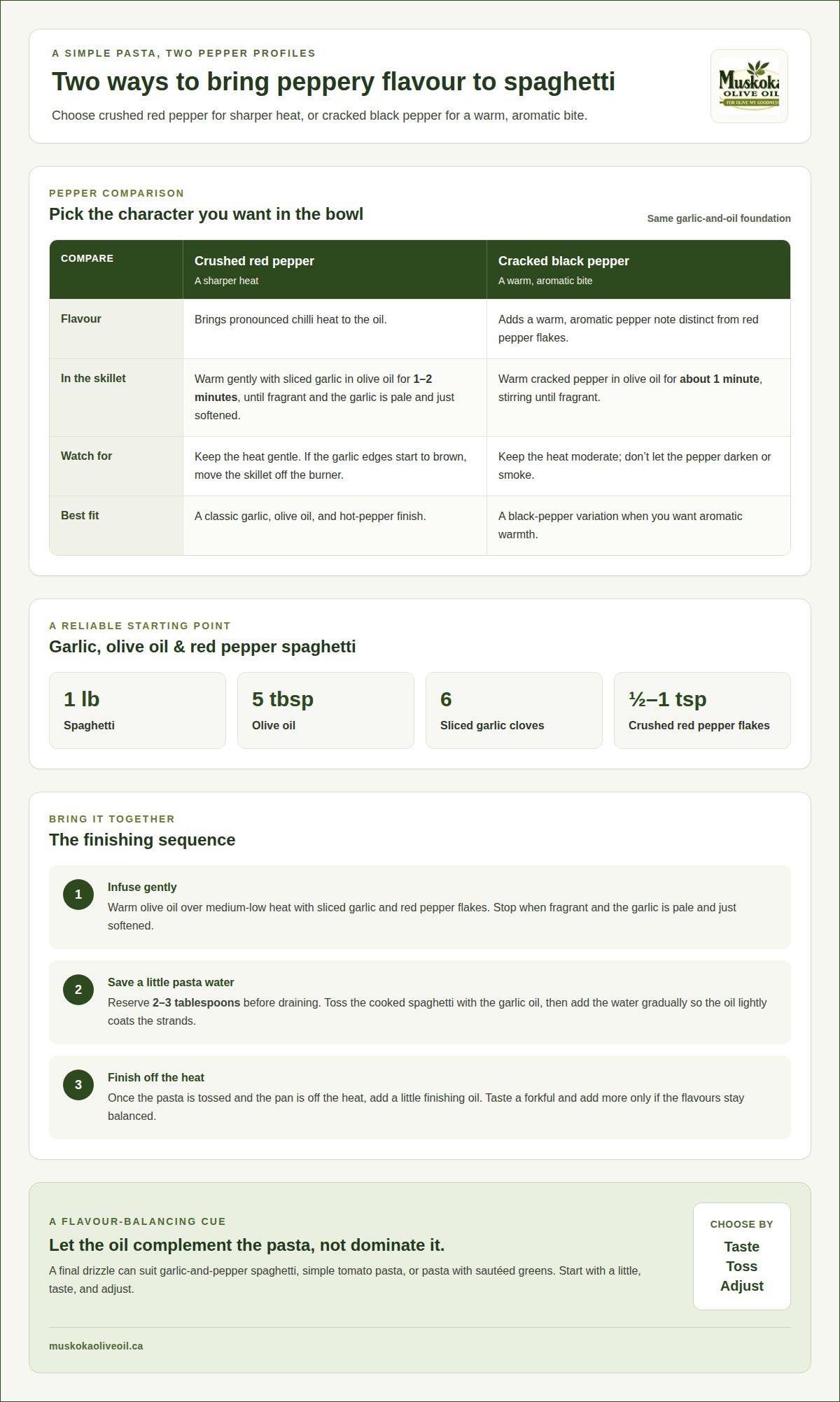
- Set out 1 pound of spaghetti, 5 tablespoons of olive oil, 6 sliced garlic cloves, and 1/2 to 1 teaspoon of crushed red pepper flakes. Keep a small bowl ready for pasta water before draining. Having the ingredients within reach helps you control the garlic’s colour while the skillet is hot and the pasta finishes cooking.
-
Infuse Olive Oil with Garlic and Pepper
Warm the olive oil in a skillet over medium-low heat, then add the sliced garlic and red pepper flakes. Stir for 1 to 2 minutes, watching for fragrance and pale, just-softened garlic. If the edges begin to brown, move the skillet off the burner. This gentle infusion brings garlic and chilli flavour into the oil without scorching either ingredient.
-
Toast Black Pepper in Olive Oil
For a black-pepper variation, warm cracked pepper in olive oil until fragrant, about 1 minute. Keep the heat moderate and stir the pepper so it releases its aroma evenly. Don’t let the particles darken or smoke. This approach gives the sauce a warm, aromatic bite distinct from the sharper heat of crushed red pepper flakes.
- Cook the spaghetti according to the package directions. Before draining, reserve 2 to 3 tablespoons of pasta water for the skillet. Add the cooked strands to the garlic oil and toss. Pour in the reserved water gradually, tossing until the oil lightly coats the pasta. The starchy liquid helps bring the sauce together instead of leaving oil pooled beneath the spaghetti.
- For a rounder, richer variation, combine 2 tablespoons of butter with 3 tablespoons of olive oil. Melt the butter gently, then add garlic and pepper before tossing in the spaghetti. Add grated parmesan at the end if you like a savoury, salty finish. This version suits a mild garlic-and-oil pasta, while a lighter hand with cheese keeps the pepper noticeable.
- Add finishing oil once the pasta is tossed and the pan is off the heat. A final drizzle works with aglio, olio e peperoncino, simple tomato spaghetti, and pasta with sautéed greens, where its flavour can complement the dish. Start with a little, taste a forkful, and add more only if the sauce remains balanced.
- Store extra virgin olive oil in a cool, dark area, away from a sunny window or warm stovetop. Close the bottle after pouring to limit exposure to air. Kendall Reagan Nutrition Center advises replacing oil if it develops a bitter odour. Careful storage helps preserve the aroma you want in a finishing drizzle.
One version uses 500 g (16 oz) of spaghetti, serves about four to six people, and uses 40 grams of butter. It calls for 3 minced garlic cloves. The method overview says to stir garlic in oil for 30 seconds without browning, then cook sliced garlic for 1 1/2 - 2 minutes.
The recipe simmers the oil mixture for 5-8 minutes, until the garlic is fragrant and barely golden.
Aglio, olio, e peperoncino
This Italian classic relies on timing: the sauce comes together in the skillet while the spaghetti finishes cooking. Follow these steps to keep the flavours distinct and the strands evenly coated.
- Choose your spaghetti and prepare the toppings before starting the pot. Slice the garlic evenly so it softens at a similar pace, and set out crushed red pepper flakes or a serrano pepper. For a gentler result, remove some seeds from fresh pepper; leave them in for more pronounced heat.
- Bring a pot of water to a boil and cook the spaghetti until al dente, usually 1 minute less than the package recommends. The pasta will finish in the skillet, so avoid cooking it fully soft in the pot. Stir during cooking to separate strands and help them cook evenly.
- Before draining, set aside some pasta water to loosen the sauce if needed. Keep it beside the skillet rather than pouring it all in immediately. The water contains starch released by the spaghetti, which helps emulsify the oil into a sauce that coats the pasta.
- Warm 1/2 cup of extra virgin olive oil over low heat while the pasta cooks. Add the sliced garlic and 1/2 teaspoon of crushed red pepper flakes, or your chosen fresh pepper. Let the oil take on their flavour gradually. Keep the garlic pale; dark, crisp edges can make its taste harsh.
- Transfer the drained spaghetti to the skillet with tongs. Toss continuously so each strand meets the flavoured oil. Add pasta water in 1/2-cup increments, tossing between additions. Stop once the sauce looks glossy and clings to the strands; the full reserved amount may not be needed.
- Check the texture and seasoning before serving. If the spaghetti feels tight or dry, add a splash of pasta water and toss again. If the sauce seems loose, keep tossing over gentle heat until it coats the pasta. Taste a strand before adding salt, since the cooking water may already season it.
- Serve promptly, while the sauce is glossy. Add chopped parsley for a fresh herbal note, if desired. Grated cheese is optional: a little can soften the chilli’s edge, while leaving it off keeps the garlic and pepper more prominent. Offer extra chilli at the table for guests who enjoy more heat.
- Adapt the method to the ingredients on hand without changing its character. A few olives or sautéed greens can make the dish more substantial, while lemon zest adds a brighter accent. Add these at the end, taste the complete bite, and adjust the balance before bringing the pan to the table.
Which olive oil varieties have the most peppery flavour?
Use cultivar as a clue, not a guarantee. Picual, Coratina, and some Koroneiki oils often have pronounced green, peppery character, while harvest timing and freshness also shape the taste.
- Look for Picual when you want a firm, green finish. Picual oils can bring notes of fresh-cut grass and green tomato, along with a distinct peppery bite. That assertive profile works well as a finishing drizzle over plain spaghetti, where tomato sauce or heavy cheese won’t cover it. Taste the oil on its own, then try a drop with a strand of warm pasta.
- Choose Coratina for a more robust impression. Coratina is associated with bold green flavours and a lingering peppery sensation. Try it over pasta with sautéed greens, beans, or a modest amount of grated cheese. These ingredients can complement the oil’s intensity without adding competing heat. A cultivar name helps set expectations, but doesn’t guarantee the same taste in every bottle.
- Consider Koroneiki for a lively, aromatic option. Koroneiki oils can combine fresh herbal notes with a peppery finish. Drizzle one over spaghetti with garlic, parsley, or lemon zest when you want the oil’s flavour to remain clear. Intensity varies with growing conditions, harvest maturity, and production choices, so use the flavour description as a guide, not a fixed ranking.
- Compare cultivars by tasting them side by side. Pour a small amount of each oil into separate cups, then smell and taste them plain. Notice whether the pepper sensation arrives immediately or builds after swallowing. Follow with a bite of plain bread or pasta. This simple comparison shows how Picual, Coratina, and Koroneiki differ without garlic, chilli, or parmesan distracting your palate.
- Match intensity to the rest of the dish. A bold oil can stand up to roasted vegetables, tomato, or bitter greens. For delicate pasta with butter or mild cheese, a more restrained oil may keep the dish balanced. Add the oil after cooking, taste a forkful, and adjust gradually. The best choice is the cultivar whose peppery character complements the sauce rather than competing with it.
- Use freshness and harvest information alongside cultivar. An olive variety alone can’t tell you how lively an oil will taste. Harvest maturity, handling, and storage all influence its green aromas and peppery finish. Look for harvest details on the bottle when available, and keep the oil away from heat and light. Taste it before pouring generously over spaghetti.
How does extra-virgin olive oil become peppery, and what does it indicate?
- Notice where the sensation appears. Taste a little extra virgin olive oil on its own before adding it to food. Pepperiness often feels like a warming tickle at the back of the throat, rather than the sharp heat of chilli. Swallow a little and notice whether that gentle catch follows.
- Connect pepperiness with the olive’s natural compounds. Olives contain phenolic compounds, including oleocanthal, which can contribute to bitterness and a peppery throat sensation. The amount and balance vary with cultivar, growing conditions, and harvest maturity. A lively finish can reflect these natural compounds, but pepperiness alone doesn’t establish an oil’s overall quality.
- Consider how ripe the olives were at harvest. Less-ripe, greener olives can produce oils with pronounced green, bitter, and peppery notes. Riper olives may taste softer and mellower. These are tendencies, not rules: cultivar and production choices also shape the result. Compare oils side by side, noticing whether grass, green leaves, or a throat tickle stands out.
- Use bitterness and aroma as context. Pepperiness is one part of an oil’s flavour profile, alongside fruitiness and bitterness. A fresh oil might suggest green tomato, herbs, or cut grass before a peppery finish. Taste a small amount with plain bread, then with spaghetti. Food changes your perception, so sample the oil alone first.
- Don’t treat a peppery finish as a complete quality test. A robust sensation can be a positive flavour trait, but no single taste tells the whole story. Freshness, aroma, balance, and signs of deterioration matter too. An oil that smells stale or tastes unpleasantly rancid isn’t a good choice simply because it feels peppery.
- Protect the flavour after opening. Heat, light, and air can dull an oil’s aroma and character over time. Close the cap after pouring, and store the bottle in a cool, dark place away from the stove or a sunny window. This helps preserve its distinctive green notes and peppery finish for pasta.
- Match intensity to the dish. A robust extra virgin olive oil can add depth to plain spaghetti, beans, or roasted vegetables. A delicate sauce may call for a gentler finish, while tomato or bitter greens can stand up to bolder flavour. Add a small drizzle after cooking, taste a forkful, and adjust to balance the dish.
When choosing an oil for a dish, consider how its peppery finish will sit alongside the other flavours. The cacio e pepe recipe uses 4 tablespoons of extra-virgin olive oil, divided. Taste the oil before cooking so you can judge its own throat-catching quality separately from the finished dish, then adjust how much you drizzle on your portion to suit your preference.
The olive oil, garlic and crushed red pepper pasta sauce takes 10 minutes to prepare. Because crushed red pepper brings its own heat, tasting the oil on its own first can help you distinguish that chilli sensation from the oil’s peppery finish. A small taste alongside the sauce can also show whether the oil’s bitterness and aroma complement the overall flavour, rather than relying on throat warmth alone as a guide.
How much finishing oil should you drizzle over pasta?
- Start with a light coating, not a pool. Toss the spaghetti with its sauce, then drizzle a little extra virgin olive oil over the top. The right amount depends on the pasta’s existing sauce, the oil’s intensity, and the richness of the other ingredients. For example, tomato-coated pasta needs less added oil than plain spaghetti.
- Account for oil already in the dish. Aglio, olio e peperoncino already gets much of its flavour from olive oil, garlic, and hot pepper. Add just enough finishing oil to refresh the aroma, rather than layering on more richness. For a sauce with butter or cheese, start especially lightly; both ingredients already contribute a smooth, rich texture.
- Let the oil’s pepperiness guide your hand. A robust oil with a strong, throat-catching finish can dominate delicate ingredients. A milder oil allows a more generous drizzle without overwhelming herbs, vegetables, or seafood. Taste a forkful before adding more. That first bite reveals whether the oil complements the sauce or crowds out its other flavours.
- Drizzle after cooking and toss briefly. Take the pan off the heat before adding finishing oil. Toss the spaghetti so the oil spreads across the strands, then taste again. Heat can soften fresh aromas, while an uneven pour leaves some bites oily and others plain. For plated pasta, add a fine stream over each serving.
- Adjust for pasta water and sauce texture. If the sauce already clings smoothly, extra oil may make it feel heavy. If the pasta looks dry, first toss in a splash of reserved pasta water. The water helps loosen and bind the sauce; use finishing oil afterward to add flavour, not to replace that adjustment.
- Use the same tasting method for different sauces. Try a restrained drizzle on spaghetti with garlic and parsley, then compare it with tomato pasta or roasted vegetables. Parmesan, chilli, and salty olives can change how peppery the oil tastes. Add a little, taste the whole bite, and stop once the oil’s aroma is clear without masking the dish.
- Choose an oil with the finish you enjoy. A peppery oil can bring freshness and a lively finish to simple pasta, while a gentler extra virgin olive oil suits subtle sauces. Explore extra virgin olive oils to find a flavour profile that fits your preferred finishing touch.
Muskoka Olive Oil
Muskoka Olive Oil Co. offers Ultra-Premium Extra Virgin Olive Oils to help you explore differences in pepperiness, aroma, and finish. When choosing an oil for spaghetti, compare flavour profiles and find one that complements your garlic, chilli, and sauce without overpowering them.
Explore Ultra-Premium Extra Virgin Olive Oils and Infused Olive Oil for different ways to add flavour to everyday cooking. White and Dark Barrel-Aged Balsamic Vinegars offer further pairing possibilities for meals beyond pasta. Start with the flavours you enjoy, then choose an oil suited to the dishes you make.
Explore the olive oils at Muskoka Olive Oil Co. to find a peppery finish that suits your pasta.
Make your next pasta night your own
Let your palate shape the finishing touch. A peppery finishing oil for pasta can become part of your signature style, whether you prefer a bright green edge, a gentler herbal note, or an aromatic infused flavour. Try a new pairing with a familiar dish, then notice how the oil changes the balance of the whole meal.
Explore flavour choices at Muskoka Olive Oil Co. and find an oil suited to the way you cook. Browse the extra virgin and infused olive oils, then choose a peppery finish for your next pasta dish.
Contact Muskoka Olive Oil Co. for pairing guidance, then bring a little extra discovery to your next dinner.
Frequently Asked Questions
What is a peppery finishing oil for pasta?
It’s an extra virgin olive oil with a noticeable peppery finish, added to pasta just before serving. The sensation comes from the oil’s own flavour, not necessarily from added chilli. Try it on a simple dish, such as spaghetti with parsley, to appreciate its character. A finishing oil is different from the oil used to cook garlic or build the sauce.
What are the best peppery finishing oils for pasta available in Canada?
The best choice is a fresh extra virgin olive oil whose flavour suits your sauce. For a ready-made flavour variation, an infused olive oil can complement pasta when its added flavour works with the other ingredients. Consider the whole dish: a bold sauce can pair with a more assertive oil, while delicate ingredients benefit from a subtler finish. Taste the oil before serving it.
Where can I buy peppery finishing olive oil in Canada?
Muskoka Olive Oil Co. offers extra virgin and infused olive oils to Canadian customers. Choose extra virgin olive oil when you want the oil’s natural flavour to lead, or consider an infused option for a different culinary accent. The right selection depends on the pasta and flavour profile you enjoy. Contact Muskoka Olive Oil Co. for help choosing an oil for your next meal.
Leave a comment