


How to Make a Shallot Balsamic Reduction for Strawberries
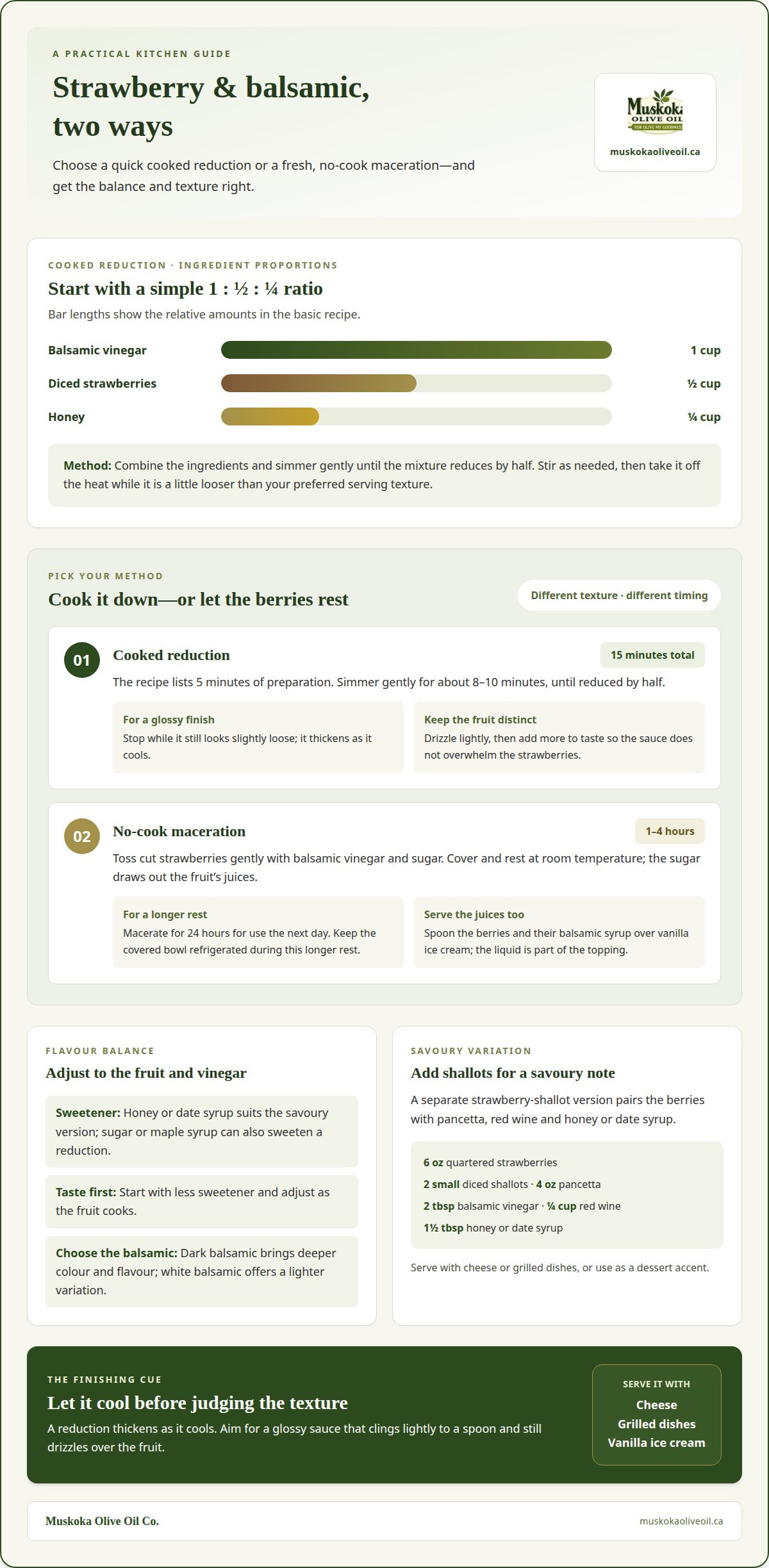
The sweetest strawberries aren’t the only ones that make a memorable topping. A balsamic reduction for strawberries balances fruit and tang: start with 1 cup of balsamic vinegar, 1/2 cup of diced strawberries and 1/4 cup of honey, then simmer until the mixture reduces by half. Add shallots for a savoury note that makes the sauce at home over cheese or grilled dishes as well as dessert.
Strawberries that are beginning to soften can work beautifully in a balsamic reduction. Adjust the sweetness to suit the fruit, then let the sauce cool so it thickens. This guide covers the ingredients, how to macerate strawberries to draw out their juices, and how to prepare a reduction with fresh or softening fruit. You’ll also learn how to add shallots and choose a serving that balances sweet, tangy and savoury flavours.
Key Takeaways
- Use shallots to add a savoury layer, and balance the sweetness to suit your balsamic and fruit.
- Macerating sliced strawberries with balsamic and sugar draws out their juices for a no-cook option.
- Let the sauce cool before judging its consistency; it thickens as it cools.
- Fresh or beginning-to-wilt strawberries can both work in the cooked reduction.
- Aceto Balsamico di Modena must contain at least 110 g/L of reducing sugars, according to the European Commission, so the vinegar contributes sweetness too.
Ingredients for a strawberry-shallot balsamic reduction
- Measure the savoury base. For the strawberry-shallot recipe, prepare 6 oz of quartered strawberries, 2 small diced shallots and 4 oz of pancetta. You’ll also need 2 tablespoons of balsamic vinegar, ¼ cup of red wine and 1 ½ tablespoons of honey or date syrup. Set everything out before cooking so the shallots don’t sit in the pan unattended.
- Choose a sweetener with the vinegar in mind. Honey or date syrup suits this version; sugar or maple syrup can also sweeten a balsamic reduction. Start with a restrained amount, taste as the fruit cooks, and adjust only if the vinegar and berries need more balance. Aceto Balsamico di Modena must contain at least 110 g/L of reducing sugars, according to the European Commission, so it already contributes sweetness.
- Select a balsamic that suits the dish. A dark balsamic gives the reduction a deeper colour and flavour; choose one whose sweetness and acidity complement ripe strawberries. For a lighter-coloured variation, a pomegranate-quince white balsamic can bring a different fruit note. The best choice depends on whether you want the shallot and pancetta to lead, or the berries to remain prominent.
- Aim for a glossy, pourable finish. The reduction should cling lightly to a spoon while still drizzling over the fruit. It will thicken as it cools, so remove it from the heat while it looks slightly looser than your ideal serving consistency. A stiff, sticky sauce can overwhelm delicate strawberries.
- Plan the amount at the table. Spoon on a light drizzle, then add more to taste rather than coating the berries. This keeps the strawberries distinct and lets guests control the sweet-sour balance. Serve the combination with cheese, grilled vegetables or chicken for a savoury plate, or use it as a dessert accent.
- Make ahead and store with care. Prepare the reduction ahead, let it cool, then refrigerate leftovers in a clean, covered container. Strawberry pulp adds moisture, so keep the sauce chilled and use it promptly. Check its aroma and appearance before serving, and discard it if either has changed noticeably.
- Keep the simmer gentle. Burning can happen when the sweetener and fruit cook too aggressively or the pan goes unstirred. Stir regularly, lower the heat if the mixture catches, and stop before it becomes too thick. Cooling will finish the texture, helping the sauce stay glossy instead of turning into a hard syrup.
Macerating strawberries with balsamic vinegar and sugar
Macerating softens the berries and draws out their juices without cooking them. Use this no-cook method for a fresh, spoonable topping.
Add balsamic vinegar and sugar
- Prepare the berries. Rinse and dry the strawberries, then remove their green tops. Cut regular-sized berries into quarters and larger berries into sixths, so the pieces are easier to coat. Place them in a bowl with enough room for stirring. Even cuts help the vinegar and sugar reach the fruit evenly.
- Add the sweet-tart mixture. Add balsamic vinegar and sugar to the strawberries, adjusting the amounts to taste. Toss gently until the crystals and vinegar coat the cut surfaces. Avoid crushing the berries; bruised fruit can turn mushy before it has rested. Choose a bowl that holds the juices as they collect.
- Adjust with care. Taste a piece after mixing. If the berries already taste very sweet, don't add extra sugar immediately; the vinegar brings acidity and the fruit will release juice as it rests. A white balsamic offers a lighter flavour profile, and the white balsamic vinegar selection from Muskoka Olive Oil Co. gives you options for that style.
Macerate the strawberries
- Let the mixture rest. Cover the bowl and leave the strawberries at room temperature for at least 1 hour, and no more than 4 hours. During this time, sugar draws moisture from the cut fruit, while balsamic vinegar seasons the juices. Keep the bowl away from direct heat, which can soften the berries too quickly.
- Stir and inspect the juices. Fold the mixture gently once during the resting time, bringing the strawberries at the bottom to the surface. The fruit should look glossy, with liquid collecting in the bowl. Stop stirring if the pieces begin to break apart; intact quarters or sixths make a better topping.
- Choose the serving texture. For a juicy spooned topping, serve after the berries have rested and released liquid. For a more concentrated flavour, the strawberries can macerate for 24 hours for use the next day. Refrigerate the covered bowl during this longer rest, then stir gently before serving.
- Serve with the collected juices. Spoon the berries and their balsamic syrup over vanilla ice cream, or add them to a simple dessert plate. The liquid is part of the topping, not something to drain away. If the berries taste sharper than you prefer, balance each serving with a little more sugar rather than adding it all to the bowl.
Prep, cook, and total time
Choose your method first: a cooked reduction, a version with shallots, or uncooked macerated berries. Each has a different active and resting time.
- Set aside time for the basic reduction. The recipe lists 5 minutes of preparation and 15 minutes total. Its simmer takes approximately 8-10 minutes, reducing the mixture by half. Gather and measure the ingredients before heating the pan. That small setup step helps you focus on the consistency as the liquid reduces.
- Keep the simmer within the cooking window. Start timing once the mixture simmers gently, rather than while the pan heats. Watch the liquid level and stir as needed. A reduction loses water as it cooks, so the volume and texture change together. Take the pan off the heat when it has reduced by half; it thickens further as it cools.
- Allow more time for the shallot version. This recipe takes 10 minutes to prepare, 15 minutes to cook, and 25 minutes total. Prep includes dicing the shallots and quartering the strawberries. Measuring the wine, vinegar and honey before cooking keeps each addition ready as the pancetta and fruit move through their stages.
- Follow the shallot recipe’s timed stages. Render the pancetta over medium-low heat for 5-8 minutes. Remove 1-2 tablespoons of rendered fat before adding shallots and strawberries. Cook them for 3-4 minutes, until the shallots are translucent. After adding wine, vinegar and honey, cook for another 3-4 minutes. Use the listed 15-minute cook time for the recipe overall.
- Include resting time for the no-cook method. Strawberries with balsamic vinegar take 10 minutes to prepare, plus 1 hour of resting. That makes the stated total 1 hour 10 minutes. The resting period isn’t active cooking time, but include it in your serving plan. The berries release juices as they sit, creating a syrupy accompaniment without a saucepan.
- Match the method to your serving time. For a six-serving cooked reduction, the listed total is 15 minutes. Choose the 25-minute shallot version when you want its savoury ingredients, or allow the macerated berries their full resting time. Avoid starting the no-cook method just before serving; its hour of rest is part of the recipe, not optional prep.
- Use cooling time to finish the schedule. Remove the reduction from heat when it reaches the halfway point, then let it cool before judging its final thickness. Cooling changes the texture, so extra simmering can push it past a pourable finish. For a planned serving, prepare the cooked sauce first, then arrange the strawberries while it cools.
Using fresh or wilting strawberries
- Sort the strawberries by condition. The shallot balsamic reduction works with fresh or wilting strawberries. Choose firm, fragrant berries for a bright, defined fruit flavour. Slightly softened berries suit a cooked sauce because heat will soften them further. Set aside fruit that has collapsed into liquid; it can make the mixture harder to control. Keep the two groups separate until you decide whether to use them raw or cooked.
- Prepare fresh fruit for the pan. Rinse the strawberries and dry them well before removing their green tops. Quarter regular-sized berries so they soften evenly alongside diced shallots. If a berry is especially large, cut it into smaller pieces. Dry surfaces help the fruit cook in the pan rather than releasing extra rinse water. Keep the pieces similar in size, but don’t mash them before cooking.
- Use wilting berries where their texture matters less. Choose strawberries that have softened but still hold their shape when handled. Remove green tops and cut away any parts that are too soft for your preferred finished texture. Their softer flesh breaks down faster than firm fruit, so add them with attention and stir gently. This helps the berries mingle with the shallots without turning the whole sauce into an uneven puree.
- Adjust your cooking by watching the fruit. Fresh strawberries may need more time to soften than berries already beginning to wilt. Look for the pieces to release juice and become tender, rather than relying on a fixed extra cooking time. Stir the shallots and fruit so they cook evenly, and lower the heat if the mixture begins sticking. Keep the fruit visible in the sauce if you want a textured finish.
- Choose the fruit based on the serving. Use fresh, intact strawberries when you want distinct pieces beside grilled chicken, vegetables or cheese. Use softer berries when a more integrated, spoonable sauce suits the plate. A combination can also work: add firmer pieces first, then softer fruit later. Taste the finished mixture before serving, since each batch of strawberries brings its own balance of sweetness and acidity.
When planning the fruit, keep the recipe quantity in view: The recipe uses 16 ounces of fresh strawberries, hulled and with large berries cut in half. The recipe uses 16 oz of fresh strawberries. That amount gives you a practical basis for sorting the batch: reserve berries that still hold their shape for a more distinct finish, and use softened but intact fruit where a more blended sauce is welcome. If the fruit varies in condition, make the choice berry by berry rather than treating the whole batch alike. The useful distinction is whether each piece can retain the texture you want after cooking.
Keep the prepared fruit separate until you’re ready to add it, so you can choose which pieces go into the pan first. Firmer pieces can soften with the shallots, while softer berries can be added later and stirred gently. Watch for tenderness and released juice as the mixture cooks, and lower the heat if it starts to stick. This helps you use the strawberries you have while controlling whether the finished sauce has visible pieces or a more integrated texture.
How do you make balsamic reduction for strawberries?
- Organize the cooking sequence. Keep the diced shallots, prepared strawberries, wine, vinegar and sweetener within reach. Choose a saucepan that gives the ingredients room to move, plus a spoon for stirring. Have a fine strainer and heat-safe container ready for the finished sauce. This order keeps attention on the pan once the pancetta starts rendering.
- Render the pancetta gently. Place it in the pan over medium-low heat and let the fat release gradually. Stir so the pieces colour evenly, and avoid rushing them over high heat. Remove some rendered fat before adding the fruit and shallots, leaving enough behind to coat the pan. The browned bits on the bottom contribute savoury flavour.
- Soften the shallots without browning them deeply. Add the diced shallots and strawberries to the pancetta. Stir to coat them in the remaining fat, scraping the pan gently as the fruit softens. Keep the heat controlled; deeply browned shallots can make the sauce taste bitter and compete with the berries’ delicate flavour.
- Use the wine to lift the pan flavours. Pour in the red wine and stir across the bottom of the pan, loosening any browned residue. Let the liquid mingle with the shallot and strawberry juices before adding the balsamic vinegar and sweetener. This order distributes the savoury notes through the sauce instead of leaving them stuck to the pan.
- Stir as the mixture comes together. Once the vinegar and sweetener are in, move the spoon around the pan’s base and edges. Look for a cohesive, glossy liquid with softened fruit and no unmixed sweetener at the bottom. Keep the heat gentle enough to prevent splattering or scorching, especially as the sauce becomes more concentrated.
- Choose a smooth or textured finish. Pour the cooked mixture through a fine strainer into a small container for a clean drizzle. For a more rustic sauce, leave some softened strawberry pieces in the mixture. Avoid pressing hard on the fruit if you want a clear finish; firm pressure pushes pulp through the mesh.
- Finish with a measured taste. Let the sauce settle, then taste a small amount with a piece of strawberry. The pancetta brings savoury depth, while the vinegar’s acidity should keep the fruit from tasting flat. If exploring another vinegar profile for a future batch, browse balsamic vinegar options that suit your preferred balance.
After straining, leave the reduction in its container and let it cool before serving. Set it on a stable surface and leave the sauce undisturbed while it cools. Meanwhile, prepare the strawberries and decide how you want to serve the reduction, without returning the pan to the stove. Once cool, check the consistency with a spoon and taste a little with a berry. Add the reduction gradually, tasting as you go, to find the amount that suits the fruit. Keep any unused sauce in the container until you’re ready to use it. Instead of coating the strawberries all at once, drizzle the sauce over them a little at a time for a measured finish.
Muskoka Olive Oil Co.
Muskoka Olive Oil Co. offers a range of balsamic flavours to explore in everyday cooking. Tasting white and dark balsamic vinegars can help you notice their distinct flavour profiles and choose what suits your kitchen.
Explore balsamic vinegar and extra virgin olive oil from Muskoka Olive Oil Co. beyond this recipe. Tasting ingredients can make it easier to choose what you’ll enjoy using in future meals.
Contact Muskoka Olive Oil Co. to continue exploring olive oil and balsamic flavours.
Make the pairing your own
A well-balanced balsamic reduction for strawberries can inspire flavour discoveries beyond dessert. Try changing the contrast on your next plate: pair the fruit’s sweetness with a savoury note, or choose a milder vinegar profile to keep the berries in the foreground. Small changes to the pairing can give the same preparation a fresh feel in another meal.
Muskoka Olive Oil Co. offers white balsamic vinegars, extra virgin olive oil and infused olive oil for exploring complementary flavours. Consider how each ingredient will pair with your strawberries, then build a combination that suits your table and the season. A simple tasting can help you find flavours you’ll want to use again.
For help choosing ingredients or exploring a flavour pairing, contact Muskoka Olive Oil Co. Bring your curiosity to the kitchen and enjoy discovering your own favourite combination.
Frequently Asked Questions
What ingredients and proportions are needed for balsamic reduction?
For a strawberry version, combine 1 cup balsamic vinegar, 1/2 cup diced strawberries, 1/4 cup honey, 1/2 teaspoon sea salt and 1/4 teaspoon freshly ground black pepper. For the shallot variation, use 6 oz quartered strawberries, 2 small diced shallots, 4 oz pancetta, 2 tablespoons balsamic vinegar, ¼ cup red wine and 1 ½ tablespoons honey or date syrup. These are two distinct recipes, so follow one set of proportions.
How long does balsamic vinegar take to reduce on the stove?
Allow approximately 8-10 minutes of simmering for the strawberry mixture to reduce by half. Use a gentle simmer and watch the liquid level, since pan width and heat affect how quickly moisture evaporates. Remove the pan from the heat once reduced, then let the sauce cool before assessing it. It thickens as it cools, so extending the simmer to make it look thicker while hot can leave it too dense.
How long does homemade balsamic reduction last in the fridge?
Refrigerate it in a clean, covered container and use it promptly. Discard it if its aroma or appearance changes noticeably.
What Canadian grocery-store balsamic vinegar is best for making a reduction?
Choose a dark balsamic whose sweetness and acidity complement the strawberries. It gives the reduction a deeper colour and flavour.
Leave a comment