


How to Make a Soft Dairy-Free Olive Oil Cake with Lemon
Butter isn’t the only way to make a tender cake. An olive oil cake uses oil in place of butter, giving the crumb a moist texture and a flavour that can complement bright lemon. For dairy-free baking with olive oil, the full ingredient list matters: this recipe pairs 125 g of extra virgin olive oil with 240 g of dairy-free milk, so the batter contains no dairy ingredients.
If you’re used to butter cakes, you may wonder whether olive oil will taste too pronounced or make the cake heavy. The oil’s flavour depends on its character, while careful mixing and baking help create a soft, balanced crumb. Lemon zest brings fragrant citrus notes; juice adds a sharper brightness.
Here, you’ll learn how olive oil cake differs from butter cake, how to balance lemon zest and juice, and how oven temperature affects the bake. You’ll also find simple topping ideas, from a light dusting of sugar to lemon syrup, so you can choose a finish that suits the occasion.
Key Takeaways
- Learn how olive oil creates a tender, moist cake without butter, and how to balance the other ingredients.
- Use lemon zest for fragrant citrus flavour and juice for a brighter, tangier note.
- Match the oven setting and pan to the recipe, then check the cake for doneness rather than relying on time alone.
- Choose a simple sugar dusting or lemon syrup to finish the cake without overpowering its flavour.
- Compare olive oil and butter to understand how each affects a cake’s texture, taste and preparation.
What is Olive Oil Cake?
Olive oil cake uses liquid oil as its baking fat instead of creamed butter. In dairy-free baking with olive oil, the recipe must also replace dairy ingredients such as milk with suitable plant-based alternatives.
Choose Olive Oil and Cake Ingredients
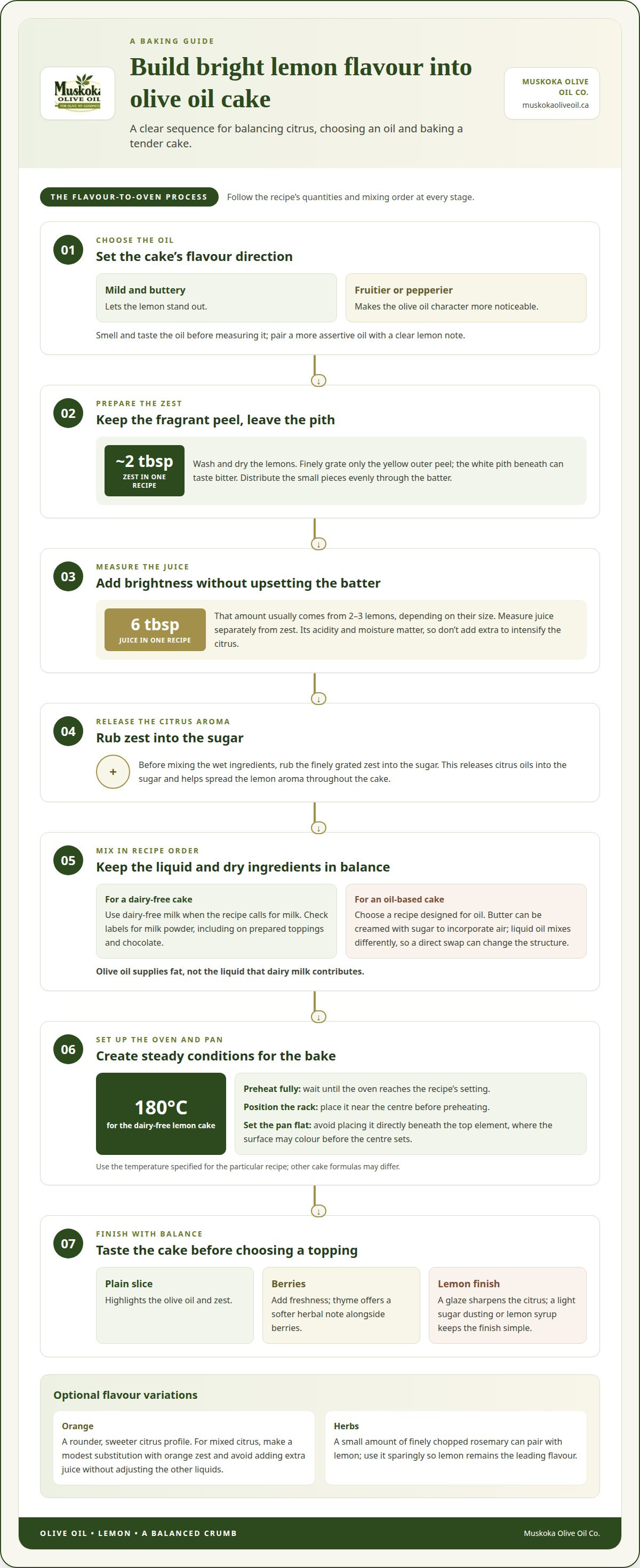
- Start with a recipe designed for dairy-free baking, then measure its ingredients as written. One vegan lemon cake formula uses 315 g all-purpose flour, 250 g granulated sugar, 125 g extra virgin olive oil, 240 g dairy-free milk, 80 g lemon juice and 3 teaspoons baking powder. These proportions show how oil, liquid and flour work together in the batter. Choose a mild oil if lemon should lead, or a more pronounced oil for a fuller flavour.
Check labels on dairy-free milk, chocolate and prepared toppings. Milk powder can appear in products that seem suitable at first glance, so read the ingredient list before adding them.
Use Olive Oil in Cakes and Muffins
- Choose an oil-based recipe for a loaf cake, round cake or muffins. Liquid oil blends readily into batter, so follow the recipe’s mixing order instead of adding flour to thicken it. For muffins, distribute berries through the batter without letting them overwhelm each portion. Dairy-free baking with olive oil works best when the recipe’s liquid and dry ingredients stay in balance.
For a gluten-free, dairy-free chocolate olive oil cake, use a formula made for both requirements. One variation may use almond flour and tapioca flour instead of wheat flour, while cocoa supplies the chocolate flavour. Check that the recipe includes suitable leavening and liquid, and that the chocolate contains no dairy.
Consider Olive Oil for Butter or Milk
- Use olive oil instead of butter with a recipe that accounts for oil’s liquid form. Butter can be creamed with sugar to incorporate air, while liquid oil mixes differently. A direct swap can change the structure, so choose an olive-oil cake recipe rather than replacing butter cup for cup without adjusting the other ingredients.
Olive oil can’t replace dairy milk because it supplies fat, not the liquid milk contributes. For cakes and muffins, use dairy-free milk when the recipe calls for milk, and an oil-based formula when replacing butter. For example, choose a lemon olive oil loaf or chocolate muffins specifically written with oil.
Lemon juice and zest for flavour and texture
- Wash and dry the lemons before zesting, then remove only the yellow outer peel. The zest carries fragrant citrus oils, while the white pith beneath can taste bitter. For a dairy-free lemon olive oil cake, a recipe may call for about 2 tablespoons of zest. Grate it finely so the small pieces distribute through the batter instead of clumping.
- Measure the juice separately from the zest. One cake recipe uses 6 tablespoons of lemon juice, usually from 2-3 lemons depending on their size. Fresh juice brings acidity and moisture, so don’t pour in extra simply to intensify the citrus. Keep to the recipe’s amount to preserve the balance between liquid and dry ingredients.
- Rub lemon zest into the sugar before mixing the wet ingredients. This releases citrus oils into the sugar and spreads the aroma through the batter. Then add the olive oil and other ingredients as directed. This simple mixing order carries the lemon flavour throughout the cake, rather than relying only on a glaze.
- Choose an extra virgin olive oil whose flavour suits the lemon. A mild, buttery profile lets the citrus stand out; a fruitier or more peppery oil makes the cake’s olive character more noticeable. Smell and taste the oil before measuring it. If its flavour feels assertive on its own, pair it with a clear lemon note rather than adding more oil.
- Keep flavour balance in mind when using orange. Orange zest and juice bring a rounder, sweeter citrus profile than lemon. For a mixed-citrus cake, use the recipe’s stated lemon quantity and make a modest substitution with orange zest. Avoid adding extra juice without adjusting the other liquids, since batter consistency depends on the full ingredient balance.
- Use herbs sparingly, with a familiar pairing such as finely chopped rosemary and lemon. Mix a small amount into the sugar or flour so it disperses evenly. Rosemary’s resinous aroma can compete with olive oil, so let lemon remain the leading flavour. Thyme offers a softer herbal note for a cake served with berries.
- Prepare the pan before mixing the acidic ingredients. Line the base with parchment and grease the sides according to the recipe. Then combine the lemon juice with the wet ingredients shortly before adding them to the dry mixture. This keeps preparation orderly and makes it easier to transfer the batter into the pan.
- Taste the finished cake with its intended topping before changing the next batch. A plain slice highlights the olive oil and zest; berries add freshness, while a lemon glaze sharpens the citrus impression. If you’re exploring oil profiles for baking, compare extra virgin olive oils by tasting them alongside a simple piece of bread.
Oven temperature and baking time
- Preheat the oven to 180°C for the dairy-free lemon olive oil cake, then wait until it reaches that setting before placing the pan inside. An oven that is still heating can expose the batter to changing conditions. Use the temperature written for your specific recipe, since a chocolate cake or another formula may behave differently.
Set the oven rack near the centre before preheating. This position leaves space around the pan and helps the cake bake evenly. Avoid placing the pan directly beneath the top element, where the surface may colour before the centre has set.
- Prepare the pan according to the recipe, then check that it sits flat on the rack. A tilted pan can distribute batter unevenly and affect how the cake rises. If the recipe calls for a loaf tin, use that shape rather than switching to a round pan without adjusting the bake. A different batter depth can alter how heat reaches the middle.
Use the pan material named in the instructions when possible. Dark metal, light metal and glass transfer heat differently, so changing materials may affect browning. Keep the pan away from the oven walls to allow heat to circulate around its sides.
- The client’s recipe calls for baking the vegan lemon olive oil cake at 180°C for 1 hour. Set a timer for the stated bake, but treat it as a guide to begin checking, not a reason to remove a cake that still looks unset. Keep the oven door closed during most of the bake.
Each time the oven door opens, warm air escapes and the temperature drops. If you need to inspect the cake, look through the window first. Avoid moving the pan while the centre is still rising, since shifting it can disturb the cake’s structure.
- As the bake approaches its stated time, look for changes across the whole surface. The top should appear set, and the edges may begin to pull slightly from the pan. If the top is darkening while the centre still looks wet, note the difference rather than increasing the oven temperature. A hotter setting can brown the outside faster without fixing an underbaked middle.
Use a toothpick in the centre to assess the crumb. Wet batter on the pick means the cake needs more time; a few moist crumbs indicate it is at a different stage. Check again after a short additional bake, keeping the door open only briefly.
- Follow the recipe’s cooling directions after removing the cake. Leave the pan on a level, heat-safe surface, away from a cold draft or open window. Moving a hot pan abruptly onto a cool surface can make it awkward to handle and may affect a delicate cake. Let the structure settle before loosening the sides or turning it out.
For a loaf, support the base as you transfer it from the pan. A long cake can bend if lifted from one end, especially while warm. Once fully cooled, cut a test slice from the centre to check that the crumb has set evenly.
Icing and other topping ideas
- Wait until the cake is completely cool before dusting it with confectioners’ sugar. A warm top melts the powder and can leave a damp-looking finish. Sift 1 tablespoon over the cake just before serving, using a fine sieve for an even layer. Place the cake on its serving plate first, so you don’t need to move it after decorating.
- Prepare lemon syrup by combining ¼ cup lemon juice with 2-4 tablespoons of granulated sugar, honey or maple syrup. Stir until the sweetener dissolves, then taste the mixture before using it. Sugar keeps the citrus flavour direct, while honey or maple syrup adds its own character. Choose the sweetener that best suits the cake’s other flavours.
- Apply syrup in stages with a spoon, distributing it across the top rather than pouring it in one spot. Let each spoonful soak in before adding the next. This gives the cake a more even finish and helps prevent syrup from pooling at the bottom of the plate. If the surface is delicate, spread the syrup gently.
- Make a dairy-free glaze by gradually adding lemon juice or plant-based milk to icing sugar. Stop when it drizzles from a spoon but doesn’t run straight off the cake. A thicker glaze creates defined ribbons; a thinner one coats the surface. If dairy avoidance is essential, check the labels on prepared icing sugar and flavourings.
- Choose fresh fruit as a topping when you want contrast without another layer of icing. Blueberries, raspberries or sliced strawberries bring colour and juicy texture to a lemon cake. Arrange the fruit on individual slices shortly before serving instead of leaving it on the whole cake. This keeps the topping distinct and makes each portion easy to plate.
- Add a crisp element only after the cake has cooled. Toasted sliced almonds or poppy seeds complement citrus and contrast with a tender crumb. Scatter them over the glaze while it’s still tacky so they stay in place. Keep additions on top instead of stirring them into the batter, unless the recipe calls for it.
- Match the finish to the occasion and the cake’s flavour. For a simple afternoon snack, serve a plain slice with fruit on the side. For a dessert plate, drizzle glaze over each portion and add a few berries. Keep extra toppings separate until serving, especially if guests may prefer less sweetness or want to taste the olive oil and citrus more clearly.
Olive oil compared with butter in baking
Choose the fat to suit the bake, since butter and olive oil behave differently in dough and batter. For pastry, the key is to follow a formula developed for the fat you plan to use.
Replace Butter with Olive Oil
- Use an olive-oil pastry recipe rather than swapping butter directly into a pie-crust formula. Butter can be cut into flour while cool, creating distinct pieces; liquid oil coats flour more evenly. That changes how the dough handles and how the crust bakes. A recipe designed around oil accounts for its different form and explains how to combine it with the other ingredients.
- Mix pastry dough only until it comes together, then shape it as the recipe directs. Too much handling can develop gluten and make the crust firm. If the dough feels greasy or difficult to roll, don’t correct it by adding flour or liquid at random. Those changes affect the balance and can make the baked pastry dense or crumbly.
Compare Baking Texture and Shelf Life
- Choose the fat according to the result you want. Olive oil works well in cakes where a moist, close crumb suits the style, while butter brings its own dairy flavour to recipes such as shortbread. In chocolate cake, a fruit-forward oil can complement cocoa; in a delicate vanilla bake, a more restrained flavour keeps the other ingredients in focus.
- Assess storage based on the finished bake, not the fat alone. A cake’s moisture, icing, fruit and storage conditions all affect how its texture changes over time. Once cooled, keep the cake covered to limit drying and protect it from nearby aromas. Follow the recipe’s storage directions, especially for bakes finished with fresh fruit or a moist topping.
- Test an oil’s flavour in a small, simple bake before using it for a special occasion. Taste a plain slice first, then try it with the intended topping. A robust oil may suit dark chocolate, while lemon juice and zest call for a flavour balance that lets citrus remain clear. Comparing extra virgin olive oils can help you choose a profile that fits your recipe.
Muskoka Olive Oil Co.: Infused Olive Oil
Muskoka Olive Oil Co. offers Infused Olive Oil and Extra Virgin Olive Oil for home cooks choosing flavours for baking. For a lemon cake, select an oil whose character complements the citrus rather than masking it. Infused olive oil can add another flavour dimension, while extra virgin olive oil lets you explore the oil’s own taste in the finished crumb. Keep the recipe’s measured quantity unchanged when selecting a different oil, so the batter stays balanced.
For your first bake, choose a flavour direction before preparing the ingredients: keep the cake’s lemon notes central or use an infused oil to introduce a complementary accent. Taste the oil on its own to understand its character before adding it to the batter. Explore olive oils for your next cake at muskokaoliveoil.ca.
Make your next cake your own
Let your next bake be a small flavour experiment. Keep the recipe steady, then change one choice at a time, such as the oil’s character or the finishing touch. That makes it easier to notice what you enjoy and refine your approach to dairy-free baking with olive oil.
For another flavour direction, Muskoka Olive Oil Co. offers Infused Olive Oil and Extra Virgin Olive Oil, along with White Balsamic Vinegars. Explore these ingredients as you plan future baking and serving ideas, choosing what suits the flavours you want to bring to the table.
Contact Muskoka Olive Oil Co. to explore its offerings and find inspiration for your next kitchen experiment. A thoughtful ingredient choice can turn a familiar cake into a new favourite. Happy baking!
Frequently Asked Questions
Can I add blueberries to this vegan lemon loaf?
Yes, blueberries can add juicy bursts to a vegan lemon loaf. Fold them gently into the finished batter so they don’t break and streak it. If using frozen berries, add them straight from the freezer to limit colour bleeding. Spread the batter evenly in the pan, and check the centre for doneness before removing the loaf. Let it cool before slicing so the berries don’t pull apart the crumb.
How do I substitute olive oil for butter in baking ratios?
There isn’t one dependable olive-oil-to-butter ratio for every bake. Butter contains both fat and water, and its solid state affects how a recipe mixes and sets. Use a recipe written for olive oil when possible. If adapting a particular cake, consider its mixing method, other liquids and desired crumb, then test a small batch before serving it to guests.
Which olive oil is best for cakes, muffins and cookies?
Choose an oil whose flavour suits the recipe. A mild extra virgin olive oil can let vanilla, fruit or spices take the lead, while a more pronounced oil can stand up to cocoa or dark chocolate. For berry muffins, a restrained flavour keeps the fruit prominent. In cookies, consider the other ingredients and whether you want the oil’s fruity notes to stand out.
Does extra virgin olive oil affect baking flavour?
Yes, extra virgin olive oil can contribute fruity, grassy or peppery notes, depending on the oil. These flavours may be subtle in a spiced cake but more noticeable in a simple loaf. For a first test, taste the oil on its own and pair it with the recipe’s strongest flavour. Lemon, chocolate and vanilla each create a different balance with the oil’s character.
What dairy-free substitutes pair well with olive oil in baking?
Unsweetened plant-based milk works in recipes that call for milk, while applesauce or mashed banana can add moisture in recipes designed for those ingredients. Each changes flavour and texture, so avoid swapping them casually into a tested formula. Oat milk can suit a mild vanilla muffin; soy milk can work in a cocoa-rich cake. Check labels for dairy ingredients, especially in chocolate and prepared mixes.
Is olive oil healthy for baking compared with butter?
Neither ingredient makes a cake healthy on its own. Olive oil and butter have different fat compositions, but a finished dessert also includes ingredients such as sugar and flour, along with portion size and overall eating habits. Choose olive oil for its flavour and how it performs in the recipe, not as a promise of a health outcome. Enjoy the cake as part of a varied diet.
Leave a comment