


How to Make Balsamic Glaze for Salmon and Broil It
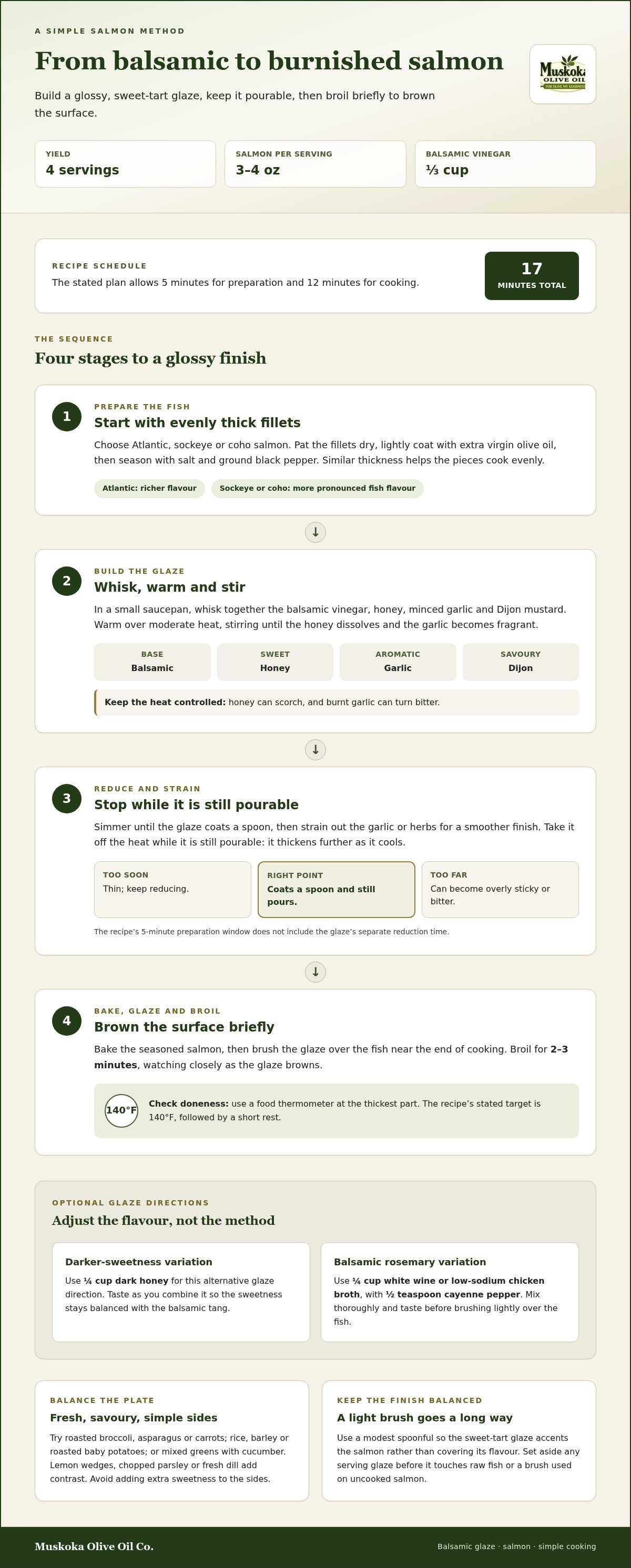
For glossy balsamic glaze for salmon, simmer balsamic vinegar until it thickens, strain out the garlic or herbs, then brush it over the fish and broil for 2-3 minutes to brown the surface. The key is to stop reducing the glaze while it’s still pourable: it thickens further as it cools, and cooking it too far can leave it overly sticky or bitter.
A deeply flavoured balsamic glaze for salmon doesn’t need a complicated method. This guide walks you through making it with ⅓ cup of balsamic vinegar, adjusting the texture, preparing the salmon for the broiler and watching closely as the glaze browns. You’ll also find practical side ideas, from crisp vegetables to simple grains, so the sweet-tart finish feels balanced on the plate. With a little attention at the stove, you can serve tender salmon beneath a burnished, flavourful coating.
Key Takeaways
- Build a balanced glaze with balsamic vinegar, honey, garlic and Dijon, then adjust the flavour to suit the fish.
- Reduce the mixture until it coats a spoon, and strain it for a smoother finish.
- Plan on 17 minutes from start to finish, with 5 minutes for preparation and 12 minutes for cooking.
- Broil the glazed salmon for 2-3 minutes at the end, watching closely as the surface browns.
- Round out the sweet-tart glaze with sides that bring fresh, savoury or gently earthy flavours to the plate.
Homemade balsamic glaze ingredients
- Choose salmon with a firm, even fillet, such as Atlantic, sockeye or coho. Each serving in this recipe uses one fillet weighing about 3-4 ounces, for four servings. Atlantic salmon’s richer flavour pairs well with the glaze’s sweetness, while sockeye and coho offer a more pronounced fish flavour. Whichever type you choose, similar thickness helps the pieces cook evenly.
- Measure the balsamic vinegar, honey and minced garlic before heating. Add Dijon mustard to the glaze for savoury depth, and season the salmon with salt and ground black pepper. This combination gives the glaze tang, gentle sweetness and aromatic garlic without making the vinegar taste like a dessert sauce.
- Whisk the balsamic vinegar, honey, garlic and Dijon mustard in a small saucepan. Warm the mixture over moderate heat, stirring until the honey dissolves and the garlic becomes fragrant. Keep the heat controlled: honey can scorch, and burnt garlic can turn bitter. For a smoother finish, strain the glaze after reducing it, rather than removing the garlic before it has flavoured the vinegar.
- Use extra virgin olive oil to lightly coat the salmon before seasoning, or whisk a small amount into the glaze for a rounder texture. For a brighter variation, a fruit-forward white balsamic can replace some of the dark vinegar; the pomegranate quince white balsamic brings a distinct fruit note. Taste the vinegar first, then adjust honey gradually so the final sweetness complements the salmon.
- Store-bought balsamic glaze works on salmon, too. Check its texture and sweetness before using it, since a thick glaze may need only a light brush and a sweeter one may not need added honey. Brush it over the fish near the end of cooking so it can brown without scorching. To judge doneness, use a food thermometer at the thickest part; this recipe’s stated target is 140°F, followed by a short rest.
For a darker-sweetness variation, the balsamic glaze for this baked salmon uses 1/4 cup of dark honey. Treat this as an alternative glaze direction, and taste the mixture as you combine it so the honey’s sweetness stays in balance with the balsamic tang. Stir until the ingredients are evenly blended, then brush on a light coating that complements the salmon rather than covering its flavour. This approach keeps the glaze central to the dish while allowing the honey to shape its character. If serving the salmon with other flavours, keep them simple so the glaze remains easy to notice.
A separate option is the balsamic rosemary glaze, which uses 1/4 cup of white wine or low-sodium chicken broth. The glaze includes 1/2 teaspoon of cayenne pepper. Choose between the liquid options according to the taste you want alongside the rosemary, and mix the cayenne in thoroughly so its warmth is distributed through the glaze. Taste before brushing it over the fish, then apply it lightly and adjust the amount to suit your preference. These ingredients offer a savoury, spiced direction distinct from the honey-forward version, while still giving the salmon a glossy balsamic coating.
Serving ideas and side dishes
- Plate one 3-4-ounce salmon fillet per serving, then add a modest spoonful of glaze. That portion keeps the sweet-tart coating in balance with the fish. Add lemon wedges, chopped parsley or fresh dill for contrast. A few thin cucumber slices bring a cool, crisp note beside the warm salmon. For an easy supper, serve the fillet whole; for shared cottage-style eating, flake it into a platter just before serving.
- Pair the glaze with sides that bring freshness, savouriness or a soft texture. Try roasted broccoli, asparagus or carrots, seasoned simply so they don’t compete with the balsamic flavour. Rice, barley or roasted baby potatoes can catch glaze that runs onto the plate. For a lighter meal, serve mixed greens with cucumber and a restrained vinaigrette. Avoid adding extra sweetness to the sides; the honey in the glaze already provides it.
- Set aside any glaze for serving before it touches raw fish or a basting brush used on uncooked salmon. Warm this clean portion gently in a saucepan, stirring until it loosens enough to drizzle. Spoon it over the cooked fillets or serve it in a small dish at the table. A little goes a long way: the goal is to accent the salmon, not bury its flavour.
- For a fruit-led finishing note, pair the plate with a bright white balsamic accent in a salad dressing. A restrained splash can echo the glaze while adding a lighter, tangy contrast. The white balsamic vinegar selection offers a way to explore that style of pairing. Keep the dressing separate until serving, so tender greens stay crisp and the salmon remains the centrepiece.
- Use the recipe’s nutrition estimate as a guide, not a universal value: one serving lists 325 kcal, 34 g protein and 11 g carbohydrates. Fillet size and the amount of glaze on the plate can change the final totals. For leftovers, refrigerate cooked salmon for up to 3 days. Reheat it in a 350°F oven until heated through, then serve with fresh greens or warm grains. Salmon flakes easily after reheating, so lift portions gently to keep them intact.
Cooking and preparation time
- Plan around the recipe’s stated timing, allowing for both preparation and cooking. Treat the broiling stage as part of those 12 cooking minutes, not extra time. This distinction keeps the schedule consistent. Set out the baking dish, brush, thermometer and serving plates before starting. If you’re preparing sides, choose ones that can be ready during the same short oven window.
- Use the 5-minute preparation window to pat the salmon dry, season it and arrange the fillets in the dish. Measure the glaze ingredients and place them within reach. The preparation time covers these setup tasks, not the glaze’s separate reduction time. If you make the glaze ahead, have it ready before the salmon enters the oven. That avoids extending the planned cooking window while the fish waits.
- For a 12-minute cooking schedule, begin with 5 minutes of baking before glazing. After brushing the fish, bake for 5 more minutes, then broil for 2 minutes. Those stages total 12 minutes. The broiling time is included, so don’t add it after the full baking schedule. Keep the oven timer visible and prepare to check the thickest fillet as the final minutes approach.
- Some methods bake the salmon for 5-10 minutes after glazing, then broil for 2-3 minutes. That longer sequence can exceed the 12-minute cooking estimate, especially with thicker fillets. Use the shorter schedule when following the stated 17-minute recipe. If the salmon needs more time, continue cooking and judge the thickest portion rather than serving it solely to meet the clock.
- Thickness, oven performance and the starting temperature of the fish affect the actual cooking time. Check the thickest part for the recipe’s 140°F target, then let the salmon rest. If you’re cooking chicken instead, its listed target is 165°F. For leftovers, reheat the salmon in a 350°F oven until heated through. Allow extra time for reheating, since it falls outside the original preparation-and-cooking schedule.
Other balsamic salmon recipes use different time plans, so keep each estimate tied to its own method rather than adding it to the schedule above. The roasted balsamic salmon recipe lists a total time of 40 minutes, while the recipe estimates a total salmon baking time of 15 to 18 minutes. The balsamic-glazed salmon recipe takes 20 minutes in total and instructs cooks to bake the salmon for about 18-20 minutes. These figures describe different recipe timelines; they are alternatives, not extra stages to append to the 17-minute plan. Check the timing attached to the version you are following before setting the oven timer.
A recipe also advises roasting salmon for 8 to 10 minutes per inch of thickness. Treat that as guidance for that recipe, not as a universal adjustment to every oven schedule. Follow the timing and doneness check for the method you have chosen, allowing the fish’s thickness to inform when you check it. Keep sides and glaze work organized around that selected timing so the salmon can be served promptly once it is done.
Glaze reduction and straining
- Choose a small, heavy-bottomed saucepan for the balsamic mixture. Add the measured vinegar, honey, minced garlic and Dijon mustard, then stir before heating so the honey disperses evenly. A smaller pan gives the mixture enough depth to simmer gently without spreading too thinly. Keep a heat-safe bowl and fine-mesh strainer beside the stove so you can strain the glaze as soon as it reaches your preferred texture.
- Bring the ingredients to a gentle simmer over medium-low heat. Look for small, steady bubbles, not a vigorous boil. Stir regularly, especially around the pan’s edges, where honey can catch and darken. Simmering concentrates the vinegar’s flavour as water evaporates. A reduction may take 10-15 minutes, depending on the pan and heat. Stay close, since the mixture thickens more quickly near the end.
- Watch how the glaze moves rather than relying only on elapsed time. Drag a spoon through the mixture: the liquid should cling lightly instead of running off like vinegar. For a more concentrated finish, reduce the mixture by half. Warm glaze looks thinner than cooled glaze, so remove the saucepan from the heat before the mixture becomes sticky. It will continue to thicken as it cools.
- Take the saucepan off the heat before straining. Pour the glaze through a fine-mesh strainer into the waiting bowl, gently pressing the garlic pieces with a spoon. This removes the solids while keeping their savoury flavour in the liquid. Avoid forcing every bit of garlic pulp through, which can make the finished glaze cloudy. Let the strained mixture cool briefly before brushing it onto salmon.
- Use the cooled glaze as a finishing layer, not as a long cooking liquid. Brush it over salmon near the end, then broil the fish for 2-3 minutes to brown the surface. If the glaze becomes too thick, warm it gently in the saucepan and stir until pourable. If it remains loose, return it to low heat and simmer briefly. These adjustments help the coating complement tender fish at dinner.
Broiling salmon to brown the glaze
- Prepare the salmon fillets before cooking. Pat the fish dry so the surface browns rather than steams. Season with salt and pepper, keeping the coating even across each piece. Letting the salmon sit at room temperature for 10-15 minutes before cooking can help it cook more evenly. Keep the glaze, brush and oven mitts close by before the dish goes in.
- Bake the salmon for 5 minutes before brushing on the glaze. This gives the fish a head start, so the sweet coating spends less time in the oven. Brush a thin, even layer over the top, reaching the edges without letting excess pool in the dish. A heavy layer can scorch under the broiler before the centre cooks. Reserve clean glaze for serving, rather than reusing anything that touched raw fish.
- Return the glazed fish to the oven for another 5-10 minutes. Thickness matters more than the clock: a thicker fillet needs more time than a slender portion. Check the thickest part for doneness, and avoid repeatedly opening the oven. The recipe’s recommended internal temperature is 140°F; the temperature can rise as the salmon rests. Remove the pan carefully before switching to broil.
- Broil the salmon for 2-3 minutes at the end to brown the glaze. Keep the oven door and fish under close watch, since honey and balsamic can darken quickly. Look for a glossy, burnished surface, not blackened edges. If one fillet browns faster, remove it while the remaining pieces finish. A brief broil adds colour and concentrated flavour without replacing the baking time needed to cook the fish.
- For grilled salmon, place seasoned fillets on a clean, oiled grill and cook until opaque and easily separated with a fork. Apply balsamic glaze near the end, then turn the fish carefully to prevent sticking or tearing. The research recipe gives a grilling estimate of 25-30 minutes, but thickness and grill heat affect timing. Watch closely after glazing, since direct heat can caramelize honey rapidly.
- Let the cooked salmon rest briefly before plating, then add a small drizzle of reserved glaze. Rice or roasted vegetables make straightforward sides for this salmon recipe. If the surface needs more colour, use the broiler in short, attentive bursts rather than extending the full cooking time. Aim for a browned glaze with moist fish beneath it, not a dark crust that masks the salmon’s delicate flavour.
Muskoka Olive Oil: Infused Olive Oil
Muskoka Olive Oil Co. offers infused olive oil to add a savoury layer to salmon and its balsamic glaze. Garlic-infused oil can echo the garlic in the glaze, while extra virgin olive oil brings a classic, fresh finish. Lightly coat the fish before seasoning, or drizzle a little over the plate after broiling.
For a different balance, pair salmon with a salad dressed with white balsamic vinegar, or explore dark balsamic vinegar for another rich, tangy note. These ingredients let you tailor the plate without changing the cooking method. Visit the infused olive oil collection for flavour ideas, or visit muskokaoliveoil.ca to explore the range.
Make the next meal your own
A recipe becomes a favourite when it fits the way you like to eat. As you enjoy your next batch, notice how the salmon’s richness, the glaze’s tang and the sides work together. That simple tasting habit can guide small changes, such as choosing a fruitier vinegar or adding a fresh herb at the table. Make balsamic glaze for salmon one part of the meal, not its only source of flavour, and let seasonal ingredients shape what you serve alongside it.
Muskoka Olive Oil Co. can help you explore flavour pairings for everyday cooking, from finishing oils to balsamic accents. If you’re curious about which combination might suit your next salmon dinner, contact Muskoka Olive Oil and continue discovering new ways to bring thoughtful flavour to the table.
Frequently Asked Questions
What Happens If You Reduce Balsamic Vinegar Too Much?
Over-reduced vinegar can taste harsh and become difficult to drizzle. If it still tastes pleasant, use a small amount in a vinaigrette or whisk it into a pan sauce, where other ingredients can soften its intensity. If it tastes burnt or bitter, do not use it as a finishing sauce; that flavour will carry through the meal. A fresh batch is better for serving over salmon.
What to Pair With this Balsamic Salmon?
For a different pairing, serve the salmon with creamy polenta and sauteed spinach. Polenta softens the vinegar's tang, while spinach adds a gentle, earthy note. Roasted squash also works well, especially with a crisp salad of radicchio and pear. Choose one rich side and one fresh side for contrast, without competing sauces or too many sweet flavours.
Best balsamic glaze ingredients for salmon
Choose ingredients for balance and texture, not sweetness alone. A lively, acidic balsamic vinegar keeps the finished coating from tasting flat, while a mild sweetener rounds its edges. For a smoother result, grate the garlic finely so it disperses evenly. Choose mustard with a clean, savoury flavour rather than a strongly sweetened variety. Taste each component before combining to guide adjustments.
How long to cook salmon with balsamic glaze
Fillet thickness and starting temperature affect cooking time, so check more than the surface. Look at the thickest section: the flesh should be opaque through most of its depth and separate into moist flakes when gently tested. A narrow knife inserted into the centre can show whether the inside remains translucent. Check individual portions separately, since smaller pieces may finish before larger ones.
How to prevent balsamic glaze from burning
Use the broiler's middle rack rather than placing the pan directly beneath the heating element. This gives the glaze more distance from intense direct heat while still allowing the surface to brown. Keep the pan level, and use a light-coloured baking dish so you can spot darkening easily. If one edge colours first, carefully rotate the dish for more even browning.
Leave a comment