


How to Make Creamy Balsamic Dressing for Salads and Grain Bowls
Want a balsamic dressing that clings to crisp greens instead of running to the bottom of the bowl? A creamy balsamic dressing recipe starts with mayonnaise, balsamic vinegar and Dijon mustard, blended into a smooth, tangy dressing in about 10 minutes.
Mayonnaise gives the dressing a rich, velvety texture, while balsamic vinegar adds the sweet-tart flavour that pairs naturally with fresh ingredients. It’s an easy way to dress a salad without masking the character of its greens and toppings.
Learn which ingredients to use, how to blend them into a cohesive dressing and how to adjust the flavour to your taste. Then try it on salads, roasted vegetables and grain bowls, where its creamy tang adds a satisfying finishing touch.
Key Takeaways
- Build a smooth, tangy dressing with mayonnaise, balsamic vinegar and Dijon mustard.
- Blend the ingredients until creamy, or whisk them together gradually for a no-blender method.
- Adjust the balance of sweetness, tang and seasoning to complement your ingredients.
- Use the dressing to bring salads, roasted vegetables and grain bowls together.
- Keep leftovers in a sealed container in the refrigerator and stir or blend before serving.
What is Creamy Balsamic Good On?
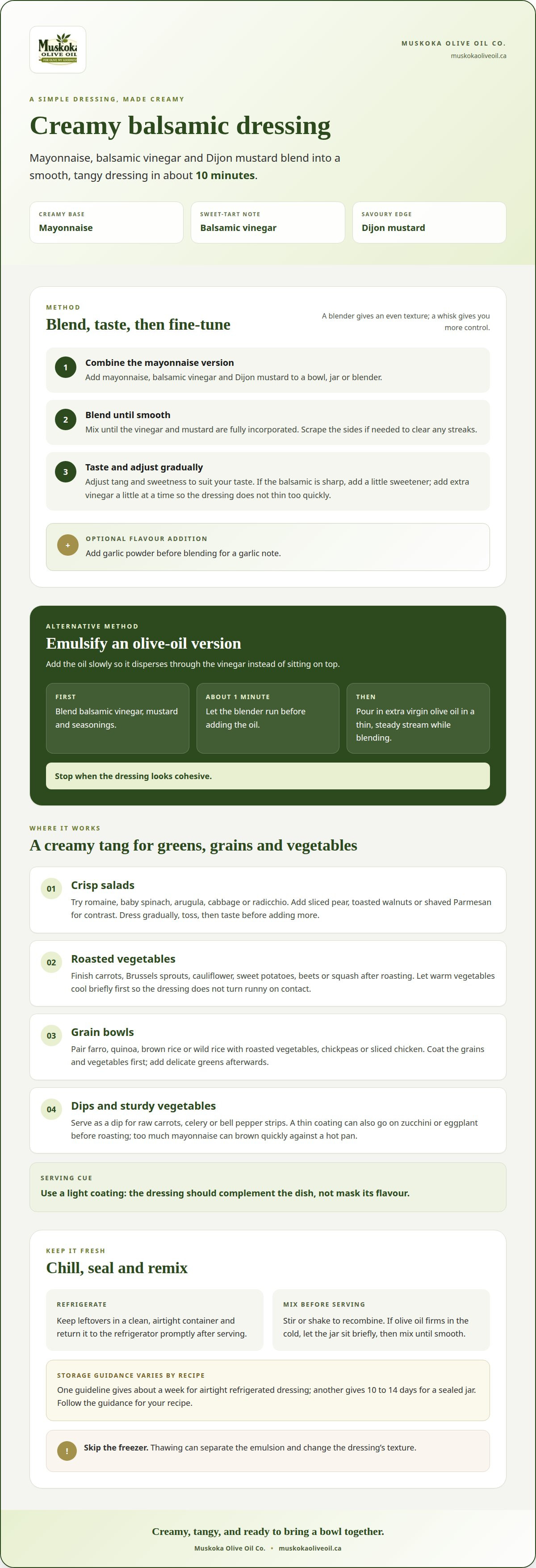
- Use the dressing to give crisp greens a tangy, creamy finish. Toss romaine, baby spinach or arugula with enough dressing to coat lightly. Add sliced pear, toasted walnuts or shaved Parmesan for contrast. The balsamic vinegar’s sweetness complements bitter leaves, while mustard brings a savoury edge. For a fruit-forward variation, try pomegranate-quince white balsamic with greens and soft cheese. Add the dressing gradually, then taste before adding more.
- Drizzle the dressing over warm vegetables after roasting, not before. Try it with carrots, Brussels sprouts, cauliflower or sweet potatoes. Its creamy texture settles into browned edges and balances their natural sweetness with acidity. Let the vegetables cool briefly first so the dressing doesn’t turn runny on contact. For a composed side, combine roasted vegetables with greens and finish with a light coating. A little adds flavour without masking the vegetables’ roasted character.
- Build a grain bowl with farro, quinoa or brown rice as its base. Add roasted vegetables, chickpeas or sliced chicken, then spoon the dressing over top. Its vinegar and mustard notes tie hearty grains to fresh toppings such as cucumber or baby spinach. Keep crunchy ingredients, including seeds, separate until serving so they retain their texture. For an even coating, toss the grains and vegetables first, then add delicate greens.
- Refrigerate leftover dressing in a clean, airtight jar. Creamy balsamic dressing keeps in the refrigerator for up to a week. Label the jar with its preparation date and use it within that period. Keep the container closed between servings, and use a clean spoon each time. Before serving, stir or shake the dressing to recombine its ingredients. If olive oil firms up in the cold, let the jar sit briefly, then mix until smooth.
- Keep the dressing chilled between meals and return it to the refrigerator promptly after serving. Freezing isn’t recommended: thawing can separate the emulsion and change its texture. Cream-based versions may split, while mayonnaise-based versions can lose their smooth consistency. Make a fresh batch rather than freezing leftovers. If refrigerated dressing looks separated, stir it thoroughly before serving. Discard it if its appearance or smell seems unusual.
Storage guidance varies by recipe: a sealed jar in the refrigerator can keep for 10 to 14 days; balsamic vinaigrette should be refrigerated and can keep for several weeks; an airtight container in the refrigerator keeps dressing for about a week.
Serving with salads, roasted vegetables, and grain bowls
Use the dressing as a finishing sauce, a dip or a light coating for vegetables. Add it gradually so its balsamic tang complements each dish without overpowering it.
-
Serve with salads
Dress cabbage, radicchio, cucumber and cherry tomatoes just before serving. Their crisp textures and fresh flavours balance the dressing’s creamy tang. Start with a little, toss thoroughly, then taste a leaf before adding more. Avoid dressing the whole salad too early: salt and vinegar can draw moisture from cut vegetables. For a peppery finish, add freshly cracked black pepper at the table.
-
Pair with roasted vegetables and grain bowls
Spoon the dressing over roasted beets, squash or cauliflower after cooking. A light coating adds acidity to their caramelized edges without obscuring their flavour. For a grain bowl, combine quinoa or wild rice with vegetables and chickpeas, then drizzle the dressing over the warm base. Add delicate greens afterwards to preserve their structure. Keep seeds or toasted nuts separate until serving for a crisp contrast.
-
Use with marinades and vegetables
Brush a thin layer over sturdy vegetables such as zucchini or eggplant before roasting. Use just enough to coat them; excess mayonnaise can brown quickly against a hot pan, especially when roasting in heavy cast iron from cookware specialists such as Oalamea.ro. The dressing also works as a dip for raw carrots, celery and bell pepper strips. With bread, serve a small portion alongside warm focaccia instead of soaking the slices. This keeps the crumb from turning soggy.
- Choose pairings that complement the dressing’s garlic and mustard notes. For a simple lunch, serve a side salad with lentil soup or a sandwich filled with grilled vegetables. At a gathering, arrange raw vegetables and bread around a small bowl of dressing. Keep that serving bowl separate from the main batch so guests can dip without getting crumbs or vegetable pieces into the leftovers.
- Consider the mayonnaise when reviewing nutrition. The dressing’s nutrition depends on the ingredients and their amounts; mayonnaise brands can differ in saturated fat. For a more complete meal, pair a modest drizzle with beans, grains or vegetables instead of relying on dressing for flavour alone. A few drops of garlic-infused olive oil can also add savoury depth to a vegetable platter or bread dip.
Blending and emulsifying the dressing
A creamy balsamic dressing recipe starts with mayonnaise, balsamic vinegar and Dijon mustard blended until smooth. Taste the mixture, then adjust its sweetness and seasoning before serving.
- Choose a bowl, jar or blender suited to your batch. A wide bowl gives a whisk room to move, while a narrow jar helps contain splashes. For a mayonnaise-based dressing, add the mayonnaise, vinegar and mustard together. Include a little sweetener if the balsamic tastes sharp. A blender gives an even texture, while a whisk offers more control.
- Blend the mayonnaise mixture until the vinegar and mustard are fully incorporated. Scrape the sides once to remove any streaks. If using garlic powder, add it before blending. Taste once the mixture looks uniform, then adjust its tang and sweetness. Avoid adding extra vinegar all at once, as it can thin the dressing.
- For an olive-oil version, blend the vinegar, mustard and seasonings first. Let the blender run for about 1 minute before adding the oil. Pour extra virgin olive oil in a thin, steady stream while the blades turn. This gradual addition helps disperse the oil through the vinegar instead of leaving a slick on top. Stop once the mixture looks cohesive.
- Make the dressing without a blender by whisking it in a medium bowl. Mix the vinegar, mustard and seasonings first, then slowly add olive oil while whisking continuously. Keep the whisk moving across the base and sides of the bowl. A steady stream matters more than forceful whisking. If the oil goes in too quickly, the mixture may separate before it turns creamy.
- Check the texture with a spoon before making adjustments. Loosen a thick mayonnaise base with a small splash of vinegar; if an oil-based version separates, whisk it again. Add sweetener in small increments, tasting between additions. Black pepper and garlic can sharpen the savoury notes, while extra mustard helps the emulsion hold together. Change one element at a time.
- Use a jar for a compact, blender-free method. Add the ingredients, secure the lid and shake until the dressing looks even. Open carefully, taste, then shake again after making an adjustment. A sealed jar contains splashes and makes refrigeration simple. Before serving, shake or stir again, especially if the oil has separated during storage.
- This creamy balsamic dressing recipe can take different flavour directions without changing its basic method. Try Dijon for a sharper mustard note or a little honey for rounder sweetness. For an olive-oil base, add the oil gradually after blending the vinegar and seasonings. Stop mixing once the dressing looks smooth and evenly coloured; blending longer won’t correct an imbalanced flavour.
Creamy balsamic dressing ingredients
For a mayonnaise-free version, whisk balsamic vinegar, extra virgin olive oil and plain Greek yogurt with Dijon mustard. Season with garlic powder, salt and pepper, then adjust the sweetness to taste.
- Measure the base ingredients into a bowl: ¼ cup balsamic vinegar, ¼ cup extra virgin olive oil and ¼ cup plain Greek yogurt. The yogurt gives this balsamic vinaigrette a creamy body without mayonnaise. Choose a balsamic whose flavour you enjoy on salads, since its sweetness and acidity shape the finished dressing.
- Add 1 teaspoon Dijon mustard and 1 teaspoon honey. Dijon contributes a savoury edge and helps the oil and vinegar combine. Honey softens the balsamic’s sharper notes. Whisk these ingredients with the yogurt first, then stream in the olive oil. Taste before adding extra honey, since balsamic vinegars vary in sweetness.
- Season with ½ teaspoon garlic powder, ½ teaspoon salt and ½ teaspoon pepper. These amounts make a balanced starting point, not a fixed rule for every palate. Add the salt gradually and taste with a lettuce leaf, since dressing eaten alone can seem more intensely seasoned than when served with vegetables.
- Replace garlic powder with 1 minced garlic clove for a fresher, more pronounced garlic flavour. For a herbal finish, stir in up to a tablespoon of chopped fresh herbs, such as parsley or basil. Add herbs near the end, then taste again. Their flavour can shift the balance, especially alongside a sweet balsamic.
- Adjust the dressing’s thickness by changing how you mix it. Greek yogurt makes the mixture creamy; extra virgin olive oil adds richness, while more vinegar sharpens it. Add any changes in small increments, whisking after each addition. For delicate greens, keep the dressing pourable. For a dip, leave it thicker.
- Use maple syrup or sugar when honey isn’t your preferred sweetener. Start with 1½ teaspoons, then add more to taste, up to 3 teaspoons. Maple brings a rounded sweetness, while cane sugar dissolves best when whisked thoroughly. Avoid adding several sweeteners together, since they can obscure the distinctive balsamic flavour.
- Consider the ingredient list when comparing nutrition information. Calories, carbohydrates and other values depend on the particular vinegar, oil, yogurt and sweetener, as well as the serving size. One balsamic vinaigrette’s label may not match another’s. For a consistent result, measure each ingredient and note any substitutions.
Mayonnaise-based creamy balsamic dressing
Mayonnaise gives balsamic dressing a rich body and a smooth, clingy finish. This version works well with salads, vegetable platters and grain bowls.
- Gather ¾ cup mayonnaise, 3 tablespoons balsamic vinegar and 1 tablespoon Dijon mustard. Measure them into a medium bowl or blender jar. The mayonnaise provides the creamy base, while balsamic vinegar brings sweetness and acidity. Dijon adds a savoury note that helps balance both. A bowl and whisk work well for small batches in a home kitchen.
- Add 1 tablespoon brown sugar, or use less to start. Balsamic vinegar varies in sweetness, so taste the mixture before adding the full amount. Whisk the sugar into the mayonnaise first, then pour in the vinegar. This order helps the sugar disperse evenly. If the dressing tastes sharp, adjust sweetness gradually instead of pouring in extra sugar.
- Season with ½ teaspoon Italian seasoning and ¼ teaspoon garlic powder. Stir until the herbs and garlic are evenly distributed. Dried Italian seasoning adds a gentle herbal character, while garlic powder brings savoury depth without chopped pieces. Taste a little with a lettuce leaf, since the dressing can seem stronger on its own.
- Whisk firmly until the mixture looks uniform and glossy. Scrape the bowl’s sides and base, where mayonnaise or seasoning can cling. A blender also works, especially for a particularly smooth texture. Stop as soon as the ingredients are combined. Blending excessively won’t improve the balance of vinegar, sweetness and mustard.
- Adjust the consistency to suit how you’ll use the dressing. For a salad, gradually whisk in balsamic vinegar until it pours easily. For a dip with carrots or bell peppers, keep the mixture thicker. Taste after each change. A little more Dijon can sharpen the finish, while a small amount of brown sugar can round out pronounced acidity.
- Drizzle the dressing over crisp greens just before serving. It also pairs well with roasted vegetables, cooked grains and sliced apples. Start with a light coating, toss, then add more only if needed. This lets the balsamic and Dijon complement ingredients such as spinach, quinoa or roasted squash without covering their individual flavours.
- For a brighter variation, try a white balsamic vinegar in place of dark balsamic. Its colour keeps pale ingredients looking fresh, while the dressing retains a vinegar-led tang. Explore white balsamic vinegars to find a different flavour direction for your next batch.
Muskoka Olive Oil
Muskoka Olive Oil Co. helps you explore the ingredients behind a balanced balsamic dressing. If you’re choosing an oil or vinegar, consider how its flavour will work with mayonnaise, Dijon mustard and your preferred sweetness. Extra virgin olive oil brings its own character; infused olive oil can add another flavour dimension. White and dark balsamic vinegars offer different ways to shape the dressing’s tang and colour. Taste-before-you-buy experiences can help you discover pairings that suit salads, roasted vegetables and grain bowls. This guidance is useful when you want to adapt the recipe around a particular oil or vinegar, rather than simply follow a fixed formula. For help exploring olive oils and balsamic vinegars for your kitchen, contact Muskoka Olive Oil Co.
Make the next batch your own
Treat your creamy balsamic dressing recipe as a starting point for finding the flavour balance you enjoy. Make one small adjustment at a time, then taste it with the meal rather than on its own. A dressing that tastes sharp by the spoonful may feel balanced beside mild ingredients, while a sweeter batch can complement more assertive greens.
Make a brief note of the combination you liked, including what you served with it. Next time, change just one element and notice how it shifts the whole plate. This simple approach makes everyday cooking a practical way to refine your palate and develop pairings that suit your table.
For fresh inspiration for your next meal, explore flavour ideas. Then choose a pairing that sounds inviting and make it your own.
Frequently Asked Questions
How do I use this dressing?
Use the dressing to connect flavours in a composed meal, not just as a salad topping. A small spoonful can add contrast to a roast beef sandwich, while a bowl beside crudités lets guests control each dip. For a plated lunch, spread a little across the plate before adding grilled chicken or roasted squash. Keep crisp toppings separate until serving.
What ingredients are needed for creamy balsamic dressing?
A classic mayonnaise-based version centres on mayonnaise, balsamic vinegar and Dijon mustard, with seasoning and sweetener adjusted to taste. For a pantry-friendly variation, dried Italian herbs add savouriness without the need to chop fresh herbs. When choosing ingredients for a particular meal, consider the vinegar’s intensity and the mayonnaise’s saltiness. Both affect how much extra seasoning the finished dressing needs.
What is the best ratio of balsamic vinegar to oil for creamy dressing?
Choose the balance according to the dressing’s base and intended texture. Mayonnaise already contributes richness, so an oil-heavy proportion can make that version feel overly rich. In a vinaigrette-style mixture, a 2:1 oil-to-vinegar ratio is a common starting point. For a creamy result, use less oil, taste with the food you’ll serve, and adjust gradually.
Can you make creamy balsamic dressing with Greek yogurt or sour cream?
Yes. Either can make a creamy base, but each changes the final flavour: Greek yogurt brings a sharper tang, while sour cream tastes rounder. Choose plain versions and test the dressing with its intended pairing. For example, yogurt’s acidity can suit a bowl with roasted squash, while sour cream can soften a strongly flavoured balsamic in a dip.
How long does homemade creamy balsamic dressing last in the fridge?
Use refrigerated homemade dressing within a week. Store it in a clean, airtight jar and mark the preparation date so it’s easy to track. Keep the jar away from uncooked ingredients during meal preparation, and pour a serving into a separate dish rather than returning leftovers from the table. These habits help keep the batch clean between uses.
Can creamy balsamic dressing be frozen?
Freezing isn’t recommended because thawing can affect the dressing’s texture, especially in versions made with mayonnaise or dairy. Instead, prepare only what you expect to use and keep it chilled. If you’re planning a meal ahead, mix the dressing the day before and store it in a covered container. Stir before serving if its texture changes in the refrigerator.
What can you use instead of Dijon mustard in creamy balsamic dressing?
Whole-grain or yellow mustard can replace Dijon. Whole-grain mustard adds visible seeds and a more textured finish; yellow mustard gives a milder, familiar taste. Start with a modest amount, then taste it with a piece of the food you’re serving. If avoiding mustard altogether, omit it and season carefully, since the dressing will lose that distinct savoury note.
How can you make creamy balsamic dressing vegan or dairy-free?
For a vegan option, choose plant-based mayonnaise or unsweetened plant-based yogurt, and use a sweetener that suits your preferences. Check the ingredient labels for the mayonnaise, mustard and any prepared seasoning blends. Plant-based products vary in acidity and thickness, so taste the dressing with a salad ingredient before serving. This helps you adjust the flavour without dairy-based ingredients.
Leave a comment