


How to make lemon herb vinaigrette for salads and marinades
A bright lemon herb vinaigrette gets its character from balancing fresh citrus with a little white wine vinegar. This lemon herb vinaigrette recipe combines ½ cup of extra virgin olive oil with 2 tablespoons of fresh lemon juice, 1 tablespoon of white wine vinegar, Dijon mustard, garlic, honey and fresh herbs. The result is lively and savoury, with enough sweetness to soften the tang.
A good lemon herb vinaigrette recipe should be quick to make and easy to tailor to the meal. Shake the ingredients in a jar until they emulsify, bringing the oil and citrus together in a lightly creamy dressing. Fresh, balanced olive oil lets the herbs and lemon shine.
Here, you’ll learn how to choose and combine the ingredients, shake the vinaigrette so it clings to greens, and adjust the flavour to suit your table. You’ll also find practical ways to use it beyond salad, including as a marinade for chicken or pork. A single jar can bring a fresh, herbaceous lift to everyday meals and relaxed cottage-country cooking.
Key Takeaways
- Choose fresh herbs and adjust the seasoning to balance the lemon’s brightness with the oil’s flavour.
- Swap fresh herbs for dried ones thoughtfully, and tailor the sweetener or mustard to suit your taste.
- Shake the ingredients in a tightly sealed jar to bring the oil and acidic ingredients together, then shake again before serving.
- Refrigerate leftover dressing in a sealed container and let it warm slightly before mixing and using it again.
- Use the vinaigrette to add flavour to chicken or pork, as well as salads, and let the meat marinate in the refrigerator.
What is lemon herb vinaigrette made of?
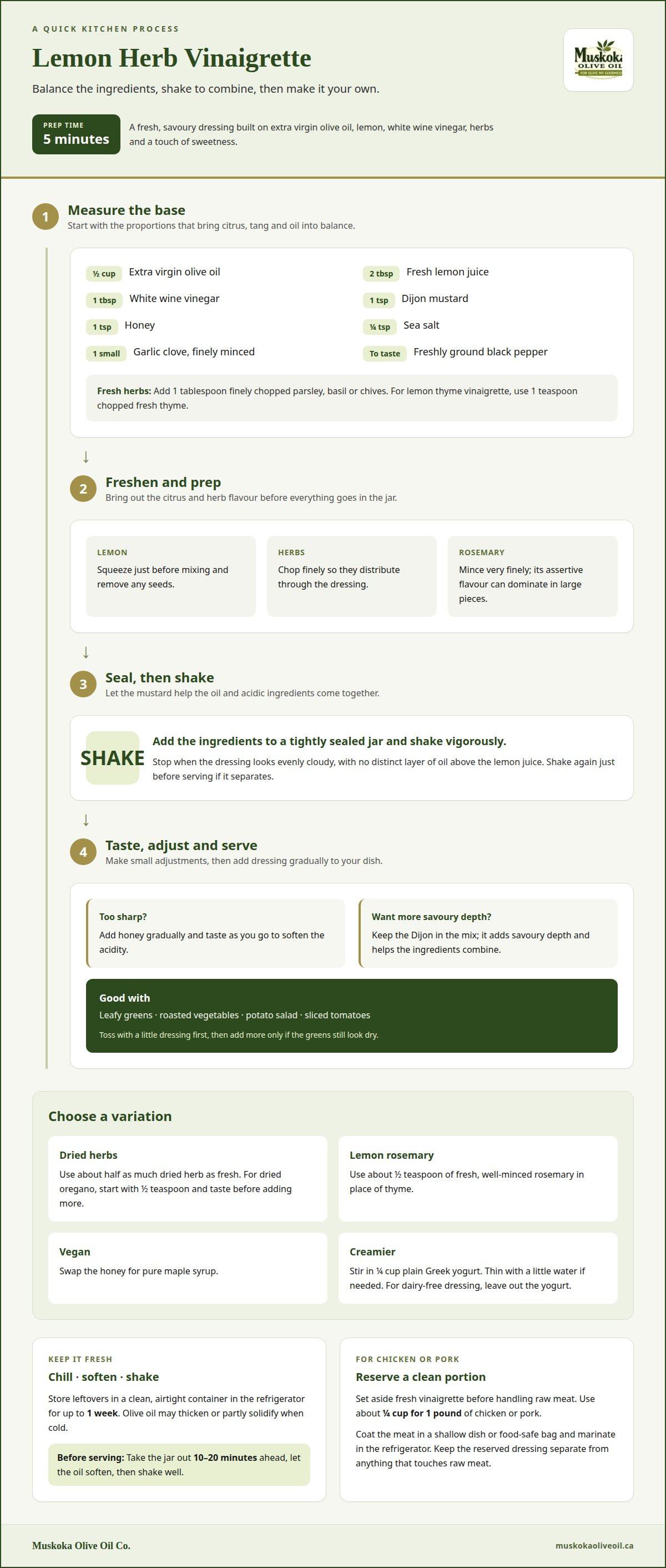
A balanced dressing combines extra virgin olive oil, fresh lemon, herbs, mustard, garlic and seasoning. Use the ingredients below as a starting point, then adjust the herbs or sweetness to suit the meal.
-
Gather the Vinaigrette Ingredients
Measure ½ cup of extra virgin olive oil, 2 tablespoons of fresh lemon juice and 1 tablespoon of white wine vinegar. Add 1 small garlic clove, 1 teaspoon of Dijon mustard, 1 teaspoon of honey and ¼ teaspoon of sea salt. Include freshly ground black pepper and chopped herbs. Check that the garlic is finely minced, so it distributes evenly through the dressing.
-
Use Fresh Lemon and Herbs
Squeeze the lemon just before mixing, then remove any seeds. For a lemon thyme vinaigrette, use 1 teaspoon of fresh chopped thyme. Add 1 tablespoon of finely chopped fresh herbs, such as parsley, basil or chives, for a broader herbal flavour. Mince rosemary finely; its assertive, resinous notes can dominate when pieces are large.
- Choose substitutions based on the flavour you want. Replace fresh herbs with about half as much dried herb, since dried seasonings are more concentrated. Dried thyme can be used in place of fresh thyme; adjust the amount to taste. Dried oregano also works; start with ½ teaspoon, then taste before adding more. A lemon rosemary variation can use about ½ teaspoon of fresh, well-minced rosemary in place of thyme.
For a vegan dressing, swap the honey for pure maple syrup. If the lemon tastes especially sharp, honey can soften the acidity. Add it gradually and taste as you go. Keep Dijon in the mix: it contributes savoury depth and helps the oil and acidic ingredients combine.
- Adjust the texture and serving style without losing the lemon-herb character. For a creamier variation, stir in ¼ cup of plain Greek yogurt. It thickens the dressing and adds calcium; thin the mixture with a little water if needed. For a dairy-free option, leave out the yogurt and keep the vinaigrette light.
Drizzle the finished dressing over leafy greens or roasted vegetables. It also brightens potato salad, where herbs and lemon complement the potato’s mild flavour. Start with a little, toss, and add more only as needed. This lemon herb vinaigrette recipe is flexible, but tasting after each adjustment keeps the lemon, herbs and seasoning in balance.
Is it worth it to make homemade salad dressing?
- Make a fresh batch when you want control over flavour and texture. Muskoka Olive Oil says this lemon vinaigrette takes 5 minutes to prepare. A sharper version can brighten simple greens; a gentler one can complement salads served beside grilled protein. Homemade dressing also lets you decide how much honey to add, rather than accepting a fixed sweetness.
Use the same dressing across different meals. Spoon it over sliced tomatoes at lunch, then serve it with leafy greens at dinner. Lemon brings a lively citrus note and vitamin C, while fresh herbs add their distinct aroma.
- Transfer leftover dressing to a clean, airtight container and refrigerate it. This lemon vinaigrette can be stored in the fridge for up to 1 week. A small jar makes it easy to keep the dressing covered between meals and limits exposure to air. Label the jar with its contents if you store several dressings together.
Olive oil can thicken or partly solidify in the refrigerator. This changes the texture, not the method: let the dressing warm before shaking it again. Keep the container sealed while it rests on the counter.
- Take the jar from the fridge 10-20 minutes before serving. This gives chilled oil time to soften, making the dressing easier to pour and re-emulsify. Avoid trying to shake a jar while its oil is still firm. The mustard and lemon can remain unevenly distributed until the oil loosens.
For a meal with salad and grilled protein, bring out only the amount you plan to use. Keep the remaining dressing sealed in the refrigerator. This makes serving simple without repeatedly warming the entire batch.
- Shake the closed jar vigorously just before dressing your salad. The mixture should look evenly cloudy, without a distinct layer of oil above the lemon juice. If it separates, let the jar stand briefly, then shake again. Mustard helps the ingredients blend, while pepper and herbs may settle between uses.
Pour a little dressing over the greens and toss. Add more only if the leaves still look dry. This gradual approach helps the lemon and oil coat the salad without pooling at the bottom of the bowl.
- Serve the vinaigrette at room temperature for a smoother texture and more even coating. Cold dressing can feel thicker on crisp lettuce or sliced cucumber. Once the jar has softened, shake it well, taste a little, and adjust with lemon or pepper if needed.
Homemade dressing is useful when one batch needs to suit several dishes. Keep the base balanced, then add extra mustard for a savoury salad or a little honey for milder greens. This flexibility makes it a delicious accompaniment to salads, roasted vegetables and simply prepared protein.
Using the dressing as a chicken or pork marinade
- Set aside a clean portion of vinaigrette before handling raw meat. Use about ¼ cup of marinade for one pound of chicken or pork. The oil carries the lemon, herbs and seasonings across the surface, while the citrus gives the cooked meat a bright, fresh flavour. A little goes a long way when the meat is evenly coated.
Keep the reserved portion separate from anything that touches raw chicken or pork. This leaves you with fresh dressing to serve, rather than marinade that has been in contact with the meat.
- Place the meat in a shallow dish or a sealable, food-safe bag. Add the measured marinade and turn the pieces to coat every surface. A shallow layer helps distribute the dressing evenly. Press excess air from a sealed bag, or cover the dish before refrigerating.
Choose pieces of similar thickness when possible. They’re easier to coat evenly and tend to cook at a similar pace. For example, marinate pork chops together rather than mixing thick chops with thin cutlets.
- Marinate chicken or pork in the refrigerator for 2-4 hours. This gives the lemon, mustard and herbs time to season the surface without leaving the meat in the acidic mixture for too long. Turn the pieces partway through if they sit in a dish, so the exposed side also gets coated.
Keep the container covered while the meat marinates. Don’t leave raw meat on the counter. Refrigeration keeps the process controlled, and a sealed container prevents drips from reaching other foods.
- Whisk or shake the vinaigrette just before adding it to the meat. Oil and lemon juice naturally separate, so a quick whisk or firm shake recombines them. If mustard has settled, scrape the bowl’s sides and whisk until the mixture looks evenly blended.
If using a bag, seal it securely and turn it gently several times. There’s no need to massage the meat vigorously; aim for an even coating. This distributes the herbs and seasoning without crushing delicate pieces.
- Adjust the dressing before it touches raw meat. Taste a clean spoonful, then add lemon for more tang, honey for a softer edge, or pepper for warmth. For a milder marinade, use fewer herbs. Once raw meat has been added, don’t taste the remaining marinade.
Keep the flavour savoury rather than treating the vinaigrette like a sweet glaze. Honey adds sweetness, but the dressing’s main character comes from lemon, olive oil and herbs, not added carbohydrates.
- Serve vinaigrette with salad at the same meal, but keep that portion separate from the raw-meat preparation. Toss crisp greens shortly before serving, or spoon the dressing over sliced tomatoes beside grilled chicken. The herbs link the salad and main dish, while lemon lifts both.
After marinating, discard the used mixture and cook the meat thoroughly. Serve chicken or pork with fresh salad and a separately reserved spoonful of dressing for a clean, cohesive plate.
Shaking and emulsifying the vinaigrette
Combine the lemon, vinegar, mustard, seasonings and herbs, then blend in the olive oil. Shake the mixture in a sealed jar or whisk it in a bowl until evenly cloudy.
-
Shake the Dressing in a Jar
Add the measured ingredients to a clean jar, leaving room to shake. Tighten the lid, then shake briskly until the oil and lemon form a cloudy mixture. Check the bottom for settled mustard or herbs, and shake again if needed. Use a jar with a secure lid to prevent leaks and make shaking easier.
-
Whisk the Dressing in a Bowl
First whisk the lemon, vinegar, mustard and seasonings in a bowl. Gradually pour in the olive oil while whisking steadily. This breaks the oil into small droplets and disperses them through the acidic ingredients. Stop when the dressing looks cohesive and lightly thickened, with no visible streaks of oil.
- Whisk when preparing a larger batch or adjusting the texture as you go. Add the oil in a thin stream, not all at once. If the mixture separates, whisk from the bottom of the bowl to incorporate the mustard and herbs again. A smooth emulsion should lightly coat the whisk.
A jar is convenient for making and storing a small batch. Shake it again just before serving, since oil and lemon naturally separate while standing. If the jar has been refrigerated, let the oil soften first; cold, thickened oil is harder to combine evenly.
- Check how the dressing clings to a spoon, then taste it with a lettuce leaf. If it’s too sharp, add a little honey; if it tastes flat, adjust the lemon or seasoning. Make small changes, shaking or whisking after each addition, to keep one ingredient from dominating.
For variety, a splash of balsamic adds a deeper, rounded note. Use it sparingly so it doesn’t mask the fresh lemon and herbs. Taste again before serving, since each adjustment changes the balance.
- Use the emulsion promptly over crisp vegetables, or spoon it onto roasted vegetables after cooking. Toss greens just before serving so the leaves stay lively rather than weighed down. For an even coating, add a little dressing, toss, and add more only where the vegetables look dry.
Keep the dressing’s seasoning in mind when pairing it with other foods. Mustard, herbs and salt already contribute flavour, so taste before adding more salt to the finished dish. A quick shake or whisk recombines the mixture if it separates.
Olive oil, lemon juice, and white wine vinegar
- Think of the three liquids as a flavour framework, not a fixed formula. Olive oil gives the dressing body, lemon juice brings fresh citrus, and white wine vinegar adds another dimension. Aim for a balance that suits the food: a mild grain salad can take more citrus, while delicate greens call for a lighter touch.
Consider the dish first, then decide which flavour should lead. For lentils, let olive oil round out the earthy base. For sliced fennel, make lemon more prominent to complement its crisp, anise-like flavour.
- Choose the oil with the finished dish in mind. A robust extra virgin olive oil can stand up to chickpeas, white beans or grilled mushrooms. A gentler oil suits tender greens, shaved cucumber or steamed asparagus. The oil should complement the ingredients, not cover their natural flavour.
Use the same approach when serving the dressing across a meal. A stronger oil may suit a bean salad, while a softer style can work better with a delicate side dish.
- Use lemon zest for a fragrant citrus note without relying only on more juice. Finely grate a little into the dressing, avoiding the bitter white pith. Zest works especially well over couscous, quinoa or chilled white-bean salad, distributing its aroma through each bite.
Add zest sparingly and taste it with the food, not just from the mixing bowl. Its aroma can seem more pronounced alongside mild ingredients than on its own.
- Consider how the food will absorb the dressing. Warm grains and legumes take on flavour as they cool, so dress them while slightly warm, then let them rest before serving. For crisp vegetables, add dressing closer to mealtime to preserve their texture. Toss gently to keep beans intact and delicate leaves from bruising.
For a new variation, a touch of white balsamic can bring a different accent to a citrus-led dressing. White balsamic vinegars offer another ingredient to explore with grains, beans and vegetables.
- Keep a brief tasting note when developing a version you enjoy. Record whether you made lentil salad, a couscous bowl or an asparagus side, and note which flavour stood out. This simple habit makes it easier to recreate a successful pairing without treating every batch as identical.
For a composed meal, use the same dressing in different ways: toss a little through grains, then serve a separate portion beside the main dish. The flavours feel connected while each component keeps its own texture and character.
Muskoka Olive Oil
Muskoka Olive Oil Co. offers flavour pairings for lemon herb dressing and the dishes served alongside it. Extra virgin olive oils bring distinct flavour profiles, while infused olive oils offer another way to complement fresh herbs, lemon and grilled chicken. White and dark balsamic vinegars add different layers of acidity or sweetness when you want to vary the dressing.
When refining a vinaigrette, tasting ingredients side by side helps you decide which balance you prefer. Muskoka Olive Oil Co. offers olive oils and balsamic vinegars for pairing with everyday cooking, salads and marinades.
Contact Muskoka Olive Oil Co. to talk about flavour ideas for your next homemade dressing.
Make the next batch your own
Let your next lemon herb vinaigrette recipe reflect the meal you’re planning instead of following a fixed formula. A delicate spring salad may call for a light touch with herbs, while grilled food can welcome a more pronounced, savoury flavour. Small, deliberate changes help you find pairings you enjoy.
As you experiment, focus on one flavour at a time. Try a different herb, adjust the citrus, or introduce a new vinegar accent. Taste the dressing with the food it will accompany, since ingredients can taste different on their own. Over time, these choices become part of your cooking style.
For a fresh perspective on choosing flavours for your table, connect with Muskoka Olive Oil Co. Your next thoughtful pairing can be the start of a delicious new favourite.
Frequently Asked Questions
Is vinaigrette served hot or cold?
Vinaigrette is generally served cool or at room temperature, not heated as a sauce. For a warm grain bowl, cook the grains first, then toss them with dressing while they’re still warm enough to absorb flavour. For a composed salad, dress the ingredients shortly before serving. Keep the dressing separate until then, especially if the plate includes tender greens or crisp cucumber.
What are the three components of a vinaigrette?
The three components are fat, acid and flavourings. In a lemon-herb version, olive oil is the fat and citrus or vinegar supplies the acid; garlic, mustard and herbs provide flavour. Use these roles to adapt the dressing: a bean salad can carry bold seasonings, while mild vegetables benefit from a restrained touch. Salt and pepper refine the final taste.
What is the ratio of fat to acid in a vinaigrette?
A classic starting ratio is 3 parts fat to 1 part acid. For a more pronounced tang, try 2 parts fat to 1 part acid, then taste the dressing with the food it will accompany. Lemon and white wine vinegar both contribute acidity, so account for their combined effect rather than judging either ingredient alone. The best balance depends on the dish’s own flavours.
What are the ingredients and measurements for lemon herb vinaigrette?
For this version, measure ½ cup extra virgin olive oil, 2 tablespoons lemon juice and 1 tablespoon white wine vinegar. Add 1 small garlic clove, 1 teaspoon Dijon mustard, 1 teaspoon honey, ¼ teaspoon sea salt and 1 tablespoon finely chopped fresh herbs. Season with black pepper to taste. Use a measuring spoon for the mustard and honey, which are easy to overpour.
Which fresh herbs work best in lemon vinaigrette?
Parsley, basil, chives, thyme, oregano and rosemary all pair well with lemon. Choose herbs to suit the dish: parsley and chives work well with cucumber or leafy greens, while oregano complements tomatoes and grilled vegetables. For a mixed-herb dressing, combine mild parsley with a smaller amount of a stronger herb. Finely chop the leaves so they distribute evenly rather than clumping.
Can dried herbs be used instead of fresh herbs, and what amounts?
Yes. Start with about half as much dried herb as the recipe calls for in fresh form, then taste before adding more. For example, use ¼ teaspoon dried thyme instead of 1 teaspoon fresh chopped thyme. Let dried herbs sit in the lemon juice briefly before adding the oil; this gives them time to soften and release flavour throughout the dressing.
What is the ideal ratio of lemon juice to oil for vinaigrette?
A classic guide is 1 part acid to 3 parts oil, but lemon juice may be paired with another acid, such as white wine vinegar. For a more lemon-forward dressing, let the citrus lead and use less vinegar. Taste a small spoonful with the intended salad ingredient, since tomatoes and other naturally tangy foods can make the finished combination seem sharper.
How can you balance vinaigrette that is too sour or too oily?
If the dressing tastes too sour, gradually add oil or a little honey to soften the sharpness. If it seems too oily, add lemon juice or vinegar in small amounts. After each change, taste it with the food you’ll serve, not just from a spoon. A lettuce leaf, tomato wedge or cucumber slice gives useful context for the final balance.
Leave a comment