


How to Make Moist Olive Oil Brownies with Cocoa and Chips
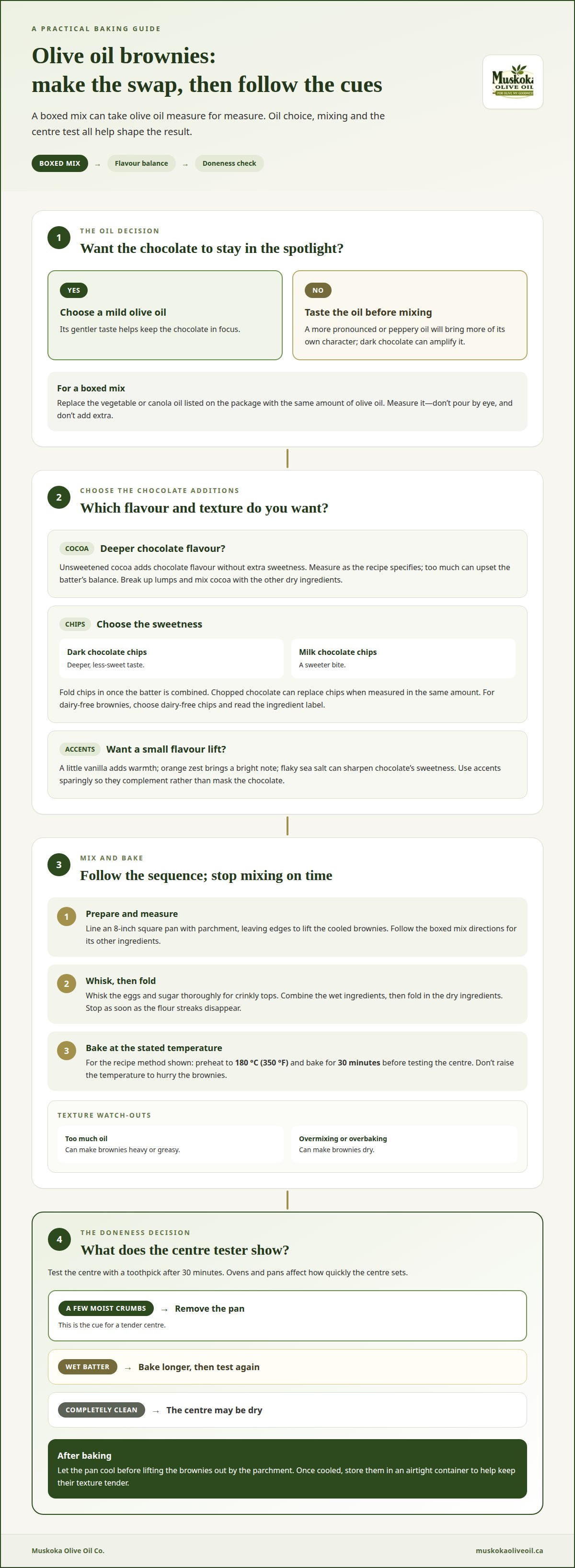
Olive oil can replace vegetable or canola oil in a boxed brownie mix in the same amount. This moist olive oil brownie recipe adds cocoa and chocolate chips for a richer chocolate flavour, while a mild oil keeps its taste in balance.
Olive oil is a simple way to give a familiar baking shortcut a more personal touch. Its aroma and taste vary, so taste the oil before mixing to decide whether you want a subtle note or a more pronounced finish. Cocoa’s depth and the chips’ sweetness also shape the balance.
The result depends on more than the oil swap. This guide covers choosing additions, mixing the batter, and knowing what to look for as the brownies bake and cool. You’ll also find practical tips for keeping the centre tender, whether you’re making a snack or a shared dessert. The method suits home kitchens and standard boxed mixes, with straightforward choices and no specialized equipment. Make the basic batch first, then adjust the flavours to suit your taste. Brownies are also easy to bring to a potluck, cottage weekend, or family gathering.
Key Takeaways
- Swap the vegetable or canola oil in boxed brownie mix for olive oil in the same amount, and choose a mild oil for a gentler flavour.
- Use cocoa powder to deepen the chocolate taste, then fold in chocolate chips for pockets of extra richness.
- For crinkly tops, whisk the eggs and sugar thoroughly, then mix the batter only until the flour streaks disappear.
- Check the centre for moist crumbs rather than waiting for a completely clean tester, which can mean the brownies have baked too long.
- Store cooled brownies in an airtight container to help keep their texture tender.
Can I use olive oil in a boxed brownie mix?
Yes. Replace the vegetable oil in a boxed mix with olive oil in a 1:1 ratio. Greasy brownies can result from excess oil, while a strongly flavoured oil may taste bitter; overmixing or overbaking can make them dry. For Canadian measurements, use millilitres and grams where provided; Health Canada pairs 180 °C with 350 °F.
- Prepare the pan. Use an 8-inch square baking pan and line it with parchment paper. Leave enough paper over the edges to lift out the cooled brownies. Smooth it into the corners so the batter spreads evenly. If the parchment shifts, secure it with a light coating of oil on the pan, not an extra pour into the batter.
-
Measure Ingredients and Equivalents
Measure the ingredients before opening the mix. This recipe uses ½ cup (125 ml) olive oil and ½ cup (70 g) unbleached all-purpose flour, plus three large eggs and 2 teaspoons of pure vanilla extract. Use a liquid cup for oil and a scale for flour. For boxed mix, replace only the vegetable oil listed on its package, measure for measure.
Follow the mix’s directions for its other ingredients. Adding extra oil or flour can throw off the batter.
- Set the oven temperature. Preheat to 180 °C (350 °F), then wait until the oven reaches temperature before baking. Put the pan on the centre rack for steady heat around the square. Don’t raise the temperature to hurry the brownies; the edges can set too quickly while the middle remains underbaked.
-
Bake and Check for Doneness
Bake for 30 minutes, then test the centre with a toothpick. Remove the pan when a few moist crumbs cling to the tester; wet batter needs more time, while a completely clean toothpick can signal a dry centre. Avoid adding leavening unless the recipe calls for it, as it can change the brownies’ texture. Extra leavening can make brownies rise more and turn cakier.
Ovens and pans affect how quickly the centre sets, so use a tester as well as the stated baking time.
- Avoid common texture problems. Measure the oil instead of pouring by eye, and choose a mild olive oil if you want the chocolate to take centre stage. Stir only until the ingredients combine. Too much oil can make the brownies feel heavy or greasy, while overmixing or overbaking can dry them out. Let the pan cool before lifting the brownies out by the parchment.
Cocoa powder and chocolate chip ingredients
- Measure the cocoa powder before adding it. Unsweetened cocoa powder can add chocolate flavour without adding sweetness from sugar. Spoon it loosely into a measuring cup, then level the top. Packing cocoa can add more than intended and change the batter’s balance. If adapting a boxed mix, don’t add an extra scoop without adjusting the other ingredients.
Break up compacted cocoa lumps with a whisk or small sieve. They can remain dry in the batter and leave bitter pockets in the finished brownies. Mixing the cocoa with the other dry ingredients first helps distribute its flavour evenly.
- Choose chocolate chips to shape the sweetness and texture. Chocolate chips add pockets of chocolate alongside the cocoa. Dark chocolate chips bring a deeper, less sweet taste; milk chocolate chips create a sweeter bite. For dairy-free brownies, use dairy-free chips and read the ingredient label.
Fold in the chips once the batter is combined. Use a spatula to distribute them without overmixing. For a more inviting surface, reserve a few chips to sprinkle on top before baking.
- Choose substitutions that perform the same role as the original ingredient. Unsweetened cocoa powder adds dry chocolate solids, while sweetened drinking chocolate also contains sugar. Swapping one for the other can make the brownies too sweet. A moist olive oil brownie recipe also relies on balance between wet and dry ingredients, so don’t add more cocoa than the recipe specifies.
Chopped chocolate can replace chips if you measure the same amount. The pieces may vary in size, giving you a mix of melted pockets and smaller flecks. Don’t substitute cocoa powder for chocolate chips: it lacks their fat and solid texture.
- Choose accents that complement the chocolate instead of masking it. A small sprinkle of flaky sea salt can sharpen the sweetness of chocolate chips. Vanilla adds warmth, while a little orange zest brings a bright note. For a moist olive oil brownie recipe with a clear cocoa flavour, use accents sparingly and taste the oil before mixing.
A mild-tasting oil keeps the chocolate in focus. If the oil tastes peppery or pronounced, dark chocolate may amplify that character. Choose the balance you enjoy instead of adding sugar or cocoa to cover the oil’s flavour.
- Set out and measure every ingredient before you start mixing. Keep any toppings separate, and use a small bowl for cocoa lumps or reserved chips. This makes the steps easier to follow and helps prevent forgotten ingredients. Once the batter is ready, add the chips as directed and move on to baking without a long delay.
If you’re packing cooled brownies, parchment between the pieces can help keep exposed chocolate chips from sticking to neighbouring squares. Stick to the recipe’s quantities; thoughtful pairings, not extra ingredients, give each batch its own character.
Mixing the batter and achieving crinkly tops
For a reliable method, combine the wet ingredients, whisk the eggs and sugar, then fold in the dry ingredients. Stop as soon as the flour streaks disappear, since excess mixing can change the brownies’ texture.
- Bring the eggs to room temperature before mixing. Use the recipe’s three large eggs, and measure the olive oil and vanilla as directed. Room-temperature eggs blend more readily with oil, helping create an even batter. Unlike butter, olive oil doesn’t need to be melted, so add it directly to the wet ingredients.
-
Mix the Brownie Batter
Whisk the eggs and sugar until the mixture looks smooth and slightly thick. Add the olive oil and vanilla, then whisk until evenly combined. In a separate bowl, stir together the flour, cocoa powder, and measured kosher salt. Add the dry ingredients to the wet mixture and fold gently with a spatula.
Scrape the sides and bottom of the bowl as you fold. Stop when no white flour streaks remain; the batter doesn’t need to be perfectly smooth. Gentle mixing limits gluten development, which can make brownies firm rather than tender. Fold in the chocolate chips last, distributing them without crushing or melting them.
-
Achieve Crinkly Tops
Whisk the eggs and sugar for 4-5 minutes before adding the remaining ingredients. This step helps dissolve sugar and incorporates air, supporting a thin, shiny surface as the brownies bake. Use a hand whisk or mixer, and look for a paler, thicker mixture before moving on.
Once the flour is in the bowl, switch to gentle folding. Vigorous mixing at this stage can make the texture tougher, even if you whisked the egg mixture well. Don’t add extra flour or leavening to try to get a crackly top; follow the recipe’s ingredient balance instead.
- Transfer the finished batter to the prepared pan promptly. Spread it into the corners with a spatula, keeping the surface level so it bakes evenly. Scrape any remaining chocolate chips from the bowl onto the top. A few visible chips make each square look inviting and add melted chocolate to the centre.
- Use a metal pan for consistent heat transfer and crisp edges. A square pan gives the batter an even shape, and parchment makes it easier to lift the brownies out after baking. Once the pan is filled, don’t tap or stir it repeatedly; settle the batter with one gentle spread. This keeps the surface intact for a naturally crackled finish.
Can I Make Brownies with Oil Instead of Butter?
Yes. Health Canada notes that olive oil can replace butter in a brownie recipe. For a recipe calling for 1 cup of butter, use ¾ cup olive oil. The swap changes flavour and texture: oil stays liquid at room temperature, while butter firms as it cools. Use a mild olive oil if you want the chocolate to lead.
-
Cool the brownies completely before storing. Warm brownies release steam inside a container, which can soften the surface and make it sticky. Leave the pan on a cooling rack until the centre and edges reach room temperature. Then lift out the slab, cut it into squares, and transfer the pieces to storage.
For clean cuts, wipe the knife between slices. This prevents melted chocolate from smearing across the next piece and helps each square hold its shape.
-
Keep the amount you’ll eat soon at room temperature. Place cooled brownies in an airtight container and store them away from direct sunlight or a warm oven. They can keep at room temperature for up to 5 days. Separate layers with parchment paper to limit sticking, especially when chocolate chips are exposed on the cut edges.
Check the container’s seal after each serving. A loose lid lets air reach the brownies, drying the edges before the centre loses its soft texture.
-
Refrigerate only if you prefer a cooler, firmer texture. Cold storage firms up the olive oil and chocolate, so a brownie may seem less smooth straight from the refrigerator. Keep the pieces covered in an airtight container, then let a portion soften before serving. Chilling can also make the flavour seem more muted.
For a softer bite, warm an individual brownie in the microwave for 10-15 seconds. The centre should become tender without turning hot or oily. Avoid repeatedly warming the full batch; reheat only the portion you plan to eat.
-
Freeze extras in a sealed container. Olive oil brownies can be frozen for up to 3 months in an airtight container. Wrap individual squares or separate them with parchment paper, then arrange them in a flat layer. This makes it easier to remove one serving without thawing the whole batch.
Thaw a square at room temperature while it’s still wrapped. The wrapping helps limit condensation on the surface as the brownie warms. Once thawed, eat it promptly for the best flavour and texture.
- Judge freshness by texture and aroma. A tender brownie that smells like chocolate is ready to enjoy. Dry edges often point to air exposure, while a bitter taste may come from the cocoa or olive oil rather than storage. Keep the container sealed between servings to preserve the brownies.
Olive oil and brownie moisture retention
-
Understand what oil contributes. Olive oil is 100% fat, while butter is roughly 80% fat and contains about 18% water. That difference affects how a brownie feels after cooling. Olive oil stays liquid at room temperature, helping the crumb feel soft and tender. It doesn’t add water to the batter, and adding extra oil won’t improve moisture; too much can make the texture heavy.
The key takeaway is simple: moisture comes from the recipe’s balance and baking method, not from adding more fat.
-
Keep the substitution measured. If replacing butter in a brownie recipe, use ¾ cup olive oil for every 1 cup butter. This accounts for butter’s different composition and avoids an overly oily batter. Don’t adjust the flour or cocoa to make the mixture look like a butter-based batter; ingredients can combine differently before baking.
A mild oil lets the chocolate flavour remain prominent. A more assertive oil can add its own character, especially alongside dark chocolate or unsweetened cocoa.
-
Mix gently after adding flour. Fold until the dry streaks disappear, then stop. Excessive mixing develops more gluten and can make the brownie chewy rather than tender. If the batter looks thick, don’t assume it needs more oil. Cocoa absorbs moisture, so the batter may look different from a butter-based version.
Scrape the sides of the bowl once to incorporate any unmixed flour, then transfer the batter. Repeated stirring can change the crumb without making the brownies moister.
-
Use doneness cues to protect the centre. Begin checking around the recipe’s 30-minute baking time. A tester inserted in the centre should carry a few moist crumbs, not wet batter. Waiting for a completely clean tester can leave the middle dry. The hot pan continues to set the brownies after it leaves the oven, so allow for that carryover heat.
Let the brownies cool before cutting. The crumb settles as it cools, helping each square hold together instead of seeming underbaked or falling apart.
-
Store them consistently. For best texture, keep cooled brownies in an airtight container at room temperature for up to 5 days. This is the practical storage window; don’t treat “moist for up to a week” as a recommendation to keep them at room temperature longer. Air exposure can dry the edges, so close the container after serving.
For a longer hold, freeze the brownies in an airtight container for up to 3 months. Separate squares with parchment, then thaw only the portions you plan to serve. This preserves a tender texture without extending the room-temperature storage period.
Muskoka Olive Oil Co.: Infused Olive Oil
Muskoka Olive Oil Co. offers Infused Olive Oil for cooks who want to explore distinctive flavours in everyday dishes. For brownies, consider whether an infused oil’s flavour complements the cocoa or competes with it. Taste the oil before adding it to the batter, and choose a pairing that suits the chocolate’s intensity.
Extra Virgin Olive Oil is another option for baking and cooking. Consider its flavour alongside the cocoa, chips, and sweetness before choosing. White Balsamic Vinegars and Dark Balsamic Vinegars offer more pairing possibilities for meals beyond dessert.
Explore olive oil options or get in touch through Muskoka Olive Oil Co.’s website.
Make the Next Batch Your Own
A moist olive oil brownie recipe can be a starting point for exploring how flavour choices shape a favourite dessert. Try a different chocolate intensity or a delicate finishing touch, and notice how each changes the balance. Make a note of the combination you enjoy, then turn it into your signature treat for a cottage weekend, family gathering, or quiet evening at home.
For your next bake, taste the olive oil before measuring it. Its character can help you decide whether chocolate should take centre stage or share the spotlight. Small, thoughtful choices make baking personal without complicating the method.
If you’d like help exploring olive oil flavours for your kitchen, connect with Muskoka Olive Oil Co. Keep experimenting, savour the results and enjoy sharing your next batch.
Frequently Asked Questions
Can You Still Get That Shiny Crackly Top?
Yes, olive oil brownies can still develop a shiny, crackly top. The surface forms as the egg-and-sugar mixture bakes and sets, so ingredient balance matters as much as the choice of fat. Let the brownies cool before cutting; slicing them warm can tear the delicate crust. For neat portions, use a sharp knife and wipe it between cuts, especially if melted chocolate chips cling to the blade.
Does Olive Oil Affect Taste, Texture, or Structure?
Yes, olive oil can affect all three. Its flavour may be subtle or noticeable, depending on the oil, and its liquid consistency gives the crumb a softer feel after cooling. The eggs, flour, and cocoa still provide structure. For your first batch, choose an oil that tastes mild on its own, then compare the chocolate flavour with a more pronounced oil in a later bake.
Does Olive Oil Change Moisture, Crumb, or Rise?
Olive oil can make the crumb feel tender because it stays liquid as brownies cool. It doesn’t automatically make brownies rise more; that depends on the recipe’s leavening and how much air the eggs incorporate. For a dense centre, don’t change the flour or add leavening. A moist crumb should feel soft, not oily, and hold together when cut.
Is Extra Virgin Olive Oil the Best Type for Baking?
Not always. Extra virgin olive oil can work in brownies, but its flavour may come through alongside the cocoa, particularly if the oil tastes robust or peppery. For a chocolate-forward result, choose a mild-tasting olive oil. If you enjoy a more distinctive flavour, try extra virgin olive oil in a small batch first and decide whether it complements your cocoa and chocolate chips.
What Happens If You Use Olive Oil Instead of Vegetable Oil in Baking?
In brownies, olive oil can replace vegetable oil in the same amount. The swap changes the source of fat but doesn’t require melting or creaming, as butter recipes may. Olive oil can contribute its own flavour, so a mild option suits delicate cakes, while a more assertive taste may work well in chocolate baking. Follow the recipe’s remaining ingredients and mixing directions.
What Ingredients and Quantities Are Needed for Moist Olive Oil Brownies?
For this batch, gather ½ cup (125 ml) olive oil, 1 cup granulated sugar, three large eggs, 2 teaspoons pure vanilla extract, ½ cup (70 g) unbleached all-purpose flour, ¾ cup (80 g) unsweetened cocoa powder, and ¾ cup (80 g) chocolate chips. Use the recipe’s measured salt as well. These ingredients are intended for an 8-inch square pan and yield 16 brownies.
What Is the Best Olive Oil to Use in Brownies, Extra-Virgin or Light?
Choose based on flavour: a mild-tasting olive oil is the easiest way to keep cocoa in the foreground. Extra virgin olive oil works for baking, though its distinct taste may come through. “Light” on an oil label refers to flavour, not fewer calories. Taste a small amount before adding it, then consider how its aroma will pair with dark chocolate.
What Makes Olive Oil Brownies Moist and Fudgy Rather Than Cakey?
A fudgy result comes from keeping the recipe balanced and avoiding excess leavening or flour. Measure dry ingredients accurately, mix gently after adding flour, and don’t bake until the centre feels completely firm. A tester with moist crumbs signals a softer middle. Let the brownies cool before slicing; the crumb continues to set, making the pieces easier to lift without drying them in the oven.
Leave a comment