


How to Make a Thick Balsamic Glaze at Home
The practical answer to how to make a thick balsamic glaze is to simmer balsamic vinegar gently until it becomes concentrated and glossy. Aim for a texture that suits the dish rather than a fixed consistency. A finishing drizzle should flow neatly and complement the food without overpowering it.
The vinegar’s flavour, the pan’s surface area and how closely you monitor the reduction all affect the result. A broad pan speeds evaporation, while occasional stirring helps the mixture heat evenly. These details give you control over both the glaze’s flavour and texture.
This guide covers the choices that make the process easier, from judging the reduction to loosening a glaze that sets too firmly. You’ll also find ways to use it with savoury meals and sweet dishes. With a little attention, a pantry staple can become a polished finishing touch for everyday cooking and entertaining.
Key Takeaways
- Use the spoon test to assess texture, then allow for further thickening as the glaze cools.
- Cool the glaze before transferring it to a lidded jar; refrigeration helps keep leftovers ready for another meal.
- If chilled glaze is too firm to drizzle, warm it gently and adjust the consistency gradually.
- Use the glaze sparingly as a finishing touch for savoury dishes or sweet treats, and explore infused olive oil for a complementary flavour pairing.
How to Fix Balsamic Reduction that is too thick?
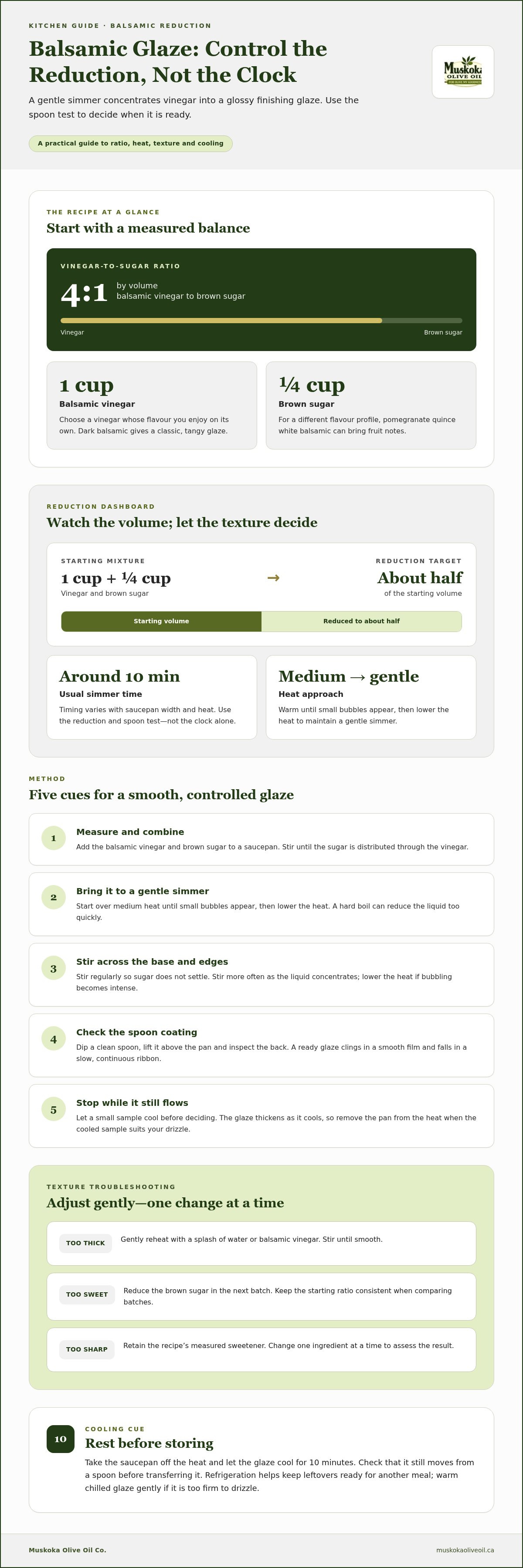
Choose a balsamic vinegar whose flavour you enjoy on its own; dark balsamic gives a classic, tangy glaze. For a different profile, a pomegranate quince white balsamic can bring fruit notes. To make a thick glaze, simmer 1 cup vinegar with 1/4 cup brown sugar until reduced by about half. That is a 4:1 vinegar-to-sugar ratio by volume. The mixture usually simmers around ten minutes, though timing varies. Prevent burning or excess thickness with gentle heat, frequent stirring and close attention.
- Measure the ingredients before heating. Add 1 cup balsamic vinegar and 1/4 cup brown sugar to a saucepan. Stir until the sugar is distributed through the vinegar. Measuring first makes the recipe easier to manage once steam rises and the liquid begins reducing. Choose a saucepan with enough room to stir without splashing, and keep a heat-safe spoon nearby.
- Warm the mixture gradually. Set the saucepan over medium heat until small bubbles begin to appear. Lower the heat to maintain a gentle simmer rather than a vigorous boil. A hard boil can reduce the liquid rapidly, making it harder to stop at the desired consistency. Stay near the stove, especially as the mixture starts to darken and thicken.
- Stir across the pan’s base. Move the spoon around the bottom and edges so sugar doesn’t settle in one spot. Scraping gently also helps you notice any sticky patches before they scorch. Stir regularly throughout simmering, and more often as the liquid becomes concentrated. If bubbling grows intense, lower the heat instead of stirring faster.
- Track the reduction as it cooks. The target is about half the starting volume, not a fixed cooking duration. The usual simmer is around ten minutes, but saucepan width and heat affect evaporation. Watch the liquid level and check its movement on the spoon as it reduces. Remove the pan from the heat once the texture suits a drizzle.
- Prevent a too-thick result. Don’t wait for the hot mixture to look fully set in the saucepan. Concentrated syrup can become firmer as it cools, so stop while it still flows. If the glaze becomes overly thick, gently reheat it with a splash of water or balsamic vinegar, stirring until smooth.
- Adjust the next batch with intention. If the result tastes too sweet, reduce the brown sugar next time; if it tastes too sharp, retain the recipe’s measured sweetener. Keep the starting ratio consistent when comparing batches. Changing one ingredient at a time makes it easier to identify whether sweetness, vinegar flavour or reduction level needs adjustment.
Checking thickness by coating the back of a spoon
The spoon test shows how a balsamic reduction will behave beyond the saucepan. Test a sample instead of judging thickness by bubbles, colour or cooking time alone.
- Use a clean spoon for each test. Dip its bowl into the simmering glaze, then lift it above the pan. Let excess liquid fall back before inspecting the coating. This creates a clearer sample than judging a spoonful mixed with fresh vinegar or sugar. Keep your hand away from the rising steam while lifting the utensil.
- Turn the spoon to inspect its back. A ready glaze should cling in a smooth, even film. If it runs off immediately and leaves bare metal, it remains quite fluid. If it gathers in sticky clumps, it may be overly concentrated for a delicate drizzle. Look at the whole surface, not a single thick spot.
- Notice how the sample falls. Hold the spoon over the saucepan and watch the glaze return to the pan. A slow, continuous ribbon suggests more body than a fast, watery stream. A drop that hangs on the spoon may indicate a heavier texture. Choose the flow that fits the food, rather than aiming for the thickest possible coating.
- Compare the coating across the spoon. A uniform layer signals that the ingredients have combined evenly. Thin streaks beside thicker patches can indicate uneven mixing or a sample taken from one part of the pan. Stir gently, then test again. This helps distinguish the glaze’s overall consistency from a local patch on the utensil.
- Let a sample cool before deciding. Place a little glaze on a plate and give it a brief rest. Hot balsamic moves more readily, while a cooler sample gives a better sense of its serving texture. Avoid waiting until the saucepan’s contents look stiff. The cooled sample should still spread when nudged with the spoon.
- Match the test to the planned drizzle. For a neat line across crostini or sliced pear, look for a coating that falls slowly and stays visible. A looser texture can suit a broad plate accent. Test a small amount on the food or plate before dressing the whole serving, since surface texture affects how the glaze spreads.
- Use consistency, not colour, as your guide. A darker appearance alone doesn’t prove the reduction is ready. Different balsamic vinegars can vary in colour and flavour before cooking. Check the spoon coating and the way the glaze falls. That gives a more useful measure for adapting recipes to the vinegar in your saucepan.
- Stop when it meets your intended use. A delicious glaze doesn’t need to hold a rigid shape. Remove it from the heat once the cooled sample clings and moves slowly. If it seems too firm on the plate, adjust the texture before serving rather than continuing to simmer the entire batch.
Cooling and refrigerating the glaze
Balsamic glaze thickens as it cools, so check its final texture after resting. Let it cool before refrigerating, then warm it gently if chilling makes it too firm.
-
Cool the Glaze
Take the saucepan off the heat and leave the glaze to cool for 10 minutes. Its texture will become thicker as it rests, so don’t keep simmering until it looks stiff. Check that it still moves from a spoon before transferring it. A glaze that flows slowly will be easier to drizzle over caprese salad, grilled vegetables or dessert.
-
Check the Cooled Consistency
After cooling, spoon a little glaze onto a plate and tilt it gently. Observe whether it moves in a slow ribbon or holds firmly in place. This simple check shows how it will behave at the table. If it’s too thick for your planned drizzle, loosen it gently before serving rather than adding liquid to the whole batch immediately.
-
Choose a clean storage container.
Pour cooled leftovers into a clean, lidded jar and seal it. A closed container helps protect the glaze from other refrigerator aromas and makes it easy to serve. Wipe the rim before closing to prevent sticky balsamic from interfering with the lid. Label the jar so you can distinguish it from sauces or dressings.
-
Refrigerate Leftover Glaze
Refrigerate the sealed jar and use the homemade glaze within three weeks. Keep it closed between servings and use a clean spoon each time to avoid introducing crumbs or other ingredients. Refrigeration firms the reduction, so take out only what you need for the meal.
-
Warm a firm glaze gently.
If the refrigerated glaze won’t pour, place the closed jar in a bowl of warm water. Or transfer a small portion to a saucepan and heat it gently. Stir as it loosens and stop once it flows easily. There’s no need to warm the whole batch if you only need enough for one plate.
-
Adjust only the portion you’re serving.
For a caprese salad, warm a spoonful until it drizzles neatly over the tomatoes and cheese. For roasted vegetables or grilled food, loosen just enough glaze to lightly coat the surface. A small portion also works over ice cream. Keep the rest refrigerated and return the sealed jar promptly after serving.
Adjusting a glaze that is too thick
You can usually loosen a thick glaze without making the reduction again. Gentle heat and a small splash of liquid help restore a pourable texture while keeping its flavour concentrated.
- Warm the glaze gently. Put the thick balsamic glaze in a small saucepan over low heat. Stir as it warms, scraping the bottom so the concentrated syrup doesn’t stick. Avoid high heat, which can reduce the mixture further and make the texture even thicker. If the glaze has been in the fridge, warming it first makes adjustment easier.
- Add liquid gradually. Stir in a splash of water or balsamic vinegar while the pan is warm. Start with a little, then assess how the glaze moves from the spoon. Add more only if needed. Water loosens the texture with less change to the flavour, while extra vinegar keeps the balsamic character pronounced.
- Stir until smooth. Keep stirring as the added liquid blends into the glaze. A streaky appearance means the liquid hasn’t incorporated evenly yet. Continue over low heat until the mixture looks glossy and uniform. Don’t pour in a large amount at once; gradual additions give you more control over the final consistency.
- Test a cooled sample. Spoon a small amount onto a cool plate and let it rest briefly. Warm glaze flows more readily than cooled glaze, so judging it straight from the pan can mislead you. If the sample still seems too firm, return the saucepan to low heat and add another small splash.
- Match the texture to the dish. For salads, aim for a glaze that drizzles in a fine stream rather than dropping in heavy clumps. For roasted vegetables, a slightly thicker coating can cling to the pieces. Adjust the whole batch only after testing a small portion against the food you’re serving.
- Protect the flavour balance. If you choose water to thin the glaze, the balsamic taste becomes less concentrated. More vinegar preserves that tang, but it may make the glaze sharper. Brown sugar adds sweetness, not looseness, so avoid adding it to solve a texture problem. Taste after each adjustment.
- Use a gentle second heating. If the glaze firms up again, warm it briefly and stir until it flows. My favourite approach is to loosen only the portion needed for the meal, then keep the rest sealed in the fridge. This avoids repeatedly heating the full batch and gives you a fresh drizzle for each serving.
Serving suggestions
Use balsamic glaze as a finishing drizzle, not a heavy pour. Its concentrated sweet-tart flavour complements savoury dishes and desserts.
- Finish roasted vegetables. Arrange roasted carrots, squash or Brussels sprouts on a serving platter. Add a light zigzag of glaze just before serving, so its flavour remains distinct. For a balanced plate, pair the vegetables with grains or greens. The glaze’s tangy sweetness adds contrast without needing to coat every piece.
- Dress a caprese salad. Layer ripe tomatoes with mozzarella and fresh basil, then add a fine drizzle. Balsamic glaze complements the creamy cheese and bright tomato flavour. Apply it just before serving, because the syrupy texture can settle around the ingredients. A small amount gives each bite flavour without overwhelming the salad.
- Add a finishing touch to grilled food. Brush meat with a separate marinade before grilling, then use the glaze as a finishing accent after cooking. This keeps the concentrated sweetness from dominating the dish. Try a thin drizzle over grilled chicken or pork, then serve extra vegetables alongside for a simple cottage-style meal.
- Pair it with fruit and cheese. Spoon a little homemade balsamic over sliced strawberries, fresh peaches or a cheese board. The sweet acidity works especially well with ripe fruit and creamy cheeses. Keep the portions modest: a few drops can sharpen the fruit’s natural sweetness and add contrast to richer bites.
- Try a dessert drizzle. Add a narrow ribbon over vanilla ice cream or fresh berries. Taste the glaze first, since a more concentrated balsamic vinegar can bring extra tang. A small drizzle provides a sweet-sour counterpoint to cool, creamy ice cream. Serve immediately so the glaze stays distinct on the dessert.
- Use it as a plate accent. For a composed serving, draw a short line across the plate before adding the main food. Keep the line thin and leave room for the other ingredients. This works with roasted vegetables, grilled meat or cheese. The glaze’s rich colour also gives a simple meal a polished finish.
- Choose the right balsamic for your next batch. A balsamic glaze recipe concentrates the vinegar’s flavour, so select one you enjoy tasting. For a lighter, fruit-forward variation, explore white balsamic vinegars and consider how their flavour might suit salads or fruit. Let the finished glaze complement the food rather than cover it.
Muskoka Olive Oil: Infused Olive Oil
Muskoka Olive Oil Co. offers infused olive oils to add another layer of flavour to meals finished with balsamic glaze. Pair a herb-infused oil with roasted vegetables, or use garlic-infused oil in a savoury salad dressing. The oil brings its own aroma and taste, while the glaze adds concentrated sweet-tart notes. For a simpler pairing, extra virgin olive oil complements balsamic vinegar without adding other flavourings.
Choose a combination that suits the dish: a bold oil can hold its own with grilled food, while a more delicate pairing lets fresh ingredients shine. Tasting oils and vinegars together can help you find combinations for everyday cooking and entertaining. Explore infused olive oils and balsamic vinegars at muskokaoliveoil.ca.
Bring a New Flavour to Your Table
Once you’ve learned how to make a thick balsamic glaze, make the next batch your own by choosing flavours that suit the meal. Pair a drizzle with a fresh salad, roasted vegetables or grilled dishes, then consider what would complement it on the plate. A thoughtful combination can turn a familiar recipe into a fresh idea for your next dinner.
Muskoka Olive Oil Co. offers infused olive oil, extra virgin olive oil and white balsamic vinegars for exploring flavour pairings at home. Match a fragrant oil with a bright vinegar, or keep the pairing simple and let the glaze stand out. Choose combinations you’ll enjoy using in everyday cooking.
Explore Muskoka Olive Oil Co.’s oils and vinegars, and find an inspiring pairing for your next meal.
Enjoy experimenting, one delicious drizzle at a time.
Frequently Asked Questions
What is Balsamic Glaze?
Balsamic glaze is a thick, concentrated condiment made by reducing balsamic vinegar. Some versions include a sweetener to soften the vinegar’s tang and add sweetness. Its syrupy texture makes it useful as a finishing drizzle, not as a substitute for pourable vinegar in dressings. Try a little with fresh cheese or sliced fruit to see how its acidity complements the other ingredients.
How long should balsamic vinegar simmer to become thick?
Balsamic vinegar often simmers for around ten minutes, but the time varies with the pan, heat and starting amount. When learning how to make a thick balsamic glaze, use the clock as a reminder to check progress, not as the only signal to stop. Keep the heat gentle and watch closely near the end, when a small reduction in volume can noticeably change the texture.
Should you add honey, sugar, or maple syrup to balsamic glaze?
Sweetener is optional, and each choice affects the glaze’s flavour. Brown sugar adds rounded sweetness; honey brings a different aroma and taste. Maple syrup has its own distinct character, so use it only if that flavour suits the dish. Start with less sweetener than you think you need, taste, then adjust before reduction concentrates the flavours.
How can you tell when balsamic glaze is reduced enough?
Look for a glossy coating that clings to a spoon and falls in a slow ribbon. For a quick plate test, place a little glaze on a cool plate and tilt it gently. If it runs like vinegar, reduce it further; if it barely moves, it may be too concentrated to drizzle. Test a cooled sample, since the texture changes as it rests.
How much does balsamic vinegar reduce when simmered?
A common guide is to reduce the mixture to about half its starting volume. Watch the liquid level fall to roughly half, using the pan’s shape and the glaze’s texture as guides. Since pan shape affects how the liquid spreads, the spoon test is also useful for judging whether it will drizzle as intended.
How should homemade balsamic glaze be stored, and how long does it last?
Cool the glaze, transfer it to a clean, lidded jar and refrigerate it for up to three weeks. Serve it with a clean spoon rather than dipping food into the jar. If chilling makes it too firm to pour, warm only the amount you need in a small saucepan. Gentle heat loosens a serving without warming the whole batch.
Can balsamic glaze be made without added sweetener?
Yes, you can reduce balsamic vinegar without adding sugar, honey or maple syrup. The result has a sharper, more vinegar-forward flavour that can suit savoury dishes. Taste the vinegar before cooking to understand its starting character. Reduction concentrates that flavour, so keep the simmer gentle and stop when the texture suits your intended use.
What are good uses for thick balsamic glaze?
Finish caprese salad, roasted vegetables, grilled meat or fresh fruit with a light drizzle. Balsamic glaze can also add a sweet-tart accent to vanilla ice cream or a cheese plate. Apply it shortly before serving so it stays visible rather than soaking into the food. For a composed plate, add a narrow line beside the main ingredient, then taste before adding more.
Leave a comment