


How to Make Vanilla Ice Cream with a Sweet Balsamic Drizzle
Balsamic vinegar’s sweet-tart character balances vanilla’s creamy sweetness. Vanilla ice cream with balsamic glaze brings together cool dairy, gentle sweetness and a bright, complex finish. The pairing may sound unexpected, but the flavours complement each other when you drizzle with care.
A successful dessert needs neither elaborate preparation nor a long list of toppings. Your choice of vinegar, its consistency and the way you serve it all shape the flavour. Fruit can add freshness, while a light drizzle keeps vanilla present in every bite.
This guide explains the flavour contrast, how to make and use a balsamic reduction, and how to choose a vinegar and assemble each serving. You’ll also learn how to use ready-made glaze and adjust the amount to your taste. A few thoughtful choices can turn an everyday scoop into a distinctive finish to a meal or a simple treat to share.
Key Takeaways
- Balsamic’s acidity and concentrated sweetness bring contrast to creamy vanilla, so a little can add depth without overwhelming the dessert.
- Simmer the reduction gently and watch its texture; it thickens further as it cools.
- Choose a rich, aged or dark balsamic for a more complex drizzle, and pair it with fruit or other complementary flavours.
- Add the glaze gradually, tasting as you go, to find the balance that suits your serving.
- For a bright variation, explore how citrus-infused olive oil can complement vanilla ice cream.
Sweet balsamic reduction for vanilla ice cream
Plain vanilla and vanilla bean ice cream both work well because their uncomplicated flavour lets the balsamic come through. Choose a brand or style you already enjoy; the pairing depends more on the ice cream’s flavour than its name.
If you have dietary restrictions or allergies, read the ingredient labels on both the vinegar and ice cream. Check the sugar and other additions in the glaze, too, since recipes and prepared products vary.
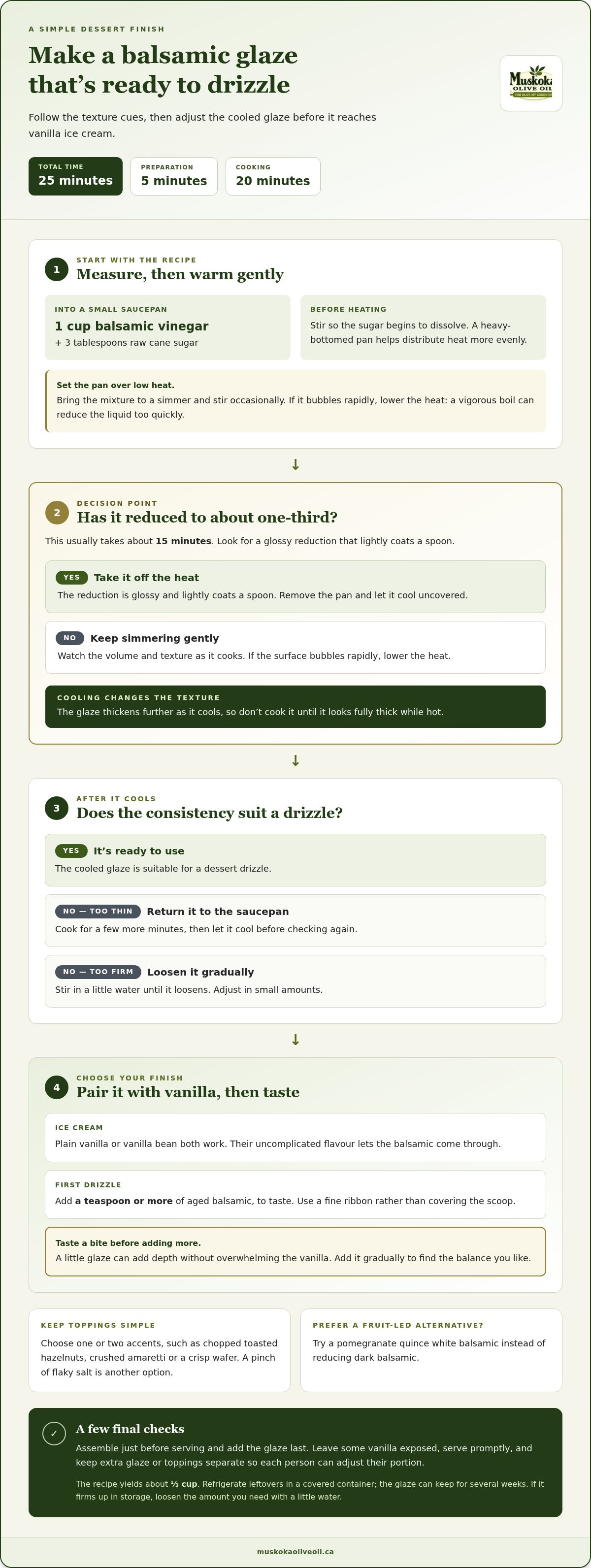
- Measure the ingredients. Add 1 cup of balsamic vinegar and 3 tablespoons of raw cane sugar to a small saucepan. Stir before heating so the sugar begins to dissolve. A heavy-bottomed pan helps distribute heat more evenly, making it easier to control the reduction as it simmers.
- Warm the mixture gently. Set the saucepan over low heat and bring the vinegar to a simmer. Keep the heat low to avoid burning the vinegar, and stir occasionally as the sugar dissolves. A vigorous boil can make the liquid reduce too quickly, so lower the heat if the surface bubbles rapidly.
- Watch the volume as it reduces. Simmer until the liquid reaches about one-third of its original amount, which takes about 15 minutes. The reduction should look glossy and lightly coat a spoon. Use its appearance as a guide as it cooks, since the pan and heat can affect how quickly the vinegar thickens.
- Cool the glaze uncovered. Remove the saucepan from the heat and let the reduction cool without a lid. It continues thickening as it cools, so avoid cooking it until it looks fully thick in the hot pan. The recipe yields about ⅓ cup, with 5 minutes of preparation and 20 minutes of cooking, for 25 minutes total.
- Adjust the consistency after cooling. If the glaze is too thin, return it to the saucepan and cook it for a few more minutes. If it becomes too firm, stir in a little water until it loosens. Make adjustments gradually, then let the glaze cool before deciding whether its texture suits a dessert drizzle.
- Store leftovers covered. Once cooled, transfer the reduction to a covered container and refrigerate it; it can keep for several weeks. If it firms up during storage, loosen the amount you need with a little water. For a fruit-led alternative, try a pomegranate quince white balsamic instead of reducing dark balsamic.
Assembling and serving the dessert
Assemble each bowl just before serving to help the ice cream keep its shape. Choose toppings that add texture without crowding the balsamic flavour.
-
Drizzle the glaze over a serving
Scoop the ice cream into a bowl, then add a teaspoon or more of aged balsamic vinegar to taste. Drizzle a fine ribbon across the scoop rather than covering the whole surface. Taste a bite before adding more. That first spoonful will show whether the vinegar complements the vanilla or calls for a lighter touch.
-
Add complementary toppings
Choose a topping with texture, such as chopped toasted hazelnuts, crushed amaretti or a crisp wafer. Use just one or two accents so the balsamic doesn’t disappear beneath a pile of garnish. A pinch of flaky salt can sharpen the contrast, but taste the finished spoonful before adding it.
- Prepare the serving dishes. Set out bowls and spoons before opening the ice cream. If you’re serving guests, arrange the toppings in separate small dishes with individual spoons. This keeps the table organized and lets everyone choose a finish. Keep the glaze separate until the scoops are ready, so it doesn’t spread across the dish while you prepare the other components.
- Build each portion with balance. Place the scoop in the centre of the bowl, then add the selected topping beside or over it. Leave some vanilla exposed for a clean, unadorned bite. Add the balsamic last, using a deliberate drizzle rather than mixing it into the ice cream. A clear pattern looks inviting and lets each spoonful pick up a little of every element.
- Serve promptly and invite adjustment. Bring the dessert to the table as soon as it’s assembled. Put extra glaze and toppings within reach so guests can tailor their portions. For a tasting-style finish, offer contrasting garnishes in separate dishes rather than combining them in advance. Everyone can then discover which texture best suits the vinegar and vanilla.
The Torciano recipe recommends drizzling each serving with a teaspoon or more of aged balsamic vinegar, to taste. Pour carefully and pause before adding more, so the sweetness and acidity stay in proportion to the vanilla. If the glaze gathers in one spot, guide it gently across the scoop with a spoon instead of stirring it in. This preserves distinct flavours and lets each bite vary, from a lightly dressed edge to a richer streak.
At the table, describe the available finishes simply and let guests choose how much glaze or garnish they want. A plain bite can reset the palate between topped spoonfuls, while a little extra glaze lets someone deepen the balsamic note gradually. Keep the presentation uncluttered: the scoop, its ribbon of vinegar and the crunchy accent should be easy to see and reach. Serve while the ice cream is firm, and leave additions separate until each person is ready. That way, everyone can enjoy the dessert at their own pace without losing the contrast between cool vanilla, tangy glaze and crisp texture.
What type of balsamic vinegar is best for ice cream?
Aged balsamic is a classic accompaniment to gelato, fresh fruit and simple desserts around Modena, Italy. For vanilla ice cream, choose a balsamic whose sweetness and acidity complement the creamy base.
- Start with an aged balsamic. Its concentrated sweet-tart character can add depth to plain vanilla without extra toppings. Aged balsamic is also served with ripe strawberries, dark chocolate and panna cotta, where acidity balances richness. Taste a little first; the flavour should appeal to you before you add it to the ice cream.
- Consider a dark balsamic for a bolder finish. Raspberry dark balsamic is suggested with vanilla or chocolate ice cream for a fruit-forward flavour. Try it with plain vanilla before adding berries or chocolate. If the balsamic already brings a distinct fruit note, keep other toppings simple so the flavours stay clear.
- Match the vinegar to your topping. Aged balsamic and fresh strawberries are a natural pairing, while dark chocolate creates a deeper, more dessert-like profile. Cinnamon pear adds gentle spice and fruit. Try one pairing at a time, such as strawberry with aged balsamic or dark chocolate with raspberry balsamic, and notice how it changes the finish.
- Use a white balsamic for a lighter variation. Its brighter style can complement vanilla when you want a fruit-led contrast without the darker colour of a traditional drizzle. Try it with fresh strawberries or pear, then taste before adding another topping. The vinegar should lift the ice cream’s sweetness, not take over the bowl.
- Choose a reduction for a thicker drizzle. A balsamic reduction clings to a scoop more readily than a thin vinegar, creating defined ribbons across the surface. You can also serve aged balsamic in a light drizzle and let its own texture and flavour lead. Add a little, then adjust the next serving to taste.
- Test the pairing before serving guests. Put a small amount of vanilla ice cream in a dish and taste it with the balsamic you plan to use. Compare a plain spoonful with one topped with strawberry, cinnamon pear, espresso or dark chocolate. This quick tasting helps you find a balanced vinegar and garnish combination for your dessert.
Treat that as a personal reference point, not a required price or a guarantee that a bottle will suit your dessert. The key question is whether the flavour works with the ice cream you plan to serve. Taste a little vinegar on its own, then try it with vanilla before deciding how much to drizzle. Let your preference guide your choice rather than assuming a particular price will deliver the right balance.
If the pairing tastes too strong, use less on your next scoop. If it feels balanced, keep the serving simple and let the vinegar remain noticeable. A small tasting helps you decide whether the flavour suits your dessert before you dress the whole serving.
Can you use store-bought balsamic glaze on vanilla ice cream?
Yes. You can spoon ready-made balsamic glaze directly over vanilla ice cream for a quick, simple dessert. Use these steps to choose and serve it thoughtfully.
- Read the ingredient list first. Store-bought glazes can differ in sweetness, thickness, and ingredients. Check the label for balsamic vinegar, added sweeteners, and any ingredients relevant to your dietary needs. If someone has an allergy, compare the full ingredient list with their requirements rather than assuming every glaze has the same recipe.
- Look for a flavour that suits vanilla. A glaze with a balanced sweet-tart character complements vanilla’s gentle flavour. If the label describes a pronounced fruit note, consider serving it with plain ice cream first. A strong flavour can take centre stage, so a simple test spoonful helps you decide whether to add strawberries or another topping.
- Check how it pours. Turn the bottle gently or stir the glaze if its contents have settled. A thick glaze makes defined ribbons; a more fluid one spreads quickly across the scoop. Avoid squeezing a large amount onto the ice cream at once. Start with a small drizzle, then add more only after tasting the first bite.
- Serve it at room temperature. If the glaze feels too firm to drizzle, let the closed container stand briefly at room temperature. Follow the package directions for storage and handling. Don’t heat the bottle unless its label permits it; instead, transfer a small amount to a suitable dish if warming instructions apply.
- Keep other toppings restrained. Store-bought glaze already brings concentrated flavour, so choose one complementary garnish. Fresh strawberries offer a bright fruit accent, while a few pieces of dark chocolate create a richer finish. Add the garnish after drizzling, and taste before adding extra sweet toppings that could overwhelm the vanilla.
- Compare it with a homemade reduction. A purchased glaze is convenient when you want to serve dessert without cooking. A homemade reduction lets you control its ingredients and sweetness. For either option, judge the result by how it tastes with the ice cream, not by thickness alone. The best choice is the one that delivers a balanced bite.
- Serve each bowl shortly after assembly. Add the glaze just before bringing the dessert to the table, while the ice cream still holds its shape. Keep the bottle nearby for guests who prefer a stronger balsamic finish. A separate serving spoon also helps prevent ice cream from entering the container.
How much balsamic glaze should you drizzle over one serving?
Start with a teaspoon of aged balsamic, then add more to taste. The right amount contrasts the vinegar’s complexity with vanilla’s creamy sweetness without overwhelming the bowl.
- Begin with a measured drizzle. Spoon a teaspoon of aged balsamic over one serving, following the dessert recommendation. Use a spoon rather than pouring straight from the bottle. This gives you control over the first taste and prevents a heavy stripe from covering the ice cream.
- Spread the glaze across the surface. Add a few narrow ribbons instead of one thick pool. This distributes the flavour so each spoonful can include some glaze and some plain vanilla. Keep part of the scoop uncovered; the contrast helps you judge whether the first drizzle is enough.
- Taste before adding more. Take a bite with both ice cream and balsamic. If the vinegar’s acidity and sweetness feel balanced against the vanilla, stop there. If the ice cream still leads, add another small drizzle, then taste again. Adjusting in stages is more reliable than estimating a large pour.
- Account for the glaze’s intensity. A concentrated reduction can taste stronger than a thinner balsamic drizzle. If yours has a rich, sharp finish, use less at first. A milder-tasting glaze may need a little more to register beside the dairy. Let flavour, not appearance, guide the amount.
- Adjust for other toppings. Fresh strawberries, dark chocolate, and cinnamon pear each change the overall sweetness and flavour. With a strongly flavoured garnish, keep the balsamic light. For plain vanilla, you may prefer a more noticeable ribbon. Add toppings first, then taste the combined bite before adding extra glaze.
- Serve additional glaze separately. If you’re sharing dessert, place the glaze beside the bowls rather than dressing every portion heavily. Guests can add more to their own serving, according to taste. This also keeps the ice cream’s vanilla flavour clear for anyone who prefers only a subtle balsamic accent.
- Choose the finish you want. A thin drizzle creates small bursts of acidity, while a broader coating makes the vinegar more prominent. Begin with the lighter touch, especially with aged balsamic. Increase the amount only after tasting; the goal is a clear contrast, not a bowl where glaze overwhelms ice cream.
- Explore a different balsamic style. The amount you enjoy may shift with the vinegar’s flavour and texture. A fruit-forward white balsamic, for example, gives vanilla a different finish than aged balsamic. You can explore white balsamic vinegars and compare their character with your usual drizzle.
Muskoka Olive Oil: Infused Olive Oil
Muskoka Olive Oil Co. offers Infused Olive Oil to explore alongside balsamic and vanilla ice cream. A delicately flavoured oil can add another layer, while extra virgin olive oil brings fruitiness and richness. Try a small drizzle on a separate spoonful first, then decide whether it complements your balsamic glaze.
For a brighter twist, citrus olive oil can bring to mind lemon cream pie, key lime pie or a creamsicle-style finish with vanilla. The best pairing depends on the balsamic's sweetness and the flavour you want to highlight. Explore Muskoka Olive Oil Co.'s infused olive oils for ideas for your next dessert.
Make the pairing your own
Make your next dessert a small flavour experiment. Try vanilla ice cream with balsamic glaze alongside a different fruit or a delicate drizzle of extra virgin olive oil, then notice which contrast you enjoy most. Muskoka Olive Oil Co. offers extra virgin olive oil and white balsamic vinegars for fresh pairings beyond a classic dark drizzle.
Memorable combinations often come from tasting thoughtfully and adjusting one ingredient at a time. A bright balsamic, a fruit-forward oil or a simple scoop of vanilla can each change the character of the bowl. Keep the pairing that suits your table, whether you’re having dessert at home or finishing a dinner with friends.
For ideas on choosing balsamic and olive oil flavours, contact Muskoka Olive Oil Co. for balsamic advice. Then enjoy making the next serving your own.
Frequently Asked Questions
Why Does Balsamic Vinegar Taste Good on Ice Cream?
Balsamic vinegar’s acidity and sweetness complement the rich dairy and sugar in ice cream. Its tart edge cuts through the creamy texture, while concentrated fruit notes add depth. Vanilla works especially well because its simple flavour gives the vinegar room to stand out. Try a small drizzle with plain vanilla, then compare it with a spoonful topped with fresh strawberries.
What does vanilla ice cream with balsamic glaze taste like?
The result is creamy and sweet, with a bright tang and deeper, almost fruity finish. The balance depends on the glaze: aged balsamic can bring richer, rounded notes, while a fruit-forward variety may taste brighter. Ripe strawberries make the dessert fresh and sweet-tart; dark chocolate intensifies the flavour. A small taste shows how the flavours work together.
How do you make balsamic glaze for vanilla ice cream?
Combine 1 cup balsamic vinegar and 3 tablespoons raw cane sugar in a saucepan. Bring it to a gentle simmer over low heat, then reduce the liquid to about one-third of its starting amount, which takes about 15 minutes. Let the glaze cool uncovered before serving; it thickens as it cools. The recipe takes 25 minutes total, including preparation and cooking.
Leave a comment