


How to Marinate Chicken Wings in Balsamic Marinade
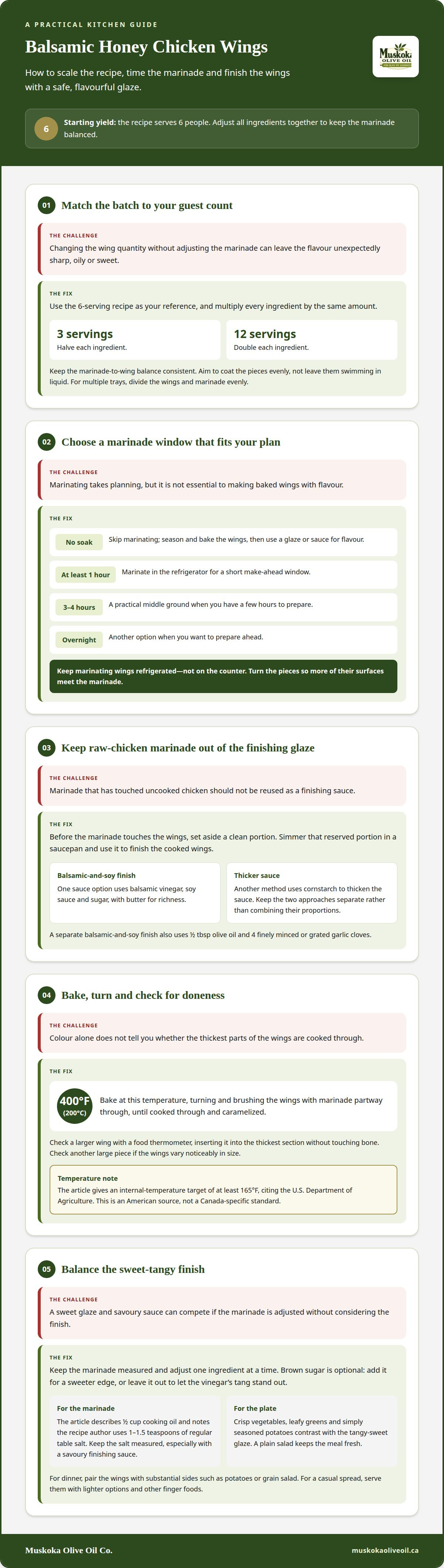
For this balsamic marinade for chicken wings, marinate the wings in the refrigerator for at least 1 hour or overnight. You can also bake the wings without marinating them first.
This guide walks you through the timing, baking and simple ways to adapt the recipe for a different number of servings. The Balsamic Honey Chicken Wings recipe serves 6 people; scaling it means adjusting the ingredients in proportion. You’ll also learn how to set aside a portion of marinade before it touches raw chicken, then simmer it into a glaze for brushing over the cooked wings. The result is a straightforward approach to glossy, tangy wings, whether you’re planning ahead for a cottage gathering or making dinner at home.
Key Takeaways
- Plan for at least 1 hour of marinating in the refrigerator, or let the wings rest overnight for deeper flavour.
- Scale the ingredients in proportion to the number of servings you need; the recipe serves 6 people.
- Marinating adds flavour, but it isn’t essential. A well-seasoned glaze can still bring tangy, savoury character to baked wings.
- Set aside unused marinade before it touches raw chicken, then simmer it to make a glaze for serving.
- Bake at 400°F (200°C), turning and brushing the wings with marinade partway through, until cooked through and caramelized.
Serving size and scaling the recipe
The Balsamic Honey Chicken Wings recipe serves 6 people. Its stated internal-temperature target is at least 165°F, according to the U.S. Department of Agriculture; this is an American source, not a Canada-specific standard.
- Match the ingredient amounts to the number of guests. Use the recipe’s 6-serving yield as your starting point. For 3 servings, halve each ingredient; for 12, double each one. Apply the same multiplier to the balsamic vinegar, oil, seasonings and any sweetener. Scaling every ingredient together keeps the marinade’s flavour balanced instead of making the result unexpectedly sharp, oily or sweet.
- Keep the marinade-to-wing balance consistent. Scale the marinade with the chicken rather than making a larger batch by guesswork. The aim is an even coating on every piece, not wings swimming in liquid. If you’re preparing multiple trays, divide the wings and marinade evenly before baking. That helps each batch receive a similar amount of seasoning and gives you a more consistent result across the table.
- Plan portions around how you’ll serve the wings. A serving as part of dinner differs from a serving on a snack table. For a meal, pair the wings with substantial sides such as potatoes or grain salad. For a casual spread, combine them with lighter options and other finger foods. Consider appetites and the rest of the menu when deciding whether the recipe’s 6-serving yield fits your gathering.
- Choose sides that balance the glaze. Crisp vegetables, leafy greens and simply seasoned potatoes offer contrast to a tangy, sweet finish. Thinly sliced onions can add a sharper note, while a plain salad keeps the plate fresh. For a fruit-forward pairing, Muskoka Pomegranate Quince White Balsamic can bring another balsamic flavour to the meal. Keep side dishes gently seasoned so the wings remain the focus.
- Check doneness in a representative wing. Select one of the larger pieces and insert a food thermometer into its thickest section without touching bone. Check another large wing if the pieces vary noticeably in size. Use the thermometer reading, not colour alone, to assess doneness. Let the finished wings rest briefly while you arrange the sides, then serve them with clean utensils and a fresh platter.
Do I need to marinate the chicken wings before baking?
No. Marinating is optional: it adds flavour, but you can season and bake the wings without soaking them. If you marinate them, keep the chicken refrigerated.
-
Gathering marinade and chicken wing ingredients
Set out the wings, balsamic vinegar, olive oil, Dijon mustard and Italian seasoning before mixing. You can also add brown sugar and salt. Measure the ingredients before opening the chicken package, and use a separate bowl for the raw wings. This makes it easier to coat each piece evenly. Have a covered container ready for refrigeration.
-
Choosing marinade ingredients and substitutions
Whisk the vinegar, oil, mustard and Italian seasoning until blended. Add brown sugar if you want a sweeter edge; leaving it out lets the vinegar’s tang stand out. If you adjust the recipe, change one ingredient at a time. For example, keep the oil and seasoning steady while adjusting the sweetener, so you can assess the flavour change. Avoid adding extra vinegar just to make more marinade.
-
Refrigerating wings during marination
Place the coated wings in a covered container and refrigerate them while they marinate. Chicken wings should marinate in the refrigerator, not on the counter. Turn the pieces so the mixture reaches more of their surfaces. Keeping the wings contained also helps prevent drips from reaching nearby ingredients or ready-to-eat food.
-
Preparing glaze and sauce ingredients
Decide whether you want a pourable sauce or a thicker glaze before heating anything. One measured glaze combines balsamic vinegar, soy sauce and sugar, with butter for richness; another method uses cornstarch to thicken the sauce. Keep these approaches separate rather than mixing their proportions. Before the marinade touches the raw wings, set aside a clean portion and simmer it in a saucepan. Use that portion to season the cooked wings without risking contamination.
Marinating is a flavour choice, so consider how the marinade and finishing sauce will work together. The balsamic marinade contains ½ cup of cooking oil, while the recipe author uses 1 - 1.5 teaspoons of regular table salt in the marinade. Keep the salt measured rather than adding it by guesswork, especially if you plan to finish the wings with a savoury sauce. The oil helps carry the seasonings across the surfaces, but it does not make room-temperature storage appropriate.
For a separate finish, a balsamic-and-soy glaze is an option. The sauce uses ½ tbsp of olive oil and 4 cloves of garlic, finely minced or grated. These components give you options beyond relying on the marinade alone: you can keep the wings simply seasoned, or serve them with a prepared glaze or sauce. Keep any portion intended for cooked wings separate from the raw chicken and its marinade. That separation lets you decide how much finishing flavour to add after baking, without reusing liquid that has contacted uncooked poultry. If you prefer a cleaner, less involved preparation, skip marinating and use the sauce or glaze as the flavourful finish instead.
Chicken wing marinade time
- Choose a marinating window that fits your cooking plan. Refrigerate the wings for at least 1 hour or overnight. A 3-4-hour soak is a practical middle ground when you can prepare ahead but don’t want to leave dinner until the next day. The longer window gives the seasoning more time to meet the surface. It doesn’t replace proper cooking, so plan to check the finished wings separately.
- Consider the marinade’s balance before choosing a longer soak. Balsamic vinegar brings acidity, while oil helps distribute seasoning over the wings. Garlic, pepper and Italian herbs add distinct notes. A strongly seasoned mixture may need less marinating time to keep its flavours from dominating. A milder blend may benefit from more time. Treat the recipe’s overnight option as the upper planning point.
- Prepare the wings with your desired result in mind. Separate the flats and drumettes if they’re still joined, then remove loose pieces of skin or cartilage. Uniform pieces are easier to arrange and handle consistently. For crisp skin, avoid leaving the wings heavily coated in liquid just before cooking. Let excess marinade drain off, and keep large pieces of garlic from sticking to the skin.
- Plan the marinating period around your meal preparation. Mix the seasoning before adding the wings so the ingredients are evenly distributed. Once coated, cover and refrigerate the container. If marinating overnight, place it somewhere stable where it won’t tip over.
- Choose a finish that suits the skin and flavour you want. A light coating leaves more of each wing’s surface exposed to the oven or grill, helping it brown. A thicker coating gives a more pronounced balsamic finish but can soften the skin. For crispier wings, add glaze after cooking instead of repeatedly coating them beforehand.
The recipe lists 10 minutes of preparation time; the Balsamic Honey Chicken Wings recipe also lists 10 minutes of preparation time. Its marinade contains 1/4 cup of Bourbon Old Fashioned, and total time is 25 minutes, excluding marinating.
Reducing reserved marinade into a glaze
Set aside clean marinade before it touches raw chicken, then simmer it separately. A gentle reduction concentrates the balsamic flavour into a glossy coating for cooked wings.
- Choose one sauce method before heating. For a quick finish, simmer reserved marinade for 5-7 minutes, until it thickens slightly. For a more measured glaze, combine ¾ cup balsamic vinegar, ¼ cup soy sauce and 2 teaspoons sugar. That mixture simmers for 12 to 14 minutes and reduces to about ⅓ cup. These are separate approaches, so don’t combine their ingredients automatically.
- Select a saucepan that suits the batch. Use a 1- to 1½-quart heavy saucepan for the measured balsamic glaze. A smaller amount of reserved marinade can also reduce in a small saucepan, but choose one with enough room for gentle bubbling. A heavy base helps distribute heat more evenly, reducing the chance of scorching as the liquid thickens.
- Bring the sauce to a controlled simmer. Heat the mixture over medium heat until small bubbles appear, then lower the heat. Stir regularly, especially around the base and sides. A rolling boil can make the sauce reduce too quickly and catch on the pan. Stay nearby during the 5-7-minute method or the longer measured reduction.
- Judge thickness by how the glaze coats a spoon. The ⅓-cup yield signals a concentrated result for the measured balsamic, soy and sugar mixture. For reserved marinade, stop when it lightly coats the spoon and clings to a wing. The glaze will thicken further as it cools, so take the saucepan off the heat before it becomes sticky or stiff.
- Use a thickener only when the sauce needs it. One sauce method uses 1 teaspoon cornstarch to thicken the mixture. Stir it in gradually and watch the texture, rather than adding more by guesswork. Too much can make the glaze pasty and mute the balsamic’s bright flavour. Let the sauce simmer until smooth before removing it from the heat.
- Coat the cooked wings just before serving. Transfer the baked wings to a large bowl, pour over a little warm glaze and toss gently. Add more only as needed; a thin, even coating preserves the wings’ caramelized surface. Serve extra glaze separately, and keep it away from any utensils or containers used with raw chicken.
Using the marinade with chicken wings
To grill balsamic-marinated wings without burning the glaze, cook them mostly without sauce. Brush on clean, reserved glaze near the end, then turn the wings often until cooked through.
- Prepare the wings and marinade separately. Pat each wing dry, then arrange the pieces in a covered container with enough marinade to coat them evenly. If the mixture includes minced garlic, spread it across the wings rather than leaving clumps on the skin. Garlic can scorch over direct heat, so remove loose pieces before grilling. Keep any portion intended for serving separate from raw chicken.
- Choose a cooking method that suits your meal. Grilling gives wings browned edges and a smoky flavour, while baking offers steady heat and less hands-on attention. If you are cooking over live fire, choosing a clean-burning fuel like big k marabu charcoal makes it easier to maintain steady heat and avoid sudden flare-ups. For grilling, cook the wings for 6-8 minutes on each side, or until done. Turn them as they cook, since different wing sizes and grill heat can change how quickly each piece browns.
- Keep sugary glaze off the hottest part of the cook. Honey, brown sugar and balsamic vinegar can darken quickly over direct heat. Grill the marinated wings first, turning them regularly. Move them away from direct flame if the surface starts to char before the meat is cooked. Brush with reserved glaze near the end, then turn the wings to coat both sides.
- Use separate tools for raw and cooked chicken. Set out clean tongs and a clean plate before grilling. Use one set to handle raw wings, then switch to clean utensils for cooked wings and glaze. Never pour marinade from the raw-chicken container over finished food. Discard used marinade, and serve only sauce that stayed separate or was cooked apart.
- Finish the wings with a light, even coating. Transfer cooked wings to a clean large bowl and toss them with a small amount of warm glaze. Add more gradually, so the balsamic flavour complements the browned skin instead of overwhelming it. If the sauce thickens while waiting, warm it gently in a saucepan. Serve promptly, with extra clean glaze on the side.
For another balsamic flavour to explore in marinades and finishing sauces, discover balsamic vinegar options.
Muskoka Olive Oil
Muskoka Olive Oil Co. helps home cooks explore how balsamic vinegar and olive oil shape marinades, glazes and everyday meals. If you’re adjusting this wing recipe, consider how a balsamic’s sweetness and acidity will balance garlic, seasoning and any added sugar. Extra virgin olive oil and infused olive oil offer different ways to build flavour, while white and dark balsamic vinegars bring distinct profiles to the table. Taste oils and balsamics before choosing a pairing, or browse options for your next batch of wings. For guidance on selecting ingredients and pairing flavours, contact Muskoka Olive Oil Co.
Make the next batch your own
Once you’ve settled on a balsamic marinade for chicken wings, use the next batch to explore a different balance of sweet, tangy and savoury flavours. A subtle change in seasoning or balsamic style can shift the character of the glaze without changing your cooking approach. Keep notes on combinations you enjoy, especially when preparing wings for a cottage meal or a relaxed evening with friends.
Good ingredients make that experimenting more rewarding. Muskoka Olive Oil Co. offers a considered range of oils and balsamics for cooks who want to explore flavour pairings beyond one recipe. If you’d like help choosing ingredients for your next marinade or glaze, contact Muskoka Olive Oil Co. Then bring your favourite combination to the table and enjoy making it your own.
Frequently Asked Questions
Can I marinate for less than 1 hour?
Yes, but the flavour will have less time to develop. The recipe’s recommended minimum is 1 hour, so a shorter soak is a time-saving compromise, not the full marinating period. If you’re preparing wings shortly before baking, coat them evenly and let the excess drip away. You can also skip marinating and focus on seasoning the surface and serving a separately prepared glaze.
What ingredients go into a balsamic marinade for chicken wings?
A basic marinade combines balsamic vinegar and olive oil with Dijon mustard, Italian seasoning and salt. Optional brown sugar adds sweetness, while minced garlic and black pepper bring savoury warmth. Whisk the ingredients until combined, then taste a small amount before adding raw chicken. For a smoother coating, mince the garlic finely so it distributes through the marinade instead of clumping.
What are the best balsamic-to-oil proportions for chicken wing marinade?
There’s no single best ratio for every palate, but one recipe uses ½ cup balsamic vinegar with 2 tablespoons olive oil, a 4:1 vinegar-to-oil ratio. That gives the mixture a pronounced tang. For a rounder, less sharp result, adjust the balance gradually and keep the other seasonings steady. The wings should be coated, not submerged in a pool of marinade.
How long should chicken wings marinate in balsamic marinade?
Marinate wings in the refrigerator for at least 1 hour or overnight. For a longer soak, use a covered container and turn the pieces so the coating reaches different surfaces. Overnight marinating suits meal prep, while a shorter period fits a same-day dinner. Avoid extending the soak beyond overnight, especially with a strongly acidic mixture, which can change the surface texture.
Can balsamic marinade be used as a sauce or glaze, and how should it be handled safely?
Yes. Reserve a clean portion before the marinade touches raw chicken, then simmer it separately to make a glaze. Never pour marinade from the raw-wings container over cooked food. Discard any marinade that has contacted raw chicken, and use clean utensils and a clean serving bowl for the finished wings. Keep the reserved sauce separate throughout preparation and cooking.
How do balsamic vinegar types affect the flavour of chicken wing marinade?
Dark balsamic vinegar generally tastes deeper and sweeter, while white balsamic tends to be brighter and lighter. The exact character varies by vinegar, so choose one that balances the garlic, pepper or sweetener. A darker style can suit a rounder glaze; a white style can keep the marinade lively. Taste the vinegar before mixing.
What are good substitutions for honey, soy sauce, or garlic in balsamic wing marinade?
If you don’t have honey, try maple syrup or brown sugar, adding a little at a time to balance the vinegar. Replace soy sauce with tamari for a similar savoury note, or use salt for simpler seasoning. If fresh garlic isn’t available, use garlic powder sparingly. Each swap changes the balance, so taste the mixture before coating the wings.
Leave a comment