


How to Serve Oil Dipping With Bread, Cured Meats and Crackers
What should you put on the table when oil and vinegar are the centre of a shared spread? Choosing what to serve with an oil and vinegar dip comes down to balance: offer something sturdy for dipping, add savoury contrasts, and leave room for the dip’s flavour to come through. A thoughtful selection feels generous without making the table complicated.
It’s easy to reach for familiar snacks, but a good spread considers texture as well as taste. Crisp, tender, salty, and fresh elements each bring something different. Serve the dip in its own dish so guests can choose how much to use and combine bites as they like.
This guide brings bread, cured meats, crackers, and complementary oil-and-vinegar flavours together. You’ll find practical tips for choosing and arranging each element, plus ideas for adapting the spread to a casual snack or a cottage gathering. Use these pairings as a starting point, then build the table around what you and your guests enjoy.
Key Takeaways
- Choose sliced French baguette for an easy, crusty base that soaks up olive oil and balsamic vinegar.
- Pair cured meats with crackers sturdy enough to hold their texture when dipped or topped.
- Build flavour with herbs, garlic, pepper or Parmesan, and adjust the oil-and-vinegar balance to suit your tastes.
- Offer a mix of breads, crackers and savoury additions so guests can try different combinations.
- Explore extra virgin olive oils, infused olive oils and balsamic vinegars to find pairings that suit your spread.
Olive oil and balsamic vinegar
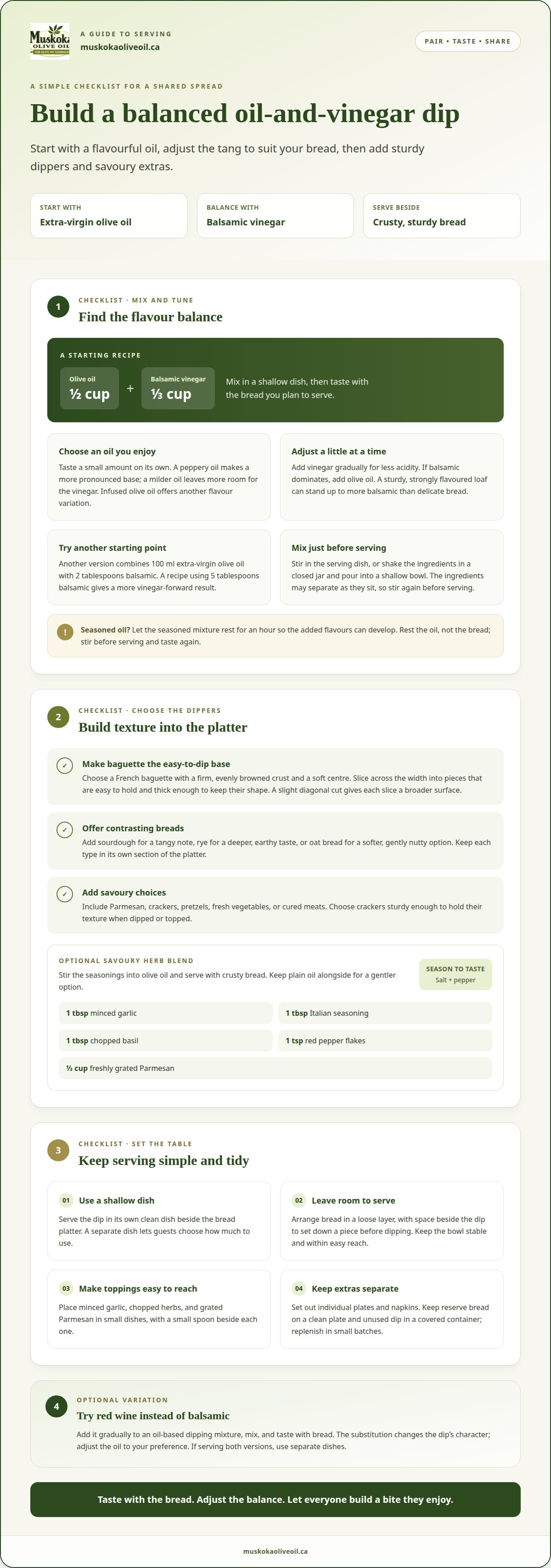
For an Italian-style dipping sauce, combine olive oil and balsamic vinegar, then season to taste. Start with 1/2 cup olive oil and 1/3 cup balsamic vinegar, and mix before serving.
- Choose an extra-virgin olive oil with a flavour you enjoy. Taste a small amount on its own before mixing. Its character will remain noticeable in the finished dip. A peppery oil creates a more pronounced base, while a milder one leaves more room for the vinegar. For a flavour variation, use infused olive oils.
- Measure the oil and vinegar into a shallow dish. A starting recipe uses 1/2 cup olive oil and 1/3 cup balsamic vinegar. This gives the dip a clear tang while keeping olive oil central. Another version combines 100 ml extra-virgin olive oil with 2 tablespoons balsamic. A recipe using 5 tablespoons balsamic creates a more vinegar-forward result.
- Adjust the proportion to suit your bread. A sturdy, strongly flavoured loaf can stand up to more balsamic, while delicate bread may taste better with a gentler mixture. Add vinegar gradually for less acidity, or add olive oil if the balsamic dominates. Taste each adjustment with the bread you plan to serve.
- Mix the ingredients just before serving. Stir the oil and vinegar together in the serving dish. For a more even blend, add them to a jar, close it, and shake, then pour the mixture into a shallow bowl. The ingredients may separate as they sit, so stir again before serving.
- Let seasoned oil rest before serving. Allow the mixture to sit for an hour so the added flavours can develop. Let only the seasoned oil rest, not the bread. Stir before serving, then taste to see whether the balance suits your table.
- Try red wine as an alternative to balsamic. Red wine can replace balsamic in an oil-based dipping mixture, creating a different flavour. Add it gradually, mix, and taste it with bread. Since this substitution changes the dip’s character, adjust the oil to your preference. Serve the alternative in a separate dish if offering both versions.
- Make a small tasting portion before preparing more. Combine a little oil and vinegar, then try it with the bread and other foods on your menu. This lets you tune the dip to the meal instead of relying on a fixed proportion. Once the flavour is balanced, prepare the amount you need.
Serving the dip with sliced French baguette
Serve the dip in a clean, shallow dish beside a platter of sliced French baguette. Keep the bread separate, and provide a clean spoon for the dip so guests can serve themselves neatly.
For a varied spread, pair baguette with sourdough, rye, or oat bread. Minced garlic, chopped herbs, and grated Parmesan offer simple ways to customize each bite.
- Choose a baguette with a firm crust. A fresh-baked French baguette gives guests a crisp outside and soft centre, and its shape is easy to cut into portions. For a gathering, look for an evenly browned crust and a loaf substantial enough for dipping.
- Slice the loaf across its width. Cut the baguette into pieces that are easy to hold and dip. Make them thick enough to keep their shape, but not so large that they’re awkward on a small plate. A slight diagonal cut creates a broader surface for the dip.
- Serve bread fresh or gently warmed. Fresh bread works well straight from the bakery. To serve it warm, heat the loaf until the crust is pleasantly crisp, then let it cool enough to handle. Slice it after warming to keep the centre soft and prevent it from drying out.
- Offer a second Canadian bread for contrast. Sourdough brings a tangy note, while rye has a deeper, earthy taste. Oat bread offers a softer, gently nutty option. Arrange each type in its own section of the platter, so guests can choose a flavour that suits the dipping oil.
- Keep optional toppings within reach. Set out minced garlic, chopped parsley, or grated Parmesan in small dishes. Guests can personalize each bite without changing the main serving bowl. Put a small spoon beside each topping to keep the bread platter tidy.
- Choose a platter that makes serving easy. Spread baguette slices in a loose layer rather than stacking them high. Leave space beside the dip for guests to set down a piece before dipping. A separate plate for used bread pieces helps keep the serving area organized.
- Set out individual plates and napkins. A small plate gives each guest a place for bread and toppings. Napkins are useful because oil can cling to the crust and fingers; incorporating curated tabletop pieces from Table Terrain can keep the presentation neat and stylish. Keep the dip bowl stable and within easy reach, away from the table’s edge.
- Keep reserve bread and dip separate from the serving setup. Put extra baguette slices on a clean plate, and keep unused dip in its own covered container. Replenish the table in small batches instead of putting everything out at once. This keeps the presentation neat as guests help themselves.
Suggested uses for bread dipping oil
Use bread dipping oil beyond the bread basket. Set out Parmesan, fresh vegetables, crackers, pretzels, cured meats, or grilled meats, and let guests build a varied plate. A small tasting station makes the dip part of the gathering.
- Make a savoury herb blend. Stir 1 tablespoon minced garlic, 1 tablespoon Italian seasoning, and 1 tablespoon chopped basil into olive oil. Add 1 teaspoon red pepper flakes and 1/3 cup freshly grated Parmesan. Season with salt and pepper to taste. Serve this recipe with crusty bread, then offer plain oil alongside for guests who prefer gentler flavour.
- Offer Parmesan as a simple pairing. Pour olive oil into a shallow dish and add grated Parmesan. Guests can dip bread into the oil, then pick up a little cheese with each bite. Keep extra cheese in a separate bowl so it stays dry and easy to sprinkle.
- Add crisp vegetables for contrast. Arrange fresh vegetables such as cucumber, sweet pepper, or carrot beside the dip. Cut them into easy-to-hold pieces. Their fresh crunch contrasts with rich oil, and their broad surfaces catch a little seasoning.
- Build a cheese-and-meat board. Set cured meats and cheeses near the bread and dipping oil. Parmesan brings a savoury note, while ricotta or feta can complement balsamic’s sweet acidity. Keep each food in its own area, giving guests room to choose combinations without blending flavours.
- Include crackers and pretzels. Add plain crackers and pretzels as crisp, salty alternatives to bread. Choose pieces sturdy enough to scoop oil without crumbling immediately. Place them on a dry plate, not in the dipping dish, to preserve their crunch.
- Pair the dip with grilled food. Serve grilled meats with a small dish of seasoned oil for dipping or drizzling. Balsamic also adds brightness to chicken, steak, fish, or veal. Keep the sauce separate so guests can choose how much to use.
- Set up a do-it-yourself tasting station. Put olive oil, balsamic vinegar, herbs, and spices in separate small dishes. Offer cracked pepper, rosemary, and Parmesan as possible additions. Guests can combine flavours on their own plates rather than changing the whole batch.
- Vary the oil for a second round. Offer specialty oils, such as truffle or chili oil, alongside a milder blend. Label each dish by flavour and serve with bread, crackers, or grilled meats. This gives guests an easy way to discover the pairings they enjoy most.
Vinegar and oil flavour combinations
For a balanced dipping mixture, start with 3 parts olive oil to 1 part vinegar. Add herbs, garlic, salt, or pepper, then taste it with bread before adjusting.
Rosemary, fresh garlic, cracked black pepper, and salt all season a dip well. For a fruitier contrast, pair balsamic with strawberries, peaches, pears, ricotta, or feta.
- Begin with a measured ratio. Combine 3 parts olive oil with 1 part vinegar, then stir or shake until blended. This gives the oil the lead while keeping vinegar’s acidity present. Taste the mixture on a piece of bread, since its texture and flavour can change how the dip comes across.
- Choose vinegar to shape the flavour. Balsamic adds a sweet, tangy note that works with crusty bread and savoury cheese. Red wine vinegar gives a sharper, wine-like edge, while white balsamic vinegar has a gentler profile. Taste each style with plain bread first, then try it with other foods.
- Use herbs for an aromatic finish. Rosemary gives olive oil a woodsy, savoury character. Italian seasoning brings a familiar blend of dried herbs, while chopped basil tastes fresh and green. Add one herb at a time and let it sit briefly before tasting. This makes it easier to judge each herb’s effect.
- Add garlic gradually. Minced fresh garlic gives the dip a pungent, savoury note. Stir in a little, taste, and add more only if needed. Garlic can quickly dominate delicate olive oil, so balance it with herbs or a little more oil. Serve the garlic blend with rustic bread.
- Bring in pepper and salt. Cracked black pepper adds warmth and a subtle bite. Salt sharpens other flavours, especially with plain bread or mild cheese. Season the oil lightly, taste, then adjust. For more heat, add red pepper flakes; for a gentler dip, leave them out.
- Pair balsamic with fruit and cheese. Drizzle a little balsamic beside sliced strawberries, peaches, or pears. Ricotta offers a mild, creamy contrast, while feta adds a saltier edge. Keep fruit and cheese on a separate plate, then dip bread between bites to compare the flavours.
- Make a tasting board with contrasting blends. Prepare one herb-and-pepper oil and another with balsamic and garlic. Label each dish by its main flavour, then serve both with bread, ricotta, and pear slices. Guests can compare how the same bread tastes with each combination.
Keep the seasoning simple when bread and oil are the focus. Combine cracked black pepper and salt with olive oil, adding each lightly and tasting as you go. The seasoning should complement the oil, not mask it.
The same ingredients can go beyond the dipping plate. Olive oil and red wine vinegar make a preferred sandwich dressing, while balsamic vinegar works in salad dressings. For a garlic-forward dip, press fresh garlic into the oil, stir, and taste it with bread. Adjust the seasoning as needed. These variations carry familiar oil-and-vinegar flavours from one meal to another.
Cured meats and crackers
Pair cured meats and crackers with oil dip by balancing salt, richness, and crunch. A mild cracker lets the dip lead, while seasoned meat brings a savoury counterpoint.
- Choose meats with contrasting flavours. Thinly sliced prosciutto offers a delicate, savoury bite beside olive oil. Salami has a firmer texture and more assertive seasoning. Arrange them separately so guests can choose a lighter or bolder match. Avoid piling the slices together, which makes them harder to lift neatly.
- Match the dip to the meat. A simple oil blend complements prosciutto without masking its flavour. Balsamic adds a sweet-tart contrast to richer salami. Try each combination on a plain cracker first to notice how the meat and dip work together.
- Select crackers for texture and strength. Water crackers offer a crisp, neutral base. Rye crackers bring an earthy note, while seeded crackers add extra crunch. Choose pieces that can hold a slice of meat without breaking. Size and sturdiness matter more than elaborate seasoning.
- Balance strongly flavoured crackers. A rosemary cracker can echo herbs in the dip, while a peppered cracker adds warmth. Pair these with mild prosciutto or plain cheese to avoid piling on intense flavours. If the dip already contains garlic or pepper, offer a neutral cracker too.
- Build each bite in a useful order. Start with a cracker, add a folded slice of meat, then spoon on a little dip. This keeps the cracker crisp and prevents oil from running across the board. Guests can also dip the cracker first, then top it with meat.
- Arrange the board by flavour. Place prosciutto beside mild crackers and salami near rye or seeded crackers. Set the dip in a small, stable bowl with room for dipping. Keep crackers on a dry surface, away from oil drips, to preserve their crunch throughout the gathering.
- Include a fresh contrast. Pear slices, strawberries, or crisp vegetables can refresh the palate between salty bites. Put fruit in its own section of the board, especially beside balsamic. This gives guests a sweeter pairing without letting fruit juices run into the oil.
- Offer a simple tasting progression. Invite guests to try a plain cracker first, then add meat, and finally taste both with the dip. This sequence makes each flavour easier to notice. For more ideas to shape a tasting board, explore flavour pairings.
Muskoka Olive Oil
Muskoka Olive Oil Co. offers oils and balsamics for pairing with bread, crackers, and cured meats. Extra Virgin Olive Oil is a classic starting point, while Infused Olive Oil can bring garlic or herb notes to the spread. White Balsamic Vinegars and Dark Balsamic Vinegars offer different ways to balance savoury foods with acidity and sweetness.
For a gathering, consider how each dip will complement the foods you plan to serve. Taste oils and balsamics side by side to find combinations that suit your bread, cheese, and charcuterie board. This practical approach helps you shape a spread around the flavours you enjoy, whether you're hosting at home or at the cottage.
Contact Muskoka Olive Oil Co. to discuss flavour pairings for your next gathering.
Make your next gathering your own
Deciding what to serve with oil and vinegar dip can help set the mood of your gathering, from a relaxed cottage snack to a shared grazing board. Start with foods your guests enjoy, then choose a dip that complements them. The best combinations feel natural on your table.
If you’re still weighing what to serve with oil and vinegar dip, consider how a different oil or vinegar could add a fresh note to your menu. Muskoka Olive Oil Co. offers Extra Virgin Olive Oil, Infused Olive Oil, and White Balsamic Vinegars to help you explore pairings.
For pairing ideas for your next gathering, contact Muskoka Olive Oil Co. Enjoy experimenting and make the spread your own.
Frequently Asked Questions
What food pairings work best with oil dipping?
Oil dipping works best with foods that balance richness, salt, and freshness. Try a small board with marinated olives, fresh mozzarella, and sliced radishes, alongside bread for dipping. Add a crisp apple or a handful of grapes for a sweet contrast. Keep the accompaniments in separate sections so guests can combine bites without competing flavours blending together.
What bread is best for dipping in oil and vinegar?
Ciabatta is a useful choice because its open crumb catches the dip, while its crust helps each piece hold together. Tear it into hand-sized portions instead of slicing to create plenty of textured edges. Focaccia also works well, especially when served plain so its seasoning doesn’t overpower the oil and vinegar. Offer both for contrasting bites.
What appetizers pair well with oil and vinegar dip?
Stuffed mushrooms, caprese skewers, and small portions of bruschetta make satisfying appetizers beside a dipping bowl. For an easy serving idea, thread cherry tomatoes and mozzarella onto short skewers, then offer plain bread nearby. Keep toppings modest so the olive oil remains part of the tasting. These bite-sized options suit guests who want something more substantial than bread alone.
What vegetables pair well with oil and vinegar dip?
Roasted zucchini, grilled eggplant, cherry tomatoes, and blanched asparagus pair well with oil and vinegar dip. Their tenderness gives the platter variety alongside raw vegetables. Let cooked vegetables cool slightly before serving, then arrange them on a separate plate. This keeps their juices from thinning the dip and gives guests a fork-friendly option.
What main dishes go well with bread served with oil and vinegar dip?
Bread and oil dip fit naturally beside tomato-based pasta, vegetable lasagna, or lentil soup. For a balanced meal, serve one main dish with a fresh green salad and keep the bread as a shared side. Tomato sauce also creates a flavour bridge to balsamic without making every part of the plate taste alike.
Leave a comment