


Lemon Olive Oil Loaf Cake: A Bright, Tender Bake
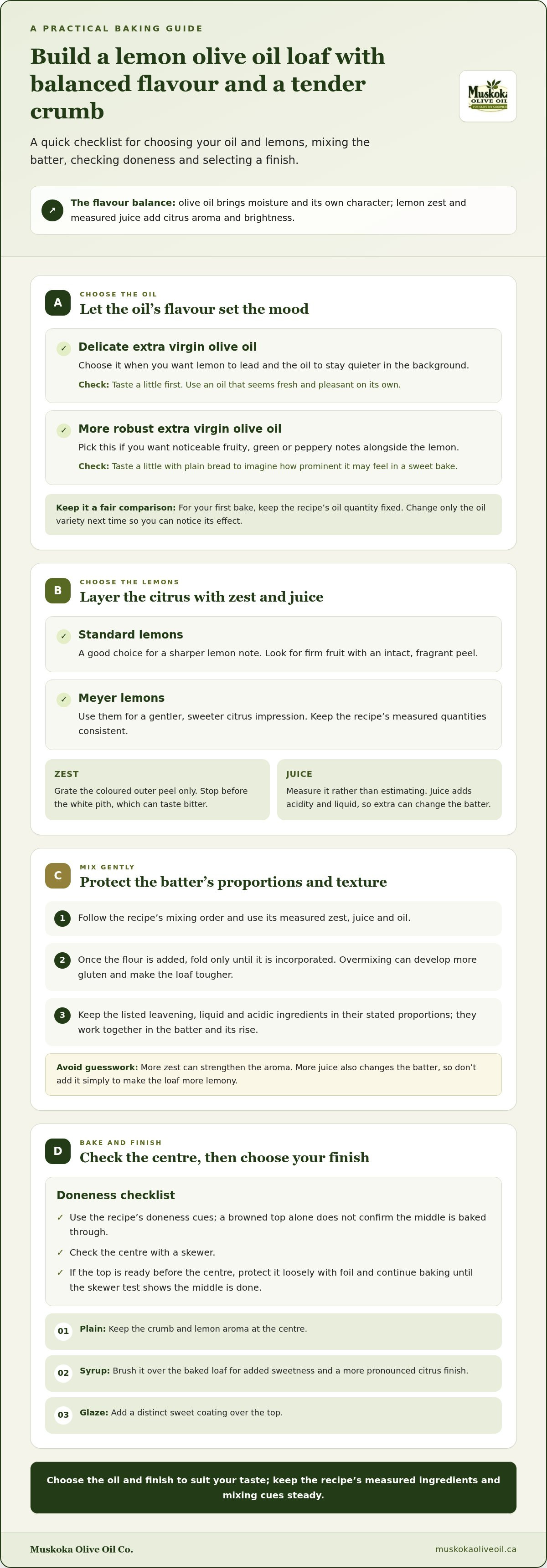
A good lemon olive oil loaf cake balances fragrant citrus with an oil you enjoy tasting. Extra virgin olive oil keeps the crumb moist and adds its own flavour, so choose a delicate oil for a lemon-forward loaf or a more robust one if you want fruity, green or peppery notes alongside the lemon.
For a tender result, use the recipe’s measured zest, juice and oil, mix the batter only until the flour disappears, and check the centre for doneness rather than relying on the browned top. This guide explains how to choose your ingredients, bake the loaf, and decide whether to finish it plain, with syrup or with glaze.
Key Takeaways
- Choose an olive oil whose flavour complements the lemon, from delicate and subtle to more pronounced.
- Use both zest and measured juice for fragrant citrus character without adding extra liquid by guesswork.
- Standard lemons and Meyer lemons can each work, but keep the recipe’s measured quantities consistent.
- Fold the dry ingredients in just until incorporated, and check the centre with a skewer to help avoid a dense or underbaked loaf.
- Choose a plain finish, syrup or glaze according to how much sweetness and citrus you want.
What makes a lemon olive oil loaf cake tender and fragrant?
Olive oil contributes moisture and flavour, while lemon zest and juice give the loaf its citrus aroma and brightness. For a balanced cake, let the lemon and oil complement each other rather than allowing either to dominate. Since olive oils vary in character, the oil you choose can give the same recipe a noticeably different flavour.
A tender lemon olive oil loaf cake depends on measured ingredients, gentle mixing and enough time in the oven. Follow a tested recipe for the proportions, then use the batter’s texture and the centre’s doneness to guide you. A golden top is a useful visual cue, but it does not confirm that the middle is baked through.
For a closer look at the cake style, watch this lemony olive oil loaf cake recipe:
What does olive oil change in a loaf cake?
Olive oil is the recipe’s fat, contributing to the cake’s soft texture while carrying its own flavour into each slice. The crumb still depends on the full recipe and how it is mixed, so adding oil does not by itself guarantee a tender result. A delicate oil tends to stay in the background; a more robust one can bring fruity, green or peppery notes.
Think of the oil as a flavour ingredient, not just a substitute for another fat. Olive oil varies with the olives and production, so taste is a helpful way to choose. If you’re comparing options, extra virgin olive oils offer different flavour profiles to consider for baking.
Where does the lemon flavour come from?
Finely grated zest supplies aromatic citrus oils from the peel, while juice adds acidity and a sharper lemon note. Zest only the coloured outer peel, stopping before the white pith, which can taste bitter. Using both gives the loaf more layered lemon character than relying on juice alone.
Syrup and glaze are optional finishes. Brushed over a baked loaf, syrup adds sweetness and a more pronounced citrus finish; glaze gives the top a distinct sweet coating. Leaving the cake plain keeps the crumb and lemon aroma at the centre. Meyer lemons can bring a gentler, sweeter citrus impression, while standard lemons work well for a sharper note.
As you mix, stop as soon as the ingredients come together. During baking, use the recipe’s doneness cues rather than taking the loaf out just because the top has browned. If the top is ready before the centre, protect it loosely with foil and continue baking until the skewer test shows the middle is done.
How olive oil, lemon, and mixing shape the cake’s flavour and crumb
The oil’s flavour, the lemon’s aroma and acidity, and the batter’s proportions all contribute to the finished loaf. Treat them as a set. Adding more juice is not a simple way to make the cake more lemony because juice also changes the batter’s liquid and acidity. Zest adds aromatic citrus character without that extra liquid.
In a loaf cake, olive oil contributes its own flavour while helping carry the lemon through each tender bite. The final crumb still depends on the recipe and how you mix and bake it. Aim for a clear citrus note that complements the oil instead of disappearing beneath it.
How should olive oil flavour complement lemon?
A delicate extra virgin olive oil suits a cake where lemon should lead and the oil should play a quieter role. Choose a more robust oil if you want noticeable fruity, green or peppery notes. Neither style is automatically better; the right choice depends on the flavour you enjoy, and oils can vary. This guide to extra virgin olive oil quality offers more context for considering an oil’s character.
For your first bake, keep the recipe’s oil quantity fixed and change only the oil variety next time. That makes it easier to notice how the oil affects the cake. If your oil is assertive, use the recipe’s measured zest and juice for a clear lemon flavour instead of adding extra juice by guesswork.
Why do mixing and acidity matter?
Follow the recipe’s mixing order, including when to combine the wet and dry ingredients. Once the flour is added, fold only until it is incorporated. Overmixing can develop more gluten and make the loaf tougher. Keep the listed leavening, liquid and acidic ingredients in their stated proportions, since they work together to create the batter and its rise.
Freshly grated zest perfumes the batter with lemon’s aromatic oils. Juice contributes both acidity and liquid, so measure it rather than estimating by the number of lemons. If the recipe calls for both zest and juice, use each as directed. More zest can strengthen the aroma, but more juice also changes the batter.
Avoid casually swapping yogurt, milk or another acidic ingredient. Ingredients that seem similar can differ in thickness and acidity, which can affect how the batter combines with the leavening. For a dependable result, use the recipe as written or choose one tested with the replacement you want to use. Change one element at a time so you can tell what made a difference to the flavour or texture.
When choosing an oil for your next bake, explore extra virgin olive oils with different flavour profiles and pick one that suits the balance you want.
Which olive oil and lemon choices suit your loaf cake?
Choose ingredients based on how they taste and how they fit the recipe. Taste the oil before measuring it, and check that the lemons have a fragrant peel and yield fresh-smelling juice. These quick checks help you avoid an oil you don’t enjoy or lemons that have dried out. Use the table to compare your options before you start mixing.
| Ingredient choice | What to assess | Practical check |
|---|---|---|
| Delicate extra virgin olive oil | Whether the oil seems fresh and pleasant on its own | Taste a little before baking; don’t use an oil with an off aroma or flavour |
| Robust extra virgin olive oil | Whether you enjoy its intensity in a sweet bake | Try a small taste with a plain bite of bread to imagine how prominent it may feel |
| Standard lemon | Whether the fruit feels firm and has an intact, fragrant peel | Wash and dry it before zesting; measure juice rather than relying on lemon count |
| Meyer lemon | Whether the recipe’s lemon amounts still suit the fruit you have | Keep the specified zest and juice measurements, even if the lemons differ in size |
Should the olive oil taste delicate or robust?
Let your own taste decide. Sample the oil at room temperature and consider whether you would enjoy that flavour in a sweet slice. If you’re comparing oils, taste them one at a time and take a sip of water between samples to help notice each oil’s character. Explore extra virgin olive oils with different profiles to find one you like for baking.
Can standard lemons replace Meyer lemons?
Yes. If your recipe calls for standard lemons, use them; Meyer lemons are an optional variation. If you substitute Meyer lemons in a recipe written for standard ones, measure the zest and juice rather than swapping by fruit count. Lemons vary in size, and measuring keeps the batter quantities consistent. Choose fruit with peel suitable for zesting and juice that smells fresh.
For a straightforward first bake, use the lemon variety named in your recipe and an oil you have tasted and enjoy. If you experiment later, change one ingredient at a time and note what you used. That makes it easier to repeat a version you like or adjust the next loaf with purpose.
How to bake lemon olive oil loaf cake, step by step
This recipe makes one loaf in a 9 × 5-inch (23 × 13 cm) pan. Measure the ingredients before starting, and use the skewer test near the end of baking to check the centre.
- 210 g (1¾ cups) all-purpose flour
- 150 g (¾ cup) granulated sugar
- 1½ tsp baking powder
- ¼ tsp baking soda
- ¼ tsp fine salt
- 2 large eggs, at room temperature
- 120 mL (½ cup) extra virgin olive oil
- 120 g (½ cup) plain yogurt
- 2 tbsp finely grated lemon zest
- 60 mL (¼ cup) fresh lemon juice
Prepare the pan and mix the batter
- Prepare. Heat the oven to 175°C (350°F), conventional setting. Grease the loaf pan and line it with parchment, leaving a little overhang to lift out the cake. Whisk the flour, baking powder, baking soda and salt in a bowl.
- Mix. In a large bowl, rub the lemon zest into the sugar with your fingertips until fragrant. Whisk in the eggs, then the olive oil, yogurt and lemon juice until smooth. Add the dry ingredients and fold just until the flour disappears. The batter should be thick but easy to spread; don’t beat it smooth for an extended time.
- Fill. Scrape the batter into the pan and level the top. Set the pan on the centre rack of the preheated oven.
Bake, check doneness, and cool the loaf
Bake for 50 to 60 minutes. Begin checking at 50 minutes: the top should be golden and set, and a skewer inserted into the centre should come out clean or with a few moist crumbs, not wet batter. If the skewer shows batter, continue baking and check again after a few minutes. If the top is browning quickly before the centre is done, loosely cover it with foil for the remaining bake.
Let the loaf cool in its pan for 15 minutes, then use the parchment to lift it onto a wire rack. Cool completely before slicing so the crumb can settle. Serve it plain, or add syrup or glaze after baking rather than mixing a topping into the batter.
In short: prepare the pan, rub zest into sugar, combine wet and dry ingredients, fold them together, bake at 175°C (350°F) for 50 to 60 minutes, then cool before slicing.
Choose an oil with a flavour profile that suits your next bake by exploring extra virgin olive oils.
How to finish, serve, and keep your lemon olive oil loaf cake
The finish is a matter of preference. A plain loaf lets the lemon and olive oil come through clearly; syrup or glaze adds sweetness and another layer of citrus. Bake and cool the cake first, then add the finish you prefer. Keep toppings separate from the batter so the recipe’s proportions stay balanced.
Should you add lemon syrup or glaze?
Brushing lemon syrup over the loaf adds sweetness and citrus flavour, with moisture concentrated at the surface. A glaze creates a sweet, bright topping with a more defined finish. Use a tested recipe’s directions and quantities for either option rather than improvising additions to the batter.
For a less-sweet slice, leave the loaf plain. A light dusting of icing sugar is another simple option, though it adds sweetness without the citrus intensity of a lemon finish. For bakers seeking to reduce refined sugar when finishing cakes, a gentle alternative such as monk fruit sweetener UK can deliver balanced sweetness while keeping the citrus notes bright. Let the loaf cool before glazing so the topping sets rather than running or soaking into a warm cake.
How should you serve and store the loaf?
Wait until the loaf has cooled completely before slicing. The crumb is still settling while warm, so early slicing can leave fragile pieces or compress the cake. Serve at room temperature with coffee or tea, keeping accompaniments modest so the lemon and olive oil remain the focus. For a gathering, slice just before serving for a clean edge and fragrant interior.
Once fully cool, store the plain loaf in an airtight container at room temperature. A loaf with syrup or glaze may keep differently, so follow the topping recipe’s storage directions. If you want to freeze the cake, wrap a fully cooled plain loaf or individual slices well and thaw them before serving. Add a glaze after thawing for a neater finish.
If you’re baking ahead, plan the topping around when you intend to serve the cake. Keeping the loaf plain until serving makes it easier to choose a finish later, and adding glaze after thawing helps preserve its appearance. Careful cooling and airtight storage help protect the crumb.
A delicious next bake starts with an oil whose flavour you enjoy. Explore premium extra virgin olive oils and choose a profile that suits the citrus-forward or olive-forward cake you have in mind.
Make your next bake your own
A familiar loaf can become a simple flavour experiment. Keep the recipe steady, then choose an oil to match the citrus character you enjoy, from a quiet background note to a more pronounced olive flavour. That choice makes a homemade lemon olive oil loaf cake your own and gives you a useful way to explore how different oils work in baking.
Muskoka Olive Oil Co. offers extra virgin and infused olive oils, along with white and dark balsamic vinegars and olive oil skincare. Customers across Canada can explore the collection online and choose an oil with a flavour profile that inspires their next loaf or everyday cooking.
Explore premium olive oils for your next bake and discover the character each one brings to your kitchen.
Frequently Asked Questions
Can I use extra virgin olive oil in lemon loaf cake?
Yes. This recipe is made with extra virgin olive oil rather than butter. Keep the measured quantity unchanged because swapping fats can alter the batter and finished cake. If you’re baking for someone who hasn’t tried olive oil in sweets, serve a small slice first. The oil’s flavour can be a pleasant surprise alongside tea or coffee.
Why does my olive oil cake taste bitter?
Some extra virgin olive oils have a naturally bitter note, which may be more noticeable in a sweet cake, especially if the oil is robust. Taste the oil before adding it to the batter to see whether its flavour suits the loaf. Also check that the baking soda and baking powder were measured accurately and not confused with each other, since too much leavening can create an unpleasant taste.
Can I use bottled lemon juice instead of fresh lemon juice?
Yes, bottled juice can work if fresh lemons aren’t available, though the flavour and acidity can vary. Measure the amount called for in the recipe rather than pouring by eye. For a brighter citrus aroma, keep the lemon zest in the recipe when you have fresh lemons. If the loaf tastes less lively than you’d like, try a recipe-tested variation next time instead of changing the batter mid-mix.
Why did the centre of my lemon loaf sink?
A sunken centre can happen if the oven door is opened before the loaf has had time to set, the pan is too small for the amount of batter, or too much leavening is used. Check that your pan matches the recipe and measure the raising agents precisely. Avoid opening the oven early. If the loaf sinks repeatedly despite following the method, check that your oven is heating as expected.
Can I make lemon olive oil loaf cake without yogurt?
Not by simply leaving it out. Yogurt is part of the batter’s balance, and removing it without a suitable replacement can change how the cake bakes. Use a recipe specifically developed without yogurt or follow a tested substitution provided with the recipe. Avoid guessing at a replacement amount, since a swap can affect the batter’s consistency and the finished loaf.
How can I tell when a lemon loaf cake is done?
Use the recipe’s doneness test rather than judging by the top’s colour alone. A loaf can look browned while the centre still needs time. Check the middle at the recipe’s suggested point. If the skewer shows wet batter, return the loaf to the oven and check again after a few minutes. Avoid repeatedly opening the oven, as that can disturb the bake.
Can I freeze lemon olive oil loaf cake?
Yes. Cool the plain loaf completely, wrap it well and freeze it whole or in slices. Thaw it before serving, then add glaze if you want a fresh-looking finish. A syrup or glaze can change the surface texture, so freezing the cake plain and finishing it after thawing is a practical option.
Leave a comment