


Oil to Drizzle on Pizza: How to Match Flavour and Texture
The best oil to drizzle on pizza is usually extra virgin olive oil: its fruity flavour and light peppery finish complement toppings without overpowering them. For white pizzas or crust edges, garlic oil adds a savoury aroma that makes each bite more fragrant and rounded.
A small finishing drizzle can change how a pizza tastes and feels. Consider more than flavour: timing and amount affect aroma, sheen and crust texture, while too much oil can leave the toppings greasy.
This guide explains how to pair olive, garlic and chilli oils with different pizza ingredients, and when to add them for the best effect. You’ll also learn how oil behaves in dough and on the crust, so you can choose a finish for anything from a delicate white pizza to a richly topped pie.
Key Takeaways
- Choose a finishing oil to complement the toppings: fruity extra virgin olive oil suits a range of pizzas, while garlic or chilli oil brings a more distinctive note.
- Try garlic oil on white pizzas or brushed lightly over crust edges to add savoury aroma without crowding delicate toppings.
- Add finishing oils after baking to preserve their aroma and freshness; use oil in dough or before baking when you want it to contribute to the crust and overall flavour.
- Use a light hand with oil so toppings stay balanced and the crust keeps its texture.
- Match the oil’s intensity to the pizza: a delicate finish can lift mild ingredients, while bolder flavours can stand up to richer toppings.
Choosing an oil to complement pizza ingredients
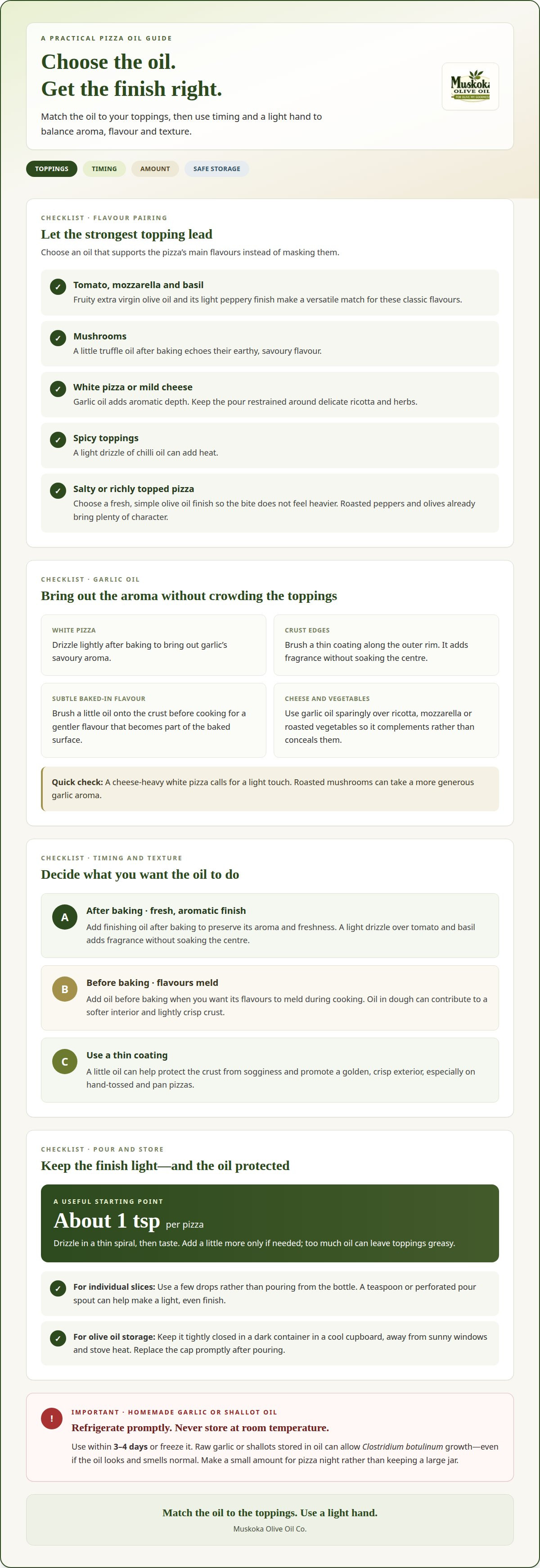
Choose an oil by considering the pizza’s strongest flavours, such as tomato, mushrooms, herbs or cheese. A gentle drizzle can lift those ingredients, while a bold oil may compete with them.
Matching oil with pizza ingredients
Pair oil with pizza ingredients by choosing a flavour that supports the toppings rather than masking them. A classic Margherita, mushroom pizza and spicy salami pie each call for a different balance. Extra virgin olive oil offers fruity notes and a light peppery finish, making it a versatile partner for tomato, mozzarella and basil.
For mushroom pizza, try a little truffle oil after baking; its earthy aroma suits mushrooms and white pizzas. A mild cheese pizza can stand up to a more pronounced olive oil, while delicate ricotta calls for a restrained pour. With salty toppings such as olives or cured meat, choose an oil that adds freshness without making each bite feel heavier.
- Tomato and basil: Fruity olive oil complements the sauce and fresh herbs.
- Mushrooms: Earthy truffle oil echoes their savoury flavour.
- Mild white pizza: Garlic oil can add aromatic depth.
- Spicy toppings: A light drizzle of chilli oil adds heat.
Let the strongest topping guide your choice. A pizza loaded with roasted peppers and olives already has plenty of character, so a simple olive oil finish can bring the flavours together without crowding them.
Olive oil drizzle amounts
The amount of olive oil to drizzle on pizza depends on its size and toppings, but about one teaspoon per pizza is a useful starting point. A measured drizzle adds sheen and flavour without overwhelming the crust or making the surface oily. Spread it in a thin spiral, then taste; add a little more only if needed.
For individual slices, use a few drops rather than pouring directly from the bottle. This gives everyone control and helps balance richer toppings, such as cheese or salami. A perforated pour spout or teaspoon makes a light, even finish easier to manage.
To preserve olive oil’s flavour, store it in a tightly closed, dark container in a cool cupboard. Keep the bottle away from sunny windows and stove heat, and replace the cap promptly after pouring. These steps limit exposure to light, warmth and air, which can dull its fresh aroma over time.
Garlic oil for white pizzas and crust edges
Garlic oil adds a savoury aroma that suits white pizza, where cheese, olive oil and herbs take the place of tomato sauce. A light finish brings those flavours into focus without making the pizza taste overly rich. It also adds fragrance to plain crust edges, especially when the centre already has plenty of toppings.
Timing shapes the result. Add garlic oil after baking to bring out its aroma as the pizza reaches the table. For a subtler flavour, brush a little onto the crust before cooking; the garlic becomes part of the baked surface rather than a distinct finishing note. On a cheese-heavy white pizza, start with the crust and avoid soaking the toppings.
Garlic oil is commonly made by slowly heating fresh garlic cloves in olive oil, then straining the oil. Slow heating infuses the oil with garlic flavour, while straining leaves a smooth drizzle without garlic pieces on the pizza. Use it sparingly over ricotta, mozzarella or roasted vegetables, where its savoury character complements rather than conceals the ingredients.
Use garlic oil without overwhelming the pizza
Consider the pizza’s strongest flavours before adding garlic. White pizza with ricotta and spinach needs a delicate touch; a pie with roasted mushrooms can take a more generous garlic aroma. For crust edges, brush a thin coating along the outer rim after baking, then let the slices sit briefly before serving. The oil clings to the crust and makes each bite more aromatic.
Garlic confit offers another approach. For a garlic confit variation, garlic and shallots can be simmered in oil until softened. You can use the infused oil as a drizzle and reserve the softened pieces for a topping. Keep the pieces sparse on a cheese pizza, so they add savoury interest without competing with the cheese.
Take care with homemade garlic oil. Refrigerate mixtures containing garlic or shallots promptly, and use them within 3-4 days or freeze them. Raw garlic and shallots stored in oil can allow Clostridium botulinum growth, so never keep these mixtures at room temperature. This limit matters even if the oil looks and smells normal. Make a small amount for a pizza night rather than keeping a large jar for later.
For a simple finish, drizzle garlic oil over a baked white pizza, then brush any remaining oil across the crust. This lets you season the edges without masking delicate cheese or herbs.
How oils affect aroma, crispness, and texture
Oil changes a pizza’s aroma, surface and texture depending on when it meets the dough. A thin coating behaves differently from a finishing drizzle.
Oil’s effects on aroma and texture
Oil carries fat-soluble flavour compounds, helping herbs, garlic and cheese taste more pronounced. This can make a simple Margherita smell fragrant without adding toppings. A little oil can also help protect the crust from sogginess and promote a golden, crisp exterior, especially on hand-tossed and pan pizzas.
Oil in dough affects texture differently. Oil can influence dough texture, potentially contributing to a softer interior and lightly crisp crust. For example, a pan pizza brushed with oil develops a more golden base, while a light finishing drizzle over tomato and basil adds aroma without soaking the centre.
Drizzling oil before or after baking
For a fresh, aromatic finish, drizzle oil after baking; add it before baking when you want the flavours to meld during cooking. Decide whether aroma or integration matters more, since timing changes the result. A raw drizzle over baked tomato pizza keeps the oil’s flavour vivid, while pre-baking oil can blend with the sauce and toppings.
Before baking, apply a thin layer rather than letting oil pool around the cheese. This supports browning and helps the crust develop a crisp surface. After baking, use a light spiral across the pizza or target areas such as basil leaves and crust edges. Either method works, but too much oil can make the centre feel greasy.
Oil can be mixed into dough before shaping. During baking, it contributes to the dough’s texture and helps ingredients merge. Add a finishing drizzle after the pizza leaves the oven to preserve a brighter aroma for serving.
Finishing oil and cooking oil
Cooking oil is incorporated into dough or brushed on before baking; finishing oil is added afterward for aroma and brightness. The distinction matters because heat changes how oil tastes and behaves. Oil mixed into pizza dough supports elasticity, while a raw drizzle over baked cheese gives the finished slice a fresher, more immediate flavour.
Choose the method according to the result you want. For a crisp pan base, lightly coat the pan before adding dough. For a softer interior, work oil into the dough. To lift baked toppings, finish with a modest drizzle after cooking. These methods can complement one another as long as each layer stays light.
On a tomato-and-herb pizza, try oil in the dough, then add a few drops after baking. The first contributes to texture; the second brings a fresh aroma to the toppings.
Is extra virgin olive oil best for drizzling on pizza?
Extra virgin olive oil is a versatile, traditional choice for pizza because it adds flavour without overpowering the toppings. Its fruity notes and light peppery finish can brighten a baked pie, from simple marinara to cheese-rich Margherita.
That character makes extra virgin olive oil useful both before and after baking. A raw finish brings fresh, pungent notes to mild ingredients such as mozzarella, while oil added before cooking can meld with sauce and toppings. Choose based on the effect you want: vivid aroma at serving or a more integrated flavour throughout the pizza.
The Associazione Verace Pizza Napoletana (AVPN) specifies 6-8 g of olive oil on a Neapolitan marinara pizza and 6-7 g on a Neapolitan Margherita. These amounts show how a measured coating can season the surface without turning oil into the dominant flavour. The AVPN says oil should be added before cooking and may also be added raw afterward for organoleptic reasons, meaning to shape the pizza’s sensory qualities.
Extra virgin olive oil has its own flavour profile, so the choice of oil matters. A mild, fruity oil sits comfortably beside tomato and basil. A more peppery oil makes a livelier contrast with creamy cheese or roasted vegetables. If the toppings are already assertive, such as olives or cured meat, use a restrained drizzle to preserve their distinct flavours.
Heat is another consideration. The North American Olive Oil Association gives extra virgin olive oil’s smoke point as 177-210 °C. Smoke point varies with the oil, and it describes when oil begins smoking, not a measure of flavour quality. For finishing, add the oil after baking to preserve its fresh aroma. For baking, follow the pizza method and use a light coating rather than letting oil pool on the toppings.
For a balanced finish, pour a little oil into a spoon, then distribute it across the pizza instead of tipping the bottle freely. Try one area first: a peppery oil on a plain cheese slice, or a fruitier one over tomato and basil. That small comparison makes it easier to find an oil that suits both the crust and toppings. Explore extra virgin olive oils with different flavour profiles for a tailored finish.
Drizzling after baking emphasizes fresh aroma, pungency and sheen, while adding a light coating before baking helps the ingredients meld. The best timing depends on whether you prefer a vivid finish or a more integrated flavour; either way, use a small amount so the oil complements rather than masks the toppings.
A study on extra-virgin olive oil’s influence on pizza volatile compounds and lipid oxidation was published on the Journal of Culinary Science & Technology website in 2015. Its stated subject connects oil choice with aroma-related compounds and oxidation during pizza preparation, offering a point of reference for why drizzle timing may matter.
What oils work best on pizza besides olive oil?
Chilli oil is a lively finishing option when you want heat rather than olive oil’s fruity character. Add a light drizzle after baking, then taste a slice before adding more. Its warmth can complement pepperoni, sausage or roasted peppers, while too much may dominate milder toppings. Keep the bottle at the table so diners can adjust their own slices.
Toasted sesame oil offers a different flavour, with a nutty, roasted note that suits pizzas topped with mushrooms, scallions or grilled vegetables. Use it as a finishing accent, not as a replacement for every cooking fat. A few drops across one slice can show whether its distinctive aroma works with the cheese and toppings before you season the whole pie.
Butter isn’t an oil, but it’s a useful alternative cooking fat for crust and dough. It can add a rich mouthfeel, slight sweetness and deep golden browning, making it a natural fit for pan-style crust or cheese-forward pizza. Use it where those qualities help, rather than over toppings that already feel rich.
Consider the pizza’s overall balance before choosing a finishing fat. Spicy sausage can welcome a restrained chilli drizzle; roasted mushrooms can pair with a little sesame oil. For creamy cheese pizza, butter may work better in the crust than poured over the surface. Each choice should have a purpose, whether adding heat, toasted aroma or golden colour.
- Chilli oil: Finish baked slices lightly for a warm, spicy accent.
- Toasted sesame oil: Try a few drops with mushrooms or grilled vegetables.
- Butter: Use it in dough or on a pan when you want richer texture and browning.
With any aromatic oil, start with one slice and assess the first bite. Cheese, sauce and crust all affect how a new flavour comes through. Delicate toppings may need only a few drops, while bolder combinations can carry a more noticeable finish. This small test helps prevent an unfamiliar oil from taking over the pizza.
Choose the fat that serves the result you want: heat from chilli oil, toasted depth from sesame, or a rich, golden crust from butter. For another buttery flavour in your pizza cooking, explore butter-infused olive oil as a finishing option.
Muskoka Olive Oil Co.
Muskoka Olive Oil Co. can help you explore how different olive oil flavours work with pizza, from a classic tomato and basil pie to a rich white pizza. If you’re looking for a more pronounced finish, infused olive oils offer another way to bring aromatic flavour to the table. Browse infused olive oils for options to consider with your favourite toppings.
Choosing an oil is a matter of balance: a delicate pizza may suit a gentle finish, while robust toppings can stand up to a bolder flavour. Tasting oils before purchasing can help you discover the character that best suits your cooking and preferences. For help exploring flavour pairings for pizza, contact Muskoka Olive Oil Co.
Make your next pizza a flavour experiment
Your ideal finish is personal, and each pizza is a chance to refine it. Keep the toppings familiar, then change one element at a time, such as the oil’s intensity or when you add it. Notice how it works with the crust and flavours you enjoy most. A few thoughtful trials can help you settle on the best oil to drizzle on pizza for your table.
Muskoka Olive Oil Co. offers extra virgin olive oil, infused olive oil, and white balsamic vinegars to explore as you build your flavour preferences. If you’d like guidance choosing an oil for your next pizza, ask Muskoka Olive Oil Co. for advice. Then bring your favourite pairing to the table and enjoy making it your own.
Frequently Asked Questions
What is the best olive oil to drizzle on pizza?
Choose a fresh extra virgin olive oil whose aroma you enjoy; no single flavour profile suits every palate. Check the harvest date and origin information on the bottle, then taste a little on its own before using it. This gives you a personal reference for the best oil to drizzle on pizza, beyond judging it by label claims alone.
Which olive oil flavour pairs best with different pizza toppings?
Try a small amount with one topping at a time, such as prosciutto, caramelized onion or arugula. Notice whether the oil’s aftertaste complements the topping or masks its character. Side-by-side tasting can distinguish an appealing pairing from one that only seems promising on paper. Keep notes on combinations you enjoy, especially when planning a pizza with contrasting toppings.
Is chilli-infused oil or garlic oil good on pizza?
Both can work as finishing accents, and you can combine them for savoury flavour with added heat. Mix a little of each in a spoon and taste it with one bite before dressing a slice. If the pizza already has hot peppers or a strong garlic topping, choose one accent instead of layering both. That keeps the main ingredients distinct while letting you adjust the finish.
What are the best Canadian olive oil brands for pizza and their prices?
Muskoka Olive Oil Co. is one Canadian option, with extra virgin and infused olive oils. Prices can vary by bottle size and product type, so compare products of similar sizes rather than treating plain and infused oils as direct equivalents. To choose the best oil to drizzle on pizza, consider how its flavour suits your toppings alongside a like-for-like price comparison.
Leave a comment