


Olive Oil for Roasting Vegetables: How to Choose the Right One
The best olive oil for roasting vegetables is a fresh extra virgin olive oil with a flavour you enjoy. Choose one you’d happily taste on its own, then consider the dish you’re making: do you want it bright and herbaceous, gently fruity or peppery? A well-matched oil adds character to roasted vegetables without making the choice complicated.
It’s understandable to focus on the oil first, but the best match also depends on your own palate and the role you want the vegetables to play in a meal. This guide explores how to choose an everyday oil, recognize freshness, pair flavour with different vegetables, and decide when an infused oil or finishing drizzle makes sense. You’ll come away with practical ways to make your next tray feel considered, whether it’s a simple weeknight side or part of a relaxed dinner with family and friends.
Key Takeaways
- Choose a fresh extra virgin olive oil with a flavour that complements the vegetables you’re roasting.
- Smoke point is only part of the decision; the oven temperature and the oil’s flavour both matter.
- Match vegetable size and texture to the roasting temperature so pieces cook through without charring.
- Save especially delicate oils for finishing, where their flavour can stand out instead of being overshadowed.
- Use infused olive oil to add a distinct flavour direction to familiar roasted vegetables.
All-purpose extra-virgin olive oils suitable for cooking
For everyday cooking, choose extra virgin olive oil with a flavour you enjoy and a character that works across different dishes. A versatile bottle can season vegetables before roasting and carry through to a soup or grain bowl the next day. That flexibility matters more than a label that simply sounds impressive.
Smoke point and high-heat cooking
Smoke point is the temperature at which heated oil begins to smoke. It’s one useful consideration, but it doesn’t tell the whole story about an oil’s suitability or taste. While roasting, watch and smell the food: visible smoke or a sharp, burnt aroma means the oil and oven conditions aren’t working well together. Oil that tastes pleasant before cooking should complement, not overwhelm, the finished dish.
Extra virgin olive oil adds flavour as well as fat to a meal, unlike a neutral cooking oil that mainly coats food without adding a distinct taste. For roasted onions with herbs, for example, an oil with a savoury, peppery edge can become part of the seasoning.
Roasting temperatures and cooking times
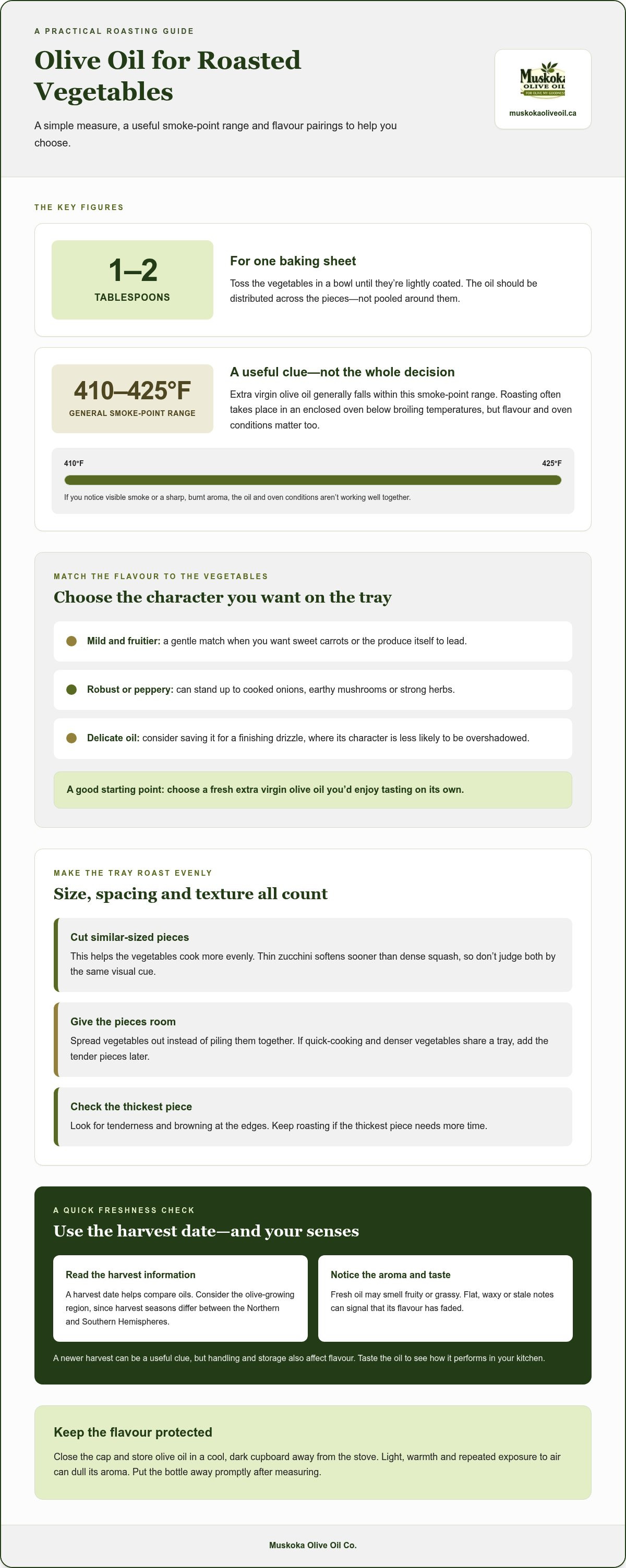
Vegetable size and texture help you judge when a tray is ready. Thin slices of zucchini soften sooner than dense pieces of squash, so don’t rely on the same visual cue for both. Check the thickest piece for tenderness and look for browning at the edges. This simple test helps you decide whether to serve the tray or keep roasting.
For even roasting, cut vegetables into similar-sized pieces and spread them out rather than piling them together. If your tray combines quick-cooking and denser vegetables, add the tender pieces later. This helps each ingredient develop its own texture without overcooking the rest.
Canadian olive oils for roasting vegetables
There isn’t one Canadian olive oil rating that identifies the perfect choice for every vegetable or palate. For Canadian home cooks, the best olive oil for roasting vegetables has a flavour that suits familiar meals and comes in a size that fits regular use. Taste a little before cooking, then consider whether its intensity will complement the vegetables and seasonings.
Choose a mild, fruity oil when you want the produce to lead, or a more assertive style for dishes with strong herbs or savoury ingredients. A delicate, expensive oil may be better as a finishing drizzle, where its character stays noticeable. For everyday cooking, prioritize a clean taste and versatility over prestige alone.
Olive oil freshness and harvest timing
Harvest information can help you assess an olive oil’s age, while its aroma and taste reveal how it performs in your kitchen. Use both clues to decide whether a bottle will bring lively flavour to roasted vegetables.
Harvest dates and oil freshness
A harvest date shows when the olives were picked, giving you a useful way to compare oils. Compare bottles from the same olive-growing region, since harvest seasons differ between the Northern and Southern Hemispheres. A more recent date can indicate a newer crop, but it’s not a substitute for tasting: handling and storage also affect flavour.
At home, pour a little into a clean glass and notice its aroma before cooking. Fresh oil may have a fruity or grassy character, while flat, waxy or stale notes can signal that its flavour has faded. For example, if an oil smells muted beside fresh-cut herbs, it may not bring the brightness you want to a tray of carrots or squash. Harvest information and a quick sensory check work best together.
Harvest dates are particularly useful when comparing oils from different origins. A Northern Hemisphere oil and a Southern Hemisphere oil may come from different points in their respective harvest cycles. Rather than comparing dates without context, consider the origin and taste the oil. That way, you choose for its actual flavour, not just its label.
Storage and oil freshness
After opening, protect olive oil from light, warmth and repeated exposure to air, which can dull its aroma. Close the cap, store the bottle in a cool, dark cupboard and keep it away from the stove. A clear bottle left on a sunny counter, for example, is exposed to more light and warmth than one kept in a cabinet.
Choose a container and storage routine that suit how you cook. If you use olive oil occasionally, a smaller bottle may be easier to finish while its flavour is appealing. If you cook with it often, keep the main container closed between uses and pour only what you need. This limits unnecessary exposure to air during meal preparation.
Packaging can affect how well oil is protected in storage. A bag-in-box format reduces the remaining oil’s exposure to air as it’s dispensed; a tightly closed bottle can also help preserve flavour when stored properly. Whichever format you choose, don’t leave it open on the counter while preparing vegetables. Put it away promptly after measuring, and taste it again before using it next.
Olive oil smoke points and flavour for roasting
For one baking sheet, use 1-2 tablespoons of olive oil, tossing vegetables in a bowl until the surfaces are lightly coated. That even coating helps the oil distribute across the pieces without leaving them swimming in fat.
Smoke points for roasting
Smoke point is the temperature at which an oil starts producing visible smoke. Extra virgin olive oil generally has a smoke point between 410 and 425°F, while roasting often happens in an enclosed oven below broiling temperatures. That makes smoke point one consideration, not the only test for a suitable roasting oil. If oil smokes, it can give vegetables a burnt or bitter taste. Heat can also change an oil’s flavour before visible smoke appears.
Flavour profiles and tasting notes
An olive oil’s flavour profile describes its tasting notes, from gentle and buttery to grassy, peppery or fruity. These qualities shape the taste of the finished vegetables. A robust oil can stand up to cooked onions or earthy mushrooms, while a mild, fruitier oil can complement sweet carrots. Taste a little before cooking: its aroma and flavour can guide your pairing, though roasting may soften delicate notes.
Consider the whole tray, too. A peppery oil may suit potatoes with rosemary, while a softer oil lets roasted cauliflower remain the focus. Avocado oil has a more neutral flavour, useful when you want the seasoning or vegetable to lead. It won’t add the same olive character, so choose based on the balance you want on the plate.
Fat, flavour, and texture
Oil carries flavour and helps vegetables brown, while the coating affects their surface texture. A light, even layer supports browning; too much can leave pieces greasy instead of pleasantly tender. Toss vegetables in a bowl first to distribute oil across the cut surfaces, including potato-wedge edges and cauliflower florets.
Dry-roasted vegetables lose more water than vegetables roasted with oil, and readily absorb oil or butter added afterward. These methods produce different results: coat vegetables before roasting for an evenly seasoned surface, or add fat afterward for a richer finish. For the first method, spread the coated pieces in a single layer so they roast rather than steam against one another.
Seasoning also affects how the oil’s flavour comes through. Olive oil, salt and black pepper make a simple base for carrots; garlic and herbs add a savoury note. Add delicate finishing oil after roasting to keep its aroma prominent. Choose olive oil, avocado oil or butter according to the flavour and texture you want with each vegetable.
Oven temperature for thin and chunky vegetables
Roast vegetables with olive oil at 400 to 425°F, adjusting for thickness and how quickly each piece cooks. For thin pieces, use the lower end; for dense chunks, slightly lower the heat if their outsides brown before their centres soften.
Broccoli and cauliflower roast at 400°F for 20 to 25 minutes, while root vegetables take 30 to 40 minutes at 425°F. These examples show why the produce itself should guide the oven setting, not a single temperature used for every tray.
Match temperature to vegetable size
Thin vegetables cook quickly, so 400°F gives zucchini and summer squash time to soften without overbrowning. Their typical roasting time is 15 to 20 minutes. Brussels sprouts are denser, and roast at 425°F for 25 to 30 minutes. Turn or toss vegetables during roasting to expose different surfaces to the hot pan.
Chunky carrots, potatoes and other root vegetables need more time for heat to reach their centres. At 425°F, root vegetables roast for 30 to 40 minutes; cut pieces evenly so they finish together. For especially thick pieces, use slightly less heat to help them cook through without charring. Check tenderness with a fork, then continue roasting if the centre remains firm.
Use oil and pan space wisely
Olive oil works at the recommended vegetable-roasting range of 400 to 425°F. Spread coated pieces in a single layer, leaving space between them. Crowded produce releases moisture into the pan, which can soften surfaces instead of helping them brown. A parchment-lined sheet pan can also help prevent burning.
For a mixed tray, group vegetables with similar cooking times. Add quick-cooking zucchini partway through roasting denser root vegetables, or use a separate pan for each type. This helps prevent browned broccoli from sharing a tray with undercooked potatoes.
Consider coconut oil and lower heat
Coconut oil has its own flavour, so use it when that taste suits the vegetables and seasonings. It can complement a sweet or savoury combination, while olive oil brings a different flavour profile. Adjust the oven setting to the thickness of the produce rather than assuming every cooking oil behaves identically.
If the tray browns too quickly before the vegetables soften, lower the oven temperature slightly and allow more cooking time. Thick root vegetables, for instance, may need gentler heat than thin zucchini. Whether you use olive oil or coconut oil, watch the colour and test the thickest piece for tenderness before serving.
Choosing extra virgin olive oil for roasting
Choose an extra virgin olive oil that tastes good to you and suits the vegetables on the tray. The best match balances freshness, flavour and how much of that flavour you want after roasting. A familiar, versatile oil can work for everyday cooking, while a more pronounced oil can bring extra character to potatoes or squash.
Start with flavour, not a prestige label
Taste a little before cooking. Notice whether the oil is mild and fruity, grassy, bitter or peppery, then pair it with the produce. A gentle oil can let sweet carrots shine; a more assertive one can hold its own with earthy mushrooms or savoury root vegetables. These tasting notes are useful guides, not a strict matching chart.
Extra virgin olive oil is graded by quality criteria, including free fatty acidity below 0.8%. That measurement is not the same as tasting acidity or a sharp, sour flavour. For a roasting oil, also consider aroma and whether the taste is clean and appealing. A label alone can’t tell you how the oil will taste with your particular vegetables.
Think about heat and how you’ll serve it
Olive oil can work for roasting vegetables, though smoke point is only one consideration. The range helps explain why it can suit roasting, but smoke point isn’t a complete measure of quality or flavour. High heat can alter an oil’s character before visible smoke starts, and long cooking can soften delicate tasting notes.
A robust oil, for example, may mellow alongside roasted potatoes. A delicate, expensive oil may be more rewarding drizzled over the vegetables after cooking, when its distinctive aroma is easier to notice. You don’t have to choose one approach: use a versatile oil for roasting, then finish with a more expressive oil when its character deserves attention.
Make the choice practical
Match the bottle to your routine. If you roast vegetables often, an all-purpose oil you enjoy using regularly is a practical choice. If a particular harvest or variety has a distinct flavour you want to savour, reserve some for finishing rather than using it all on a crowded sheet pan. Try the same roasted carrots with a mild oil and a peppery one, then compare the flavours.
Choose extra virgin olive oil for its flavour, freshness and intended use, not smoke point alone. Explore extra virgin olive oil choices to find a style that suits your next tray of roasted vegetables.
Muskoka Olive Oil Co.: Infused Olive Oil
Muskoka Olive Oil Co. offers infused olive oil to give roasted vegetables a distinct flavour. Choose an infusion that complements your seasonings when you want a simple tray to taste savoury or aromatic, or add a small drizzle after cooking to keep the infused flavour prominent. Match it to the other ingredients on your tray, such as carrots, potatoes or broccoli.
For everyday roasting, choose from infused olive oil options alongside extra virgin olive oil, then decide whether the oil belongs on the vegetables before roasting or as a finishing touch. Muskoka Olive Oil Co. also offers white and dark balsamic vinegars for other cooking and serving ideas.
Visit muskokaoliveoil.ca to explore the oils, or contact Muskoka Olive Oil Co. with questions about flavour pairings.
Make your next tray your own
The best olive oil for roasting vegetables is the one that complements your cooking and makes you eager to serve the result. Use your next tray to try a pairing: choose a vegetable, select suitable seasonings and notice how the finished flavour changes with a different oil. A simple kitchen note can help you remember combinations you’d gladly make again, from weeknight sides to a meal shared around the table.
As your palate develops, you may find a versatile oil you love for cooking and a more distinctive one for finishing. Both can have a place in your kitchen. Let the vegetables, the season and the people you’re cooking for guide your next choice.
Explore olive oils and find a new flavour pairing, then bring a fresh idea to your next roast. A small change can make a familiar dish feel like yours.
Frequently Asked Questions
What qualities make olive oil best for roasting vegetables?
Choose an oil that tastes clean and complements the vegetables you cook most often. For a flexible pantry choice, look for extra virgin olive oil with a flavour you enjoy in different dishes, from squash to broccoli. Harvest information can help you assess freshness, and choosing a bottle size that matches your cooking habits helps you use the oil while its flavour is appealing.
Is extra virgin olive oil good for roasting vegetables at high temperatures?
Yes, extra virgin olive oil can work well for roasting vegetables when the oven and cooking method are appropriate. Unlike neutral oils, it contributes its own flavour and is commonly used for roasting vegetables. Toss carrots or cauliflower with oil before roasting, then watch for smoke or an unexpectedly bitter aroma. To bring out the flavour of a delicate oil, use it as a finishing drizzle instead.
What is the smoke point of extra virgin olive oil versus refined olive oil?
Extra virgin olive oil generally has a smoke point between 410 and 425°F. Refined oils, including olive oil labelled virgin or light, generally have higher smoke points than unrefined extra virgin olive oil. The exact comparison depends on the oils being considered, so don’t treat smoke point as a quality ranking. For roasting, also consider the oven setting, cooking time and whether the oil’s flavour suits the vegetables.
Which olive oil flavour profiles pair best with roasted vegetables?
Match the oil’s intensity to the vegetable and seasoning. A robust, peppery oil can complement earthy mushrooms or rosemary potatoes, while a gentler, fruitier oil suits sweet carrots or squash. For a mixed tray, choose a versatile flavour that won’t overpower milder pieces. Try the oil with one cooked vegetable first, then adjust the herbs or seasoning to balance the plate.
How much does good olive oil for roasting vegetables cost in Canada?
There isn’t one set Canadian price for good roasting oil. Cost varies with factors such as origin, harvest, freshness, packaging and production. To compare value, consider how often you cook with the oil and whether its flavour works for roasting and everyday meals. A versatile bottle you use regularly may suit your kitchen better than a delicate oil reserved for finishing.
Does olive oil lose nutrients or produce harmful compounds when heated?
Heating can alter olive oil’s flavour. Cooking beyond its smoke point can produce bitter notes and break down fats, compromising some nutritional qualities. For typical vegetable roasting, choose a suitable oil and avoid prolonged heating that causes it to smoke. Roasting doesn’t automatically make olive oil harmful. Use it as part of a varied diet, and don’t reuse oil that smells burnt or tastes unpleasant.
Leave a comment