


Picual vs Arbequina Olive Oil: Which Should You Choose
For Picual vs. Arbequina olive oil, choose Picual for a bold, peppery flavour that stands up to robust cooking, or Arbequina for a softer, fruitier taste that suits delicate dishes and finishing. Picual is generally more resistant to oxidation, while a blend offers a middle ground if you want qualities of both. The best choice depends on what you’re cooking and how prominent you want the oil’s flavour to be.
The choice is about more than strong versus mild: flavour intensity also affects how an oil works in a dish and how well it stands up to cooking. This comparison covers the cultivars’ typical flavours and oxidation resistance, practical kitchen uses, and when a blend makes sense. Use it to choose an oil for anything from a delicate salad dressing to grilled food.
Key Takeaways
- Choose Picual when you want a bold, peppery oil for robust flavours; reach for Arbequina when a milder, fruitier profile suits the dish.
- Match the oil to the ingredients: Picual complements grilled or roasted foods, while Arbequina can let delicate seafood and fresh salads shine.
- Consider oxidation resistance alongside flavour, especially when choosing an oil for regular cooking and deciding how to store it.
- A blend can offer a middle ground, bringing together qualities of both cultivars for dressings and finishing dishes.
- Use the oil’s flavour as your guide: decide whether you want it to stand out or support the other ingredients.
What is the Difference Between Picual vs Arbequina EVOOs?
Picual and Arbequina are distinct olive cultivars, so their oils can differ in aroma, bitterness and intensity. These differences help you decide whether an oil will complement a dish or become its dominant flavour.
Arbequina Flavour and Aroma
Arbequina extra virgin olive oil is typically smooth, fruity and gently sweet, with a delicate aroma that may suggest green apple. Its mild bitterness and soft finish make it less forceful than Picual. Try it with a simple salad, white fish or a light dressing, where a peppery oil could draw attention away from the other ingredients.
Picual Flavour and Aroma
Picual olive oil offers a more intense, green profile, often described as bold, peppery and slightly bitter. Its herbaceous aroma can suggest tomato leaves, while its robust taste contrasts with Arbequina’s softer fruitiness. A spoonful of Picual extra virgin olive oil can add a pronounced finish to grilled vegetables or roasted potatoes.
Gentle Fruity and Bold Peppery Uses
Use Arbequina when you want the oil to support, rather than dominate, a dish. It suits salads, dressings and delicate seafood, including white fish. Picual is a stronger match for sautéed, grilled or roasted foods, red meat and other ingredients with deep flavours. For example, Arbequina can dress a fresh salad, while Picual gives roasted vegetables a lively, peppery finish.
Cultivar Effects on Flavour and Aroma
A cultivar is a cultivated olive variety, and its characteristics shape an oil’s typical flavour and aroma. Arbequina tends towards gentle fruitiness and lower bitterness; Picual tends towards green intensity, pepper and bitterness. The cultivar is a useful starting point, but growing conditions and production also influence the finished oil. Taste both with bread to notice the difference directly.
For nutrition and health, both are extra virgin olive oils, and cultivar alone doesn’t establish that one offers greater health benefits. Extra virgin olive oil has free fatty acidity under 0.8%, according to the European Commission.
When shopping in Canada, look for the cultivar name, country or region of origin, harvest information and an extra virgin designation on the label. These details indicate the stated variety and provenance. A taste can then help you judge whether the oil’s freshness and flavour suit your palate.
| Option | Flavour | Good fit |
|---|---|---|
| Arbequina | Mild, fruity, gently sweet | Salads, dressings, delicate fish |
| Picual | Bold, green, peppery | Grilling, roasting, robust dishes |
| Blend | Balances both profiles | Dressings or finishing dishes |
Choose Arbequina for a subtle touch, Picual for a pronounced one, or a blend for a balance of both.
Comparisons of specific Arbequina and Picual oils
A useful comparison starts with the label, then considers aroma, intensity and intended use. A single-variety oil highlights one cultivar, while a Picual and Arbequina blend combines olives from both varieties.
Origin adds another layer. Arbequina grows in regions including Catalonia and Andalusia, while Picual is cultivated mainly in Andalusian provinces such as Jaén, Córdoba, Málaga and Sevilla. Oils made from olives grown in Ciudad Real, in La Mancha, can also feature either variety. These names describe places, not guaranteed flavour profiles: both the cultivar and production choices shape the oil in the bottle.
Three options side by side
| Option | What to expect | Useful application |
|---|---|---|
| Arbequina | Gentle, fruity character and softer intensity | Dressings or drizzling over baked fish |
| Picual | More robust, green character and pronounced intensity | Cooking with assertive ingredients |
| Arbequina-Picual blend | A meeting of the two varieties’ profiles | Dressings or finishing pasta and pizza |
A blend is a distinct choice, not a third olive variety. Its balance can vary with the proportions used, so tasting helps you judge whether it leans gentler or bolder.
For a practical comparison, pour a little of each oil into separate small dishes. Smell them before tasting, then note which aromas stand out and how long each flavour lingers. Pair them with the same plain bread to keep the comparison focused. Next, try a few drops on the same food, such as baked fish or roasted vegetables. This shows whether an oil complements the ingredient or competes with it.
Sautéing offers another useful test. Arbequina can bring a softer fruit note to vegetables, while Picual’s greater intensity remains noticeable alongside stronger ingredients. A blend may suit cooks who want a middle ground for dressings or a finishing drizzle. The result depends on the oil’s balance, so cultivar names alone don’t describe every bottle.
What do Picual and Arbequina olive oils cost in Canada? There isn’t one standard Canadian price for either variety. Retail prices vary with factors such as producer, origin, harvest, packaging and bottle size. Compare similarly sized bottles and read their labels rather than judging by cultivar alone.
Use this three-step label check: identify whether the bottle names Picual, Arbequina or both; note its stated origin; then match its described intensity to your planned use. For example, a blend can be a practical choice for a household that wants one oil for both dressing and finishing dishes.
Picual oxidation resistance and cooking uses
Picual’s composition and robust character make it a useful cooking choice. Arbequina offers a gentler option, especially when delicate ingredients need a lighter touch.
Picual Cooking Uses and Heat Stability
Picual is valued for its oxidative stability, which helps it stand up to cooking and stronger flavours. Its high polyphenol content is one factor associated with that stability. Use it for sautéing, grilling, roasting, stews or casseroles, where its green intensity can complement the finished dish.
For example, Picual works with roasted vegetables, grilled steak and slow-cooked casseroles. Its stability also makes it useful in food preservation. Heat affects every olive oil, so avoid prolonged overheating and store the bottle away from light and heat. Harvest timing and production influence the characteristics of the oil you buy.
Smoke Point and Fatty Acid Composition
Smoke point is the temperature at which oil begins to smoke. There isn’t one fixed smoke-point figure for every Picual or Arbequina oil, so don’t choose by cultivar name alone. Freshness, processing and overall composition also matter. Both varieties can be used in ordinary cooking methods suited to extra virgin olive oil.
Picual is described as high in oleic acid, a monounsaturated fatty acid. Extra virgin olive oil contains oleic acid, but the available comparison doesn’t establish a precise fatty-acid difference between Picual and Arbequina. For either variety, use moderate heat for sautéing and avoid letting the oil smoke.
Polyphenols and Antioxidants
Picual is characterized as a high-polyphenol oil. Polyphenols are naturally occurring compounds that contribute to an oil’s antioxidant properties and can influence its bitter, peppery character. The specific amount varies with factors such as harvest and production, so the variety name alone doesn’t provide a measurement.
That makes Picual a reasonable choice if you value a bold oil associated with higher polyphenol content. It doesn’t mean every Picual oil contains more polyphenols than every Arbequina oil. Freshness and production conditions affect the final oil, as they do for Hojiblanca. Consider flavour, harvest information and your cooking needs together, rather than treating cultivar as a guarantee.
Arbequina also has practical cooking uses. Its softer flavour suits delicate seafood, vegetables and dressings, and it can be used for sautéing or roasting vegetables when you want a gentler finish. Try it over white fish or with mild cheeses; reserve Picual for dishes where a peppery note can hold its own. For a simple kitchen test, taste each oil plain, then try a little with the same food. The contrast shows which variety better suits the dish.
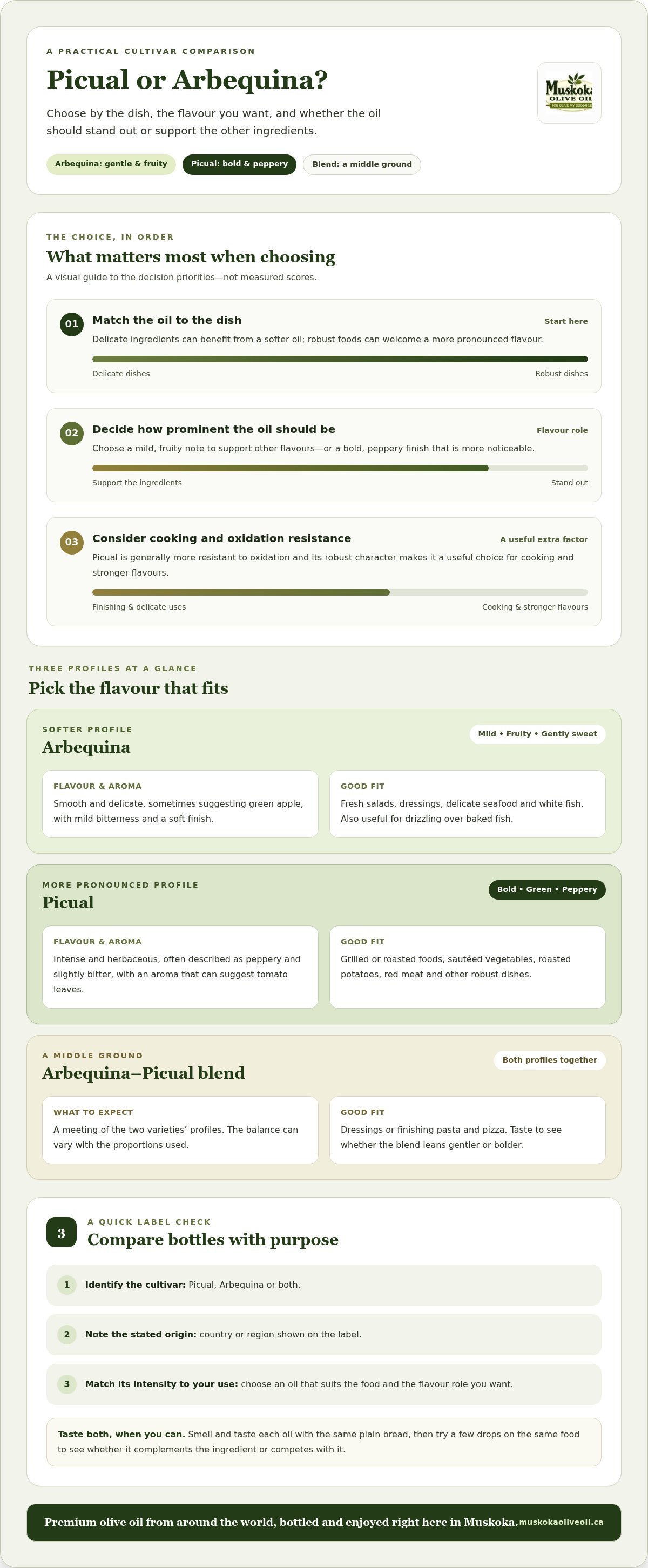
Choosing between Arbequina and Picual
Choose by the role you want the oil to play, not by cultivar prestige. For a delicate dressing, Arbequina can bring a gentle, fruity note; for a robust meal, Picual’s bitterness and peppery character can add contrast. If you want one oil to finish several dishes, compare the flavours with your usual ingredients before deciding.
Start with the meal’s strongest flavour. Picual’s aromatic, green character, sometimes with hints of almond and apple, can complement grilled steak or roasted vegetables. Arbequina’s softer, slightly sweet profile is a natural fit for white fish, fresh greens or a mild dressing. Aim for balance: the oil should support the main ingredient or add a deliberate counterpoint.
Consider when you’ll add the oil, too. A finishing drizzle makes its aroma easy to notice, while cooking blends its flavour with the rest of the dish. For example, try Arbequina over baked fish at the table, then use Picual to finish a hearty stew. Your preferred flavour intensity matters as much as the recipe.
- Choose Arbequina for a mild dressing, delicate seafood or a dish where the oil shouldn’t dominate.
- Choose Picual for grilled or roasted foods, red meat or ingredients that can stand alongside its peppery bite.
- Consider a blend if you want qualities of both cultivars in a dressing or finishing oil.
- Compare the aroma by tasting each oil plain, then with the same piece of bread or vegetable.
If you’re choosing a bottle for everyday use, write down two or three dishes you make often. A household that prepares salads and delicate fish may reach for Arbequina more frequently. If your regular meals include roasted vegetables, grilled meats or casseroles, Picual may suit more occasions. For varied cooking, a blend can be a flexible middle ground, especially for dressing or drizzling over baked fish, pasta or pizza.
Use a simple tasting test before settling on a favourite: pour a little of each oil, smell them, then taste them with the same food. Notice whether the finish feels gentle, bitter or peppery, and whether the oil brings out the ingredient’s flavour. That direct comparison makes the choice practical. Choose the oil that best fits the dishes you actually cook, not an imagined ideal use.
Arbequina olive oil characteristics
Arbequina extra virgin olive oil is prized for a gentle, fruity profile rather than a forceful, robust one. Its aroma can suggest green apple, and its mild bitterness and spiciness leave room for the food’s own flavour. That softer character makes it a distinctive choice if you want an aromatic oil without Picual’s pronounced peppery finish.
Colour offers a visual cue, not a reliable quality test. Arbequina oil from La Mancha is described as bright golden, but olive oil colour varies with factors such as the olives and their maturity. Taste matters more: look for a fresh, fruity impression, then notice whether sweetness or bitterness lingers. A golden hue alone can’t tell you how an oil will taste.
Arbequina is grown across several regions, including Catalonia and Andalusia in Spain, as well as California, Argentina, Chile and Australia. The oil’s character can shift with growing conditions, harvest and production, even when the cultivar is the same. A La Mancha Arbequina may offer a smooth, sweet impression, while an oil from another origin may have a different balance of fruit and aroma.
Arbequina olives are small and weigh less than two grams. Their size describes the fruit, not the oil’s quality. In Spain, Arbequina olives are harvested manually in some groves. Harvest and handling help shape the oil that is ultimately produced.
At the table, Arbequina’s mild profile suits seafood, especially white fish, because it is less likely to overwhelm delicate flavours. Try it in a simple dressing with leafy greens, or drizzle it over baked fish just before serving. Its gentle fruitiness can also complement breads and pastries, where a more robust oil might change the finished flavour.
For Mediterranean-style meals, think of Arbequina as a versatile everyday option, not an oil reserved for special occasions. Use it to sauté or roast vegetables when you want a softer olive note. In baking, its mild taste can replace other fats when the recipe benefits from subtle fruitiness. Start with a familiar recipe, such as roasted carrots or a simple loaf, and notice how the oil affects the aroma and finish.
To assess a bottle, pour a small sample and smell it before tasting. Then try a drop with bread or a piece of cucumber to let the oil’s fruit character stand out. Note whether it tastes fresh, gently sweet or unexpectedly flat. After opening, store the bottle away from light and heat to help preserve its aroma.
Muskoka Olive Oil Co.: Infused Olive Oil
Muskoka Olive Oil Co. offers a range of oils and vinegars for exploring how different flavours shape a meal. Its Ultra-Premium Extra Virgin Olive Oils offer a traditional starting point, while Infused Olive Oil adds flavour to everyday cooking. Try an infused oil for a convenient way to add a distinct note to vegetables, marinades or a finishing drizzle. White and Dark Balsamic Vinegars can also complement olive oil in dressings and pairings.
If you’re deciding between a gentle or robust profile, tasting oils can help you find what suits your palate and favourite dishes. Explore the oils and vinegars at Muskoka Olive Oil Co. at muskokaoliveoil.ca.
Make your next tasting part of the meal
Let your everyday cooking guide your next choice. Keep a note of the flavours you enjoy and the dishes you’re planning, then use those preferences to guide your next kitchen discovery. A favourite oil can become part of your cooking rhythm, whether you’re preparing a simple supper or welcoming friends around the table.
As your recipes change with the seasons, you may find new pairings worth exploring. Muskoka Olive Oil Co. offers options to suit different tastes and ways of cooking.
Contact Muskoka Olive Oil Co. to continue exploring, and enjoy bringing a little more intention to your next meal.
Frequently Asked Questions
Single Cultivar or Blend?
A single-cultivar oil is a good choice if you want the label to identify one variety; a blend brings varieties together in one bottle. For your pantry, consider whether you enjoy exploring oils separately or prefer one oil for several recipes. Check the ingredient and origin details on the label, then choose what fits your cooking and taste.
What are the flavour differences between Picual and Arbequina olive oil?
Picual generally tastes more intense, while Arbequina is generally milder and fruitier. These descriptions are useful starting points, not precise predictions for every bottle. Origin and production can influence the finished oil. If it will accompany a strongly seasoned meal, consider how its intensity will interact with the dish’s herbs, spices and acidity, rather than relying only on the cultivar name.
Which olive oil is better for cooking, frying, sautéing, and high-heat use?
Picual is generally a stronger candidate for high-heat cooking because of its oxidation resistance, but the variety name alone doesn’t give an exact smoke point. For frying, follow the recipe’s heat guidance and watch the pan for visible smoke. Arbequina can suit gentler cooking when you want a less assertive flavour. With either variety, avoid reusing oil that smells or tastes stale after cooking.
Which olive oil is better for salads, dipping, and finishing dishes?
Arbequina is often a good choice when you want the oil to play a quieter role. For a dressing, whisk it gradually with vinegar or citrus, tasting as you go so the acidity doesn’t overpower the greens. For dipping, serve a small amount in a shallow dish rather than pouring it over the bread. This lets each person control how much oil they use.
How do Picual and Arbequina olive oils differ in shelf life and oxidation stability?
Picual is generally more oxidation-resistant than Arbequina, but storage and freshness matter for both. At purchase, look for harvest information and a best-before date, then choose a bottle size you expect to use while its aroma remains appealing. Keep the cap closed between uses and avoid storing the bottle beside a warm appliance. These habits help limit exposure to air, light and heat.
Which olive oil should I choose based on taste, cooking use, and budget?
Choose based on the oil’s role in your kitchen and the flavour you enjoy, rather than assuming one cultivar costs less. To compare value, check the bottle size and compare cost per volume across similar products. Also consider whether you’ll use the oil regularly. A bottle that suits your usual recipes is more practical than one chosen only for its cultivar name.
How do Picual and Arbequina compare in health benefits and nutrition?
Both are extra virgin olive oils, and cultivar alone doesn’t establish that one offers greater health benefits. Picual is characterized as high in polyphenols and oleic acid, but its composition varies with harvest and production. For those looking to support their everyday well-being alongside a nutritious diet, Motion Nest curates wellness, fitness, and practical home products to enhance healthy daily living.
Leave a comment