


Single varietal or blended olive oil: which should you choose
Single-varietal olive oil isn’t automatically better than a blend. It simply offers a focused way to taste what one olive cultivar brings to the table. If you’re wondering what single-varietal olive oil means, it’s oil made from one variety of olive, while a blend combines oils from two or more varieties.
It’s easy to assume “single” also means the oil came from one farm or grove, but that’s a different distinction. Single-estate olive oil means the olives were harvested, crushed and bottled at the same grove. The terms describe different things: variety and origin.
In this guide, you’ll learn how single-varietal, single-estate and blended oils differ, and how olive variety can shape flavour. You’ll also find a practical way to choose: reach for a single-varietal oil to explore a cultivar’s distinctive character, or consider a well-made blend for a balanced flavour in cooking and serving.
Key Takeaways
- Choose a single-variety oil to explore the character of one olive cultivar; choose a blend when you want a flavour shaped from multiple varieties.
- Keep variety and origin distinct: “single-estate” describes where the olives are harvested, crushed and bottled.
- Use cultivar details as a starting point for understanding an oil’s flavour, not as a guarantee of exactly how it will taste.
- When assessing a single-varietal claim, look for clear information about the olive variety and the oil’s production.
- Let your intended dish and preferred flavour guide your choice. Neither a single-variety oil nor a blend is automatically best.
Single-Variety vs Blend Olive Oil: Which Is Best?
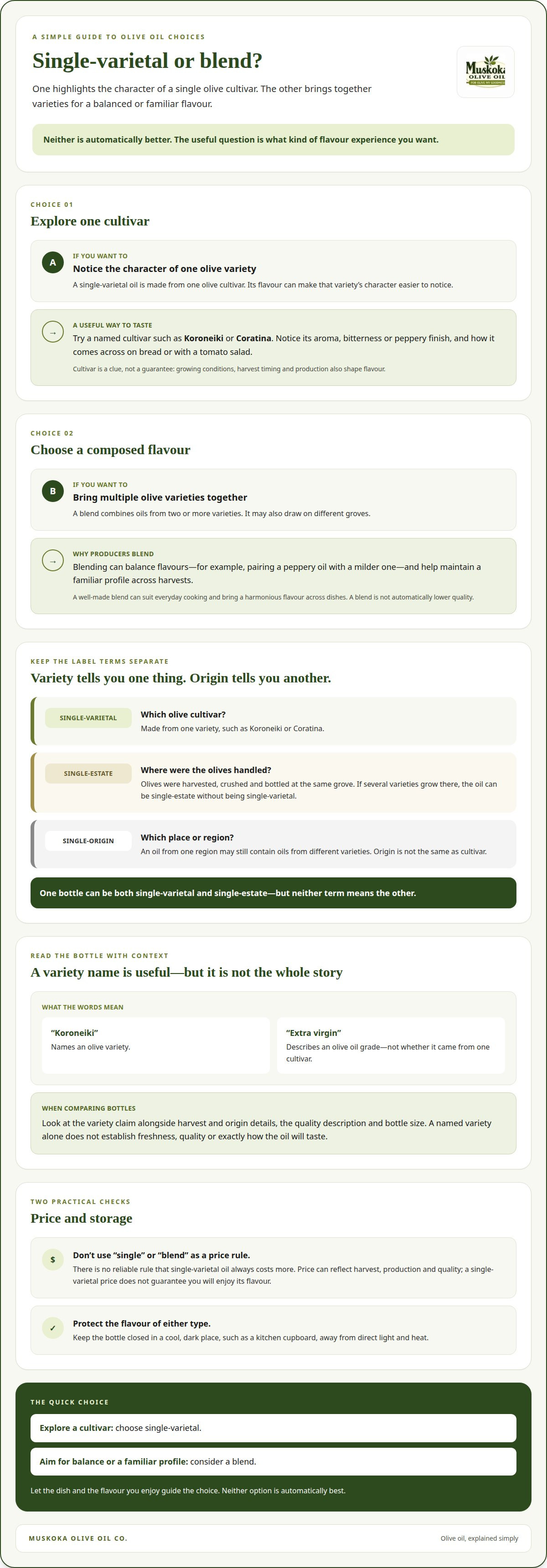
Single-varietal oil highlights one olive cultivar, while a blend combines oils from two or more varieties. The better choice depends on whether you want to explore a distinct character or enjoy a flavour designed for balance.
Single-Variety and Blended Oils
Single-varietal oil is made from one olive cultivar, such as Koroneiki or Coratina. Its flavour can make that variety’s character easier to notice. “Single-origin” refers to a place or region, not necessarily one cultivar. A bottle from one region may still contain oils from different varieties.
A blend brings together oils from multiple cultivars and may also draw on different groves. Producers can combine them to balance flavours, pairing a peppery oil with a milder one. Blending can also help maintain a familiar profile across harvests, when growing conditions affect each variety’s taste.
When shopping in Canada, distinguish a label’s variety claim from its origin statement: one names the olive cultivar, the other identifies a place. A named variety is useful information, but it doesn’t establish freshness or quality on its own.
Blends aren’t automatically lower quality. A blend made from quality extra virgin olive oils can be carefully composed for flavour. Nor is single-varietal oil automatically superior: its appeal is the chance to taste one cultivar’s distinct character.
| Option | What it combines | Flavour aim | Useful for |
|---|---|---|---|
| Single-varietal | One olive cultivar | Showcase a variety’s character | Comparing cultivars or highlighting a distinctive oil |
| Blend | Two or more olive varieties | Balance or a consistent profile | Everyday cooking and a harmonious flavour across dishes |
Choose single-varietal oil to explore a cultivar, or a blend for a balanced profile that suits your cooking.
Single-Varietal and Blended Oil Costs
There’s no reliable rule that single-varietal olive oil always costs more than blended oil in Canada. Price can reflect factors such as harvest, production and quality, not just whether one or several olive varieties were pressed. A blend can use excellent oils, while a single-varietal oil’s price doesn’t guarantee you’ll enjoy its flavour.
Compare harvest and origin details, the quality description and bottle size alongside the variety claim. These details explain what you’re buying more clearly than “single” or “blend” alone.
To preserve flavour, keep either type of oil in a cool, dark place, such as a kitchen cupboard. Close the bottle after pouring and keep it away from direct light and heat.
Definition of single-variety olive oil
To understand what single-varietal olive oil means, start with the olive cultivar. A cultivar is a cultivated variety, such as Koroneiki or Coratina. Oil described as single-varietal is made from one olive cultivar, rather than several. The term describes the olives used, not the oil’s grade, freshness, harvest date or production location.
That distinction matters on a bottle. “Koroneiki” identifies a variety; “extra virgin” describes a grade of olive oil. A single-varietal oil can be described as extra virgin only if it meets the requirements for that grade. Likewise, “extra virgin” alone doesn’t tell you whether the oil came from one cultivar.
The cultivar gives the oil a starting flavour profile, but growing conditions, harvest timing and production also influence the taste. For example, Koroneiki and Coratina oils may show different characteristics, even when both are carefully made. Treat the variety name as a useful clue, not a guarantee of a particular flavour.
“Single-varietal” shouldn’t be confused with “single-origin.” The first describes the olive cultivar; the second identifies a place or region. An oil can come from a named region without using only one cultivar, while a single-varietal oil can be made from that cultivar’s olives grown in a particular region.
When reading a label, find the variety name, then check the rest of the bottle. A label naming one cultivar tells you the producer is presenting that variety as the oil’s defining identity. A place name provides different information. Neither detail alone tells you when the olives were harvested or how the oil will taste.
At the table, a single-varietal oil lets you explore one cultivar’s character without the combination of varieties found in a blend. One oil may taste grassy or peppery, while another may feel gentler. These are possible sensory impressions, not fixed rules for every cultivar or harvest.
For instance, taste Koroneiki oil on bread, then try it with a tomato salad. Notice whether its aroma, bitterness or peppery finish stands out in each setting. Repeat the tasting with Coratina oil to explore how different cultivars can shape an oil’s character.
In short, single-varietal identifies oil made from one olive cultivar. Use the cultivar name to guide your tasting, then judge the bottle by its own aroma and flavour profile.
Difference between single-varietal and single-estate olive oil
“Single-varietal” identifies the olive cultivar; “single-estate” identifies where the olives were harvested, crushed and bottled. A bottle can be both, but neither term tells you the other detail.
For example, oil made from Coratina olives grown and processed at one grove could be both single-varietal and single-estate. Oil made from several cultivars at that grove could be single-estate without being single-varietal.
Single-varietal oil lets you focus on characteristics associated with one olive type. Single-estate oil reflects the olives and growing conditions of one grove; if several varieties grow there, its flavour may bring together their different qualities. Neither term guarantees a particular level of bitterness, pepperiness or finish.
Grade is separate: “extra virgin” and “virgin olive oil” refer to olive-oil categories, not the number of cultivars or groves. A single-estate or single-varietal description doesn’t establish an oil’s grade, so read those claims separately.
- Single-varietal: The defining detail is one olive cultivar, such as Koroneiki.
- Single-estate: The defining detail is one grove for harvesting, crushing and bottling.
- Both descriptions: One cultivar is grown and processed at the same estate.
- Neither description alone: The phrase doesn’t state the oil’s grade or describe every flavour note.
Imagine two bottles from the same estate. One names a single cultivar; the other combines olives from different cultivars. Their shared origin contrasts with their different variety compositions. Comparing them side by side can show how cultivar selection influences aroma and taste.
Now compare two oils made from the same cultivar at different estates. The cultivar name provides a shared reference point, but each oil reflects its own grove and production. Growing conditions, harvest timing and handling can shape the result, so the oils won’t necessarily be identical.
Use the terms as separate clues when choosing a bottle: look for “single-varietal” to explore one cultivar and “single-estate” to understand the grove-to-bottle origin. Then consider grade and taste profile separately.
Pure characteristics and flavours of individual olive types
A cultivar gives extra virgin olive oil its starting character, but doesn’t dictate every note. Comparing oils side by side helps reveal how each tastes.
Olive-Type Characteristics
Each olive type brings distinct characteristics to oil. Koroneiki and Coratina, for example, are named cultivars that identify oils made from those olives. Their names help tasters compare varieties, but don’t guarantee an identical result from every harvest. Growing conditions, ripeness and production also shape the oil’s character.
Think of the cultivar as one influence among several, not a flavour label with a fixed meaning. Two oils produced from the same type can differ in aroma, bitterness and peppery sensation. The harvest and how the olives are processed also affect what reaches the bottle.
For a useful comparison, taste two or three single-varietal oils side by side. Use the same kind of bread or plain food with each sample, and taste them in the same order. Notice the aroma first, then bitterness and the sensation at the finish. This makes cultivar differences easier to describe than tasting each oil on separate days.
Individual Olive Flavours
Flavour is the sensory expression of an oil’s character. One sample may seem grassy or green, while another may feel softer or more peppery. These words describe a taster’s experience, not a guaranteed profile for a named olive type. Judge a Coratina oil, for instance, by its own aroma and taste.
Try the same tasting with a simple tomato salad. A pronounced oil can stand out against ripe tomato, while a gentler one may let the ingredient remain central. An oil’s natural flavour can also seem different on bread than on vegetables, because the food changes the overall impression.
To compare carefully, pour a small taste of each oil and pause between samples. Note whether the aroma seems fresh, fruity or green, then consider any bitter taste and peppery finish. Keep the food and tasting conditions consistent. This helps separate differences between the oils from changes caused by the dish.
Use cultivar names as an invitation to explore, not as a complete tasting note. A single-varietal oil can show a focused expression of its olive type, while the final flavour still reflects the harvest and production. Your own tasting is the clearest guide to whether the oil suits bread, salad or another dish.
How can you verify an olive oil is genuinely single-varietal?
Start with the bottle’s variety claim, then look for details that connect it to a specific oil. A name such as Koroneiki or Coratina identifies a cultivar, but the name alone doesn’t show how the producer tracked the olives from harvest to bottling. Clear origin and production information gives the claim more context.
Look for the producer’s explanation of the batch, including the cultivar, harvest and where the olives were processed. These details connect the label to a particular lot. For example, a bottle naming Koroneiki should have product information identifying Koroneiki olives for that oil.
Use this practical sequence when assessing a bottle:
- Read the variety statement. Identify whether it names one cultivar, such as Koroneiki, or describes a region instead.
- Look for batch and harvest details. Check whether the producer connects the variety to the oil in that bottle.
- Read the producer’s explanation. Look for a clear description of how the named olives were selected and processed.
- Keep grade separate. “Extra virgin” describes a grade, not proof that the oil comes from one cultivar.
Tasting can help you explore an oil’s character, but flavour alone can’t verify its cultivar. Grassy aromas or a peppery finish aren’t unique to Koroneiki, Coratina or another olive type; taste varies with harvest and production. Treat flavour as a sensory clue, not proof of varietal identity.
Colour is no more conclusive: green or golden oil can’t confirm that a bottle contains only one cultivar, and storage and age can influence its colour. Focus on the variety named and the producer’s account of the batch.
There’s no single agreed percentage threshold for “single-varietal.” Some use the term only for oil made entirely from one variety; others allow small amounts of different olives, such as pollinizer varieties, in the harvest. For shoppers, the useful question is whether the producer clearly explains what the claim means for that bottle.
For a stronger evidence trail, favour product information that links the cultivar name with the harvest and batch, rather than relying on a front-label claim alone. Comparing those details with another bottle can also show whether each producer explains its varietal claim consistently.
To explore extra virgin oils while paying attention to their origin and production details, browse the extra virgin olive oil selection.
Muskoka Olive Oil Co.
Muskoka Olive Oil Co. offers a range of extra virgin olive oils to help you explore flavour. If you’re comparing cultivar names, harvest details or taste, sampling oils side by side can make the differences easier to recognize. The company also offers infused olive oils, which add flavour rather than focusing solely on one olive variety.
Turn to Muskoka Olive Oil Co. when you want to learn more about olive varieties, understand the details behind an oil or find a flavour that suits your cooking. For guidance on choosing and tasting olive oils, contact Muskoka Olive Oil Co.
Make tasting part of your next meal
Knowing what single-varietal olive oil means gives you a useful starting point, but your palate can guide what you explore next. As you cook, notice which flavours you enjoy and how they fit the meal. Tasting an oil alongside a familiar dish can turn that preference into a practical choice for your kitchen.
Muskoka Olive Oil Co. can help you explore flavour pairings and make olive oil education part of everyday cooking. Bring your questions about choosing an oil or matching flavours to a dish, and take the next step at your own pace.
Contact Muskoka Olive Oil Co. to talk through your olive oil questions. Keep tasting, stay curious and let your own preferences shape what you try next.
Frequently Asked Questions
What does single varietal olive oil mean?
It means the oil is presented as coming from one named olive cultivar. Treat the cultivar name as a starting point for tasting, not a complete buying guide. Pair a small pour with a mild food, such as plain bread, then try it with a more flavourful dish. That gives you a practical sense of where the oil suits your cooking.
What is a single-varietal olive oil made from?
It’s made from olives identified as one cultivar and processed to produce oil. For a useful label-reading habit, separate the cultivar name from other information on the bottle. A harvest detail can help you understand when the olives were picked, while an origin statement tells you where they came from. Each detail answers a different question about the oil.
How does single-varietal olive oil differ from an olive oil blend?
The difference is the number of olive varieties represented in the oil: one named cultivar or a combination. Use that information to decide how you want to taste. A single-varietal oil can be an interesting finishing drizzle when you want its character to stand out; a blend can suit dishes where you prefer the oil to support other ingredients.
How does olive variety affect olive oil flavour and aroma?
Variety can influence the aromas and tastes you notice, giving each oil its own sensory impression. For a useful tasting, use the same small plate of food for each sample and jot down a few words afterward. Record the aroma first, then your overall impression with the food. These notes make it easier to remember which oils you enjoyed.
What are common olive varieties used for single-varietal oil?
Koroneiki and Coratina are two examples named on single-varietal oils. If you encounter either, use the name to organize a tasting rather than assuming you’ll prefer one. Try each with the same simple dish, then note which you’d choose for that meal. This makes cultivar names a practical way to explore oils without needing technical tasting vocabulary.
Does single-varietal olive oil guarantee higher quality or purity?
No. The variety description alone doesn’t establish the oil’s grade or overall quality. Read the bottle for separate information about grade and harvest, then taste the oil if possible. A clean aroma and flavour you enjoy can help you decide whether it belongs in your kitchen, but a cultivar claim by itself isn’t a substitute for those other considerations.
Leave a comment