


Substitute Butter with Olive Oil in Cakes and Baking
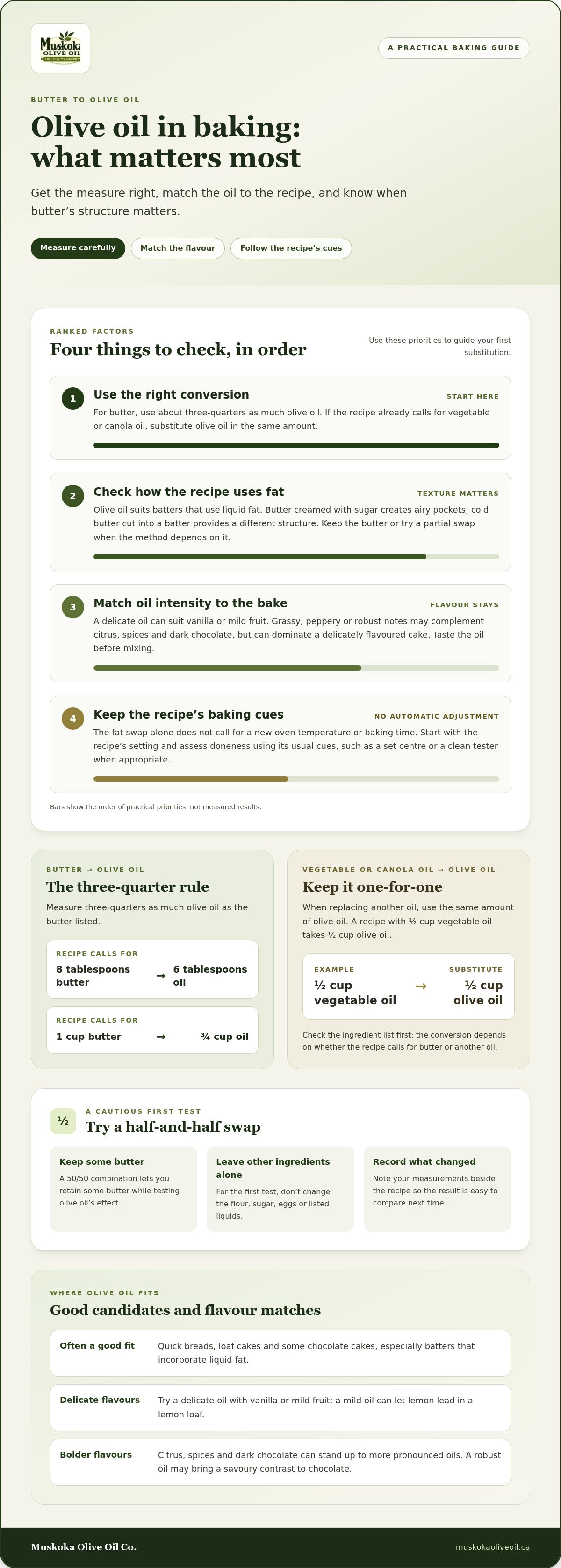
Butter is not a one-for-one swap in most baking recipes: to substitute butter with olive oil in baking, use about three-quarters as much oil as butter. For example, replace 8 tablespoons of butter with 6 tablespoons of olive oil, or 1 cup of butter with ¾ cup of olive oil. The change can affect a cake’s texture as well as its flavour.
If you’re used to butter’s familiar richness, it’s natural to wonder whether olive oil will work in a favourite cake or loaf. The answer depends on how the recipe uses its fat: oil won’t create the same airy pockets as creamed butter and sugar, so some baked goods may turn out denser.
Here, you’ll learn how to measure the swap, choose an olive oil that suits your recipe, and see where the change is most noticeable. We’ll also cover why some mixing methods call for butter and how a small adjustment can help you get the most from olive oil in baking.
Key Takeaways
- For most baking swaps, start with three-quarters as much olive oil as butter, then consider how the recipe’s texture may change.
- Choose a delicate extra virgin olive oil for a subtle flavour, or match a more robust oil with ingredients that can stand up to its peppery or grassy notes.
- Olive oil works best in recipes that use liquid fat; it won’t create the same air pockets as creamed butter and sugar.
- When a recipe relies on cold butter cut into the batter or room-temperature butter creamed with sugar, keep the butter or try a partial swap.
- Explore how different olive oil flavours could complement your baking, from familiar extra virgin olive oil to infused options.
Substituting olive oil for butter in baked goods
Olive oil brings its own flavour, so match its intensity to the other ingredients. Cakes, quick breads and chocolate bakes are useful candidates for the swap, while the recipe’s stated oven temperature remains your starting point.
Quick breads, loaf cakes and some chocolate cakes suit olive oil because their batters can incorporate liquid fat. The substitution alone doesn’t call for a new baking time or temperature, so follow the recipe’s oven setting and use its usual cues to assess doneness.
Olive Oil’s Flavour in Baked Goods
Olive oil contributes its own flavour, from delicate and mild to grassy, peppery or robust. That flavour remains in the finished bake rather than disappearing behind the sweetness of sugar.
For example, a grassy or peppery oil can complement a savoury loaf but compete with the gentle flavour of vanilla cake. Taste the oil before mixing, then decide whether its character suits the recipe’s other ingredients.
Fat affects more than texture: butter brings familiar dairy richness, while olive oil adds fruity or green notes. In a lemon loaf, a mild oil can let the citrus lead; in a chocolate cake, a more expressive oil can create a deeper, savoury contrast.
Baked Goods Suited to Olive Oil
Olive oil generally suits batters that use liquid fat, including quick breads, loaf cakes and some chocolate cakes. In these recipes, it’s easier to blend the oil evenly through the mixture without relying on butter’s solid structure.
Chocolate can pair well with a medium or robust extra virgin olive oil because its flavour stands up to bitterness and pungency. In a cocoa-rich cake, those notes can add complexity; in a delicately flavoured vanilla sponge, the same oil may dominate.
Choose an oil to match the recipe’s strongest flavour. Citrus, spices and dark chocolate can hold their own beside a more pronounced oil, while mild fruit or vanilla often calls for a delicate oil with low bitterness and pungency.
Effects on Baking Time and Temperature
Replacing butter with olive oil doesn’t automatically require a different oven temperature. Use the recipe’s stated setting as your reference, since the fat swap alone doesn’t determine a reliable new baking time.
Follow the recipe’s doneness cues, such as a set centre or a clean tester when that cue suits the bake. A loaf cake and a shallow cake can finish differently, so judge the specific item rather than changing the oven setting simply because the batter contains olive oil.
Mix the oil evenly into the batter before baking. If the cake’s centre still looks unset while the edges appear done, keep assessing it with the recipe’s usual cues instead of raising the temperature. The substitution doesn’t call for an unnecessary oven adjustment.
Olive oil-to-butter substitution ratio
Olive oil can replace butter in some baked goods, though the result may differ. This ratio accounts for the difference between butter and oil, so using the same volume can throw off the batter’s balance. Measure carefully before mixing. To substitute butter with olive oil in baking, first confirm that the ingredient list calls for butter, not another type of oil.
For a recipe calling for 8 tablespoons of butter, measure 6 tablespoons of olive oil. If it calls for 1 cup of butter, use ¾ cup of oil. Both examples follow the same three-quarters conversion, making it easier to scale the amount to your recipe. Use measuring spoons or a liquid measuring cup rather than estimating by eye.
- Butter to olive oil: Use three-quarters as much olive oil as the butter listed.
- 8 tablespoons butter: Substitute 6 tablespoons olive oil.
- 1 cup butter: Substitute ¾ cup olive oil.
Keep butter distinct from other oils. If a cake recipe already calls for vegetable or canola oil, replace it with the same amount of olive oil. For example, a recipe listing half a cup of vegetable oil takes half a cup of olive oil, not a reduced amount. Check the ingredient list before applying a conversion.
The ratio changes if you’re going in the opposite direction. Melted and cooled butter may work as a substitute for olive oil in some baking recipes. That differs from replacing butter with olive oil, where the three-quarters guideline applies. In cooking, olive oil can replace butter at a 1:1 ratio, but that cooking measure isn’t the general baking conversion.
If you’re unsure about replacing all the butter, try a 50/50 combination of butter and oil. Measure each fat separately, then combine them according to the recipe’s mixing method. This lets you retain some butter while testing the oil’s effect on the bake. If you substitute butter with olive oil in baking this way, record what you changed so the result is easy to compare.
For your first test, leave the recipe’s other ingredients unchanged. Don’t reduce the flour, sugar, eggs or listed liquids to compensate for the oil. Changing several ingredients at once makes it harder to tell what affected the result. Note your measurements alongside the recipe for reference next time.
Before measuring, check whether the recipe calls for butter or vegetable oil. That detail determines the conversion: three-quarters for butter, or an equal amount for vegetable or canola oil. Apply the right ratio before mixing instead of correcting the batter by eye.
Choosing olive oil for baking
Choose an olive oil by checking its identity, freshness cues and intended use. For baking, start with extra virgin olive oil, then consider its aroma and intensity. The goal is an oil that supports the recipe rather than becoming its most noticeable ingredient.
Look for a harvest date on the bottle and use it to compare options. Olive oil changes with time and storage, so a clear harvest date helps you make a more informed choice than a general label description alone. Also check that the bottle is sealed and stored away from heat and direct light.
Next, smell and taste a small amount before baking. Notice whether the oil is gentle or strongly aromatic, and whether bitterness or pungency stands out. These qualities help you judge how prominent it may be in the finished bake. If you’re choosing between two bottles, compare them side by side rather than relying only on the label wording.
Use a simple selection checklist:
- Check the label: Confirm that the bottle contains extra virgin olive oil.
- Review freshness cues: Use the harvest date and the bottle’s condition to guide your choice.
- Taste before measuring: Note the oil’s aroma, bitterness and pungency.
- Match the oil’s intensity: Consider whether you want its character to remain subtle or noticeable in the finished bake.
For your first bake, choose one oil and note the bottle details with your recipe. Record the harvest date, the oil’s sensory qualities and whether its character stood out in the cooled slice. These observations make it easier to choose an oil for a later batch without changing several ingredients at once.
Storage matters after you’ve chosen. Keep the bottle closed between uses and away from the stove, a sunny windowsill or another warm spot. Heat, light and air can affect olive oil over time, so careful storage helps preserve the character you selected for baking.
Consider how often you bake before opening a bottle solely for that purpose. If you use olive oil in other cooking, choosing one that suits both your everyday meals and baking is more practical. A dedicated bottle can make sense when you want consistent flavour across repeated batches of a familiar recipe.
How butter’s texture affects baking
Butter’s physical state determines how it behaves when you mix and shape dough. Soft butter can be pressed and spread through a mixture; chilled butter holds its shape longer. Olive oil remains fluid, so it can coat ingredients but can’t create the same firm pieces or flexible mass. That difference matters when a recipe depends on handling the fat before baking.
In pastry dough, small pieces of cold butter are worked through flour without fully blending in. As the pastry bakes, those pieces affect the dough’s structure and help create a tender, layered result. Pouring olive oil into the flour coats it more evenly, producing a different dough that may not roll or lift in the same way.
Shortbread is another useful example. Its dough is shaped while the butter is firm enough to hold the mixture together, then baked into a crisp, close-textured biscuit. Liquid fat can make the dough softer and harder to shape cleanly. The result may spread differently or lose the precise edges expected of traditional shortbread.
Butter’s firmness also changes with temperature during preparation. Chilled butter is less likely to blend immediately into flour, while softened butter combines more readily with other ingredients. Olive oil doesn’t pass through those same workable states, so recipes built around chilling, rolling or cutting the dough need more than a simple ingredient swap.
Before substituting, look for handling instructions such as “chill the dough,” “roll out” or “cut into shapes.” These steps signal that the fat’s consistency helps make the dough manageable. For a savoury tart shell, for instance, the recipe may rely on dough that stays firm while being rolled and transferred to its pan.
- Pastry: Cold butter pieces are incorporated without fully blending into the flour.
- Shortbread: Firm dough helps hold its shape during cutting and baking.
- Rolled cookies: Chilling can make dough easier to handle and cut cleanly.
If you want to try an oil-based version, choose a recipe formulated for liquid fat rather than trying to reshape a pastry method. A muffin batter or quick-bread mixture can be stirred and portioned without rolling firm dough. This lets you work with olive oil’s fluid consistency instead of asking it to behave like chilled butter.
For a butter-based recipe, treat its shaping instructions as part of the formula. If the dough must stay firm for rolling or cutting, keep the butter. If the method mixes liquid ingredients and portions the batter directly, olive oil is a more practical fit.
Substituting olive oil for butter in baking
Before changing a recipe, identify what the butter contributes beyond fat. According to the Center for Dairy Research, butter typically contains 80-82% fat and 16-17.5% water, so replacing it with olive oil changes the recipe’s water contribution. That difference can affect how the batter combines and the finished crumb feels.
The main drawbacks are a possible change in flavour, a denser texture and a different moisture balance. A mild vanilla cake may pick up grassy or peppery notes, while a cake made by creaming butter can lose some of its lift.
Start with the recipe’s method, not just its ingredient list. A batter that blends liquid ingredients is a more natural fit for olive oil than one that depends on butter’s particular mixing behaviour. If the instructions say to beat butter and sugar until fluffy, expect a different result when you change the fat.
Water matters because it helps determine how a batter comes together. Butter contributes some water along with its fat, while olive oil doesn’t. In a familiar cake recipe, the change may show up in the crumb or make the batter feel different from the original. Keep the other ingredients as written during your first trial; changing flour or liquid at the same time makes the outcome harder to assess.
Flavour is another variable to manage. Olive oil can bring grassy, fruity or peppery notes, which may stand out in a lightly flavoured bake. In a chocolate cake, the chocolate provides a stronger counterpoint. Taste the oil first and choose one that suits the recipe’s leading flavours.
Use a measured, controlled test rather than changing several parts of a recipe at once:
- Choose a familiar cake or loaf, and note its original mixing method.
- Measure the oil carefully using the recipe’s butter-to-oil conversion.
- Keep the flour, sugar, eggs and other ingredients unchanged.
- After baking, compare the crumb, moisture and flavour with the usual version.
A 50/50 butter-and-oil blend offers a middle ground for testing a recipe. It retains some butter while letting you assess olive oil’s flavour and effect. Record the oil used and your observations, especially whether the result suits the recipe’s texture and taste.
For a more informed choice, compare the flavour profiles of extra virgin olive oils before deciding which character suits your next bake.
Muskoka Olive Oil Co.: Infused Olive Oil
Muskoka Olive Oil Co. offers infused olive oil for bakers exploring a distinctive flavour in their recipes. Consider the infusion’s character alongside the other ingredients, and start with a bake where that added note feels intentional. The infused olive oil selection offers options to consider for your kitchen.
Muskoka Olive Oil Co. also offers extra virgin olive oil, white balsamic vinegars and dark balsamic vinegars for cooking and flavour pairings.
Make your next bake a thoughtful experiment
Choose a familiar recipe for your first test, and change only one element at a time. That makes it easier to notice how the oil’s flavour and the finished crumb work together. Make a brief note beside the recipe, including the oil you used and what you’d adjust next time.
If you decide to substitute butter with olive oil in baking, let the ingredients guide your choice. A bold chocolate cake calls for a different oil than a delicate vanilla loaf, and discovering that pairing can become part of the pleasure of baking.
For ideas on choosing an oil to suit your kitchen, connect with Muskoka Olive Oil Co. Then try a considered swap in a favourite recipe and enjoy making it your own.
Frequently Asked Questions
If a recipe, like carrot cake, calls for vegetable or canola oil, can I use olive oil instead?
Yes. Replace vegetable or canola oil with the same amount of olive oil. For a carrot cake calling for half a cup of vegetable oil, use half a cup of olive oil. Carrots, cinnamon and other spices have distinct flavours, so taste the oil first and choose one that complements them. Mix it with the recipe’s wet ingredients as directed, then follow the original baking instructions.
What if the recipe calls for the butter to be creamed with the sugar?
Creaming relies on softened butter and sugar working together to create an airy mixture. Liquid olive oil won’t behave the same way, so the cake may have a different crumb. For a recipe such as butter cake, keep the stated method and butter for a closer match. If you want to experiment, choose an oil-based cake recipe instead, where liquid fat suits the mixing method.
What style of olive oil should I use in my baking?
Choose a delicate extra virgin olive oil with low bitterness and pungency when you want the bake’s other flavours to lead. A mild oil, for example, can suit a plain tea cake, while a more robust oil can work with dark chocolate. Taste the oil before adding it, then decide whether its grassy, fruity or peppery character fits the ingredients.
How much olive oil replaces 1 cup of butter in baking?
Use ¾ cup of olive oil in place of 1 cup of butter for baking. Measure the oil in a liquid measuring cup, then add it where the recipe’s mixing method allows. This is a useful starting conversion for cakes and loaves, but the finished result can differ if the recipe depends on butter being creamed or cut into flour.
What is the butter-to-olive-oil conversion ratio for baking?
A general baking conversion is to use three-quarters as much olive oil as butter. For example, 8 tablespoons of butter converts to 6 tablespoons of olive oil. Don’t apply that same reduction when the recipe already lists vegetable or canola oil; in that case, use an equal amount of olive oil. Identify the fat named in the ingredients before measuring.
How does olive oil affect the texture and flavour of baked goods compared with butter?
Olive oil can give baked goods a different crumb and add its own flavour. Butter-based cakes may be lighter because their method incorporates air, while an oil-based loaf can have a smooth, moist-feeling crumb. The oil’s taste comes through too: a peppery note may work in chocolate cake but stand out in a delicate vanilla bake.
Can olive oil replace butter in cookies, cakes, muffins, and pastries?
Olive oil can suit some cakes and muffins, especially recipes designed for liquid fat. Cookies may spread or have a different texture if the recipe depends on solid butter. Pastry is a more difficult fit because cold butter helps create distinct layers or a crumbly structure. Before substituting, check whether the instructions call for creaming, chilling or cutting butter into the mixture.
Should olive oil be reduced or adjusted when replacing butter in a recipe?
For a butter-to-oil baking swap, use the three-quarters conversion rather than matching butter’s volume. Keep the recipe’s other ingredients unchanged for your first test, including eggs, flour and listed liquids. Changing several quantities at once makes it difficult to identify what affected the result. Note the finished texture and flavour, then use those observations to guide any later adjustment.
Leave a comment